
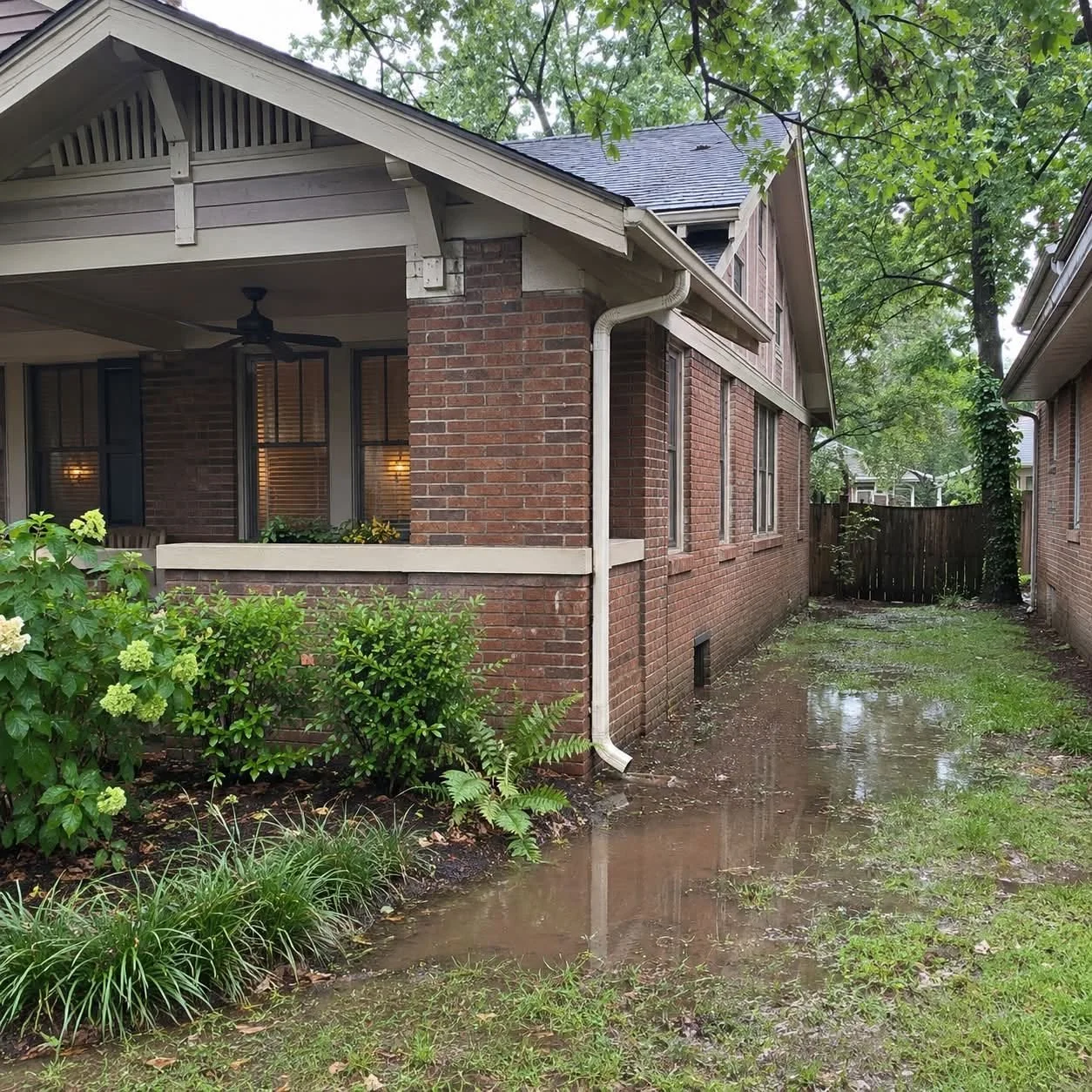
If your yard turns into a muddy mess every time it rains, the problem usually isn’t simply “too much water.”
The real issue is that the water has nowhere to go.
Across Memphis and North Mississippi, we regularly evaluate yards with standing water, soggy grass, erosion and runoff flowing toward the home. Some need a full drainage system. Others only need a grading correction or a better way to manage roof runoff.
The right solution depends on what is causing the water to collect in the first place.
Memphis Clay Soil Holds Water
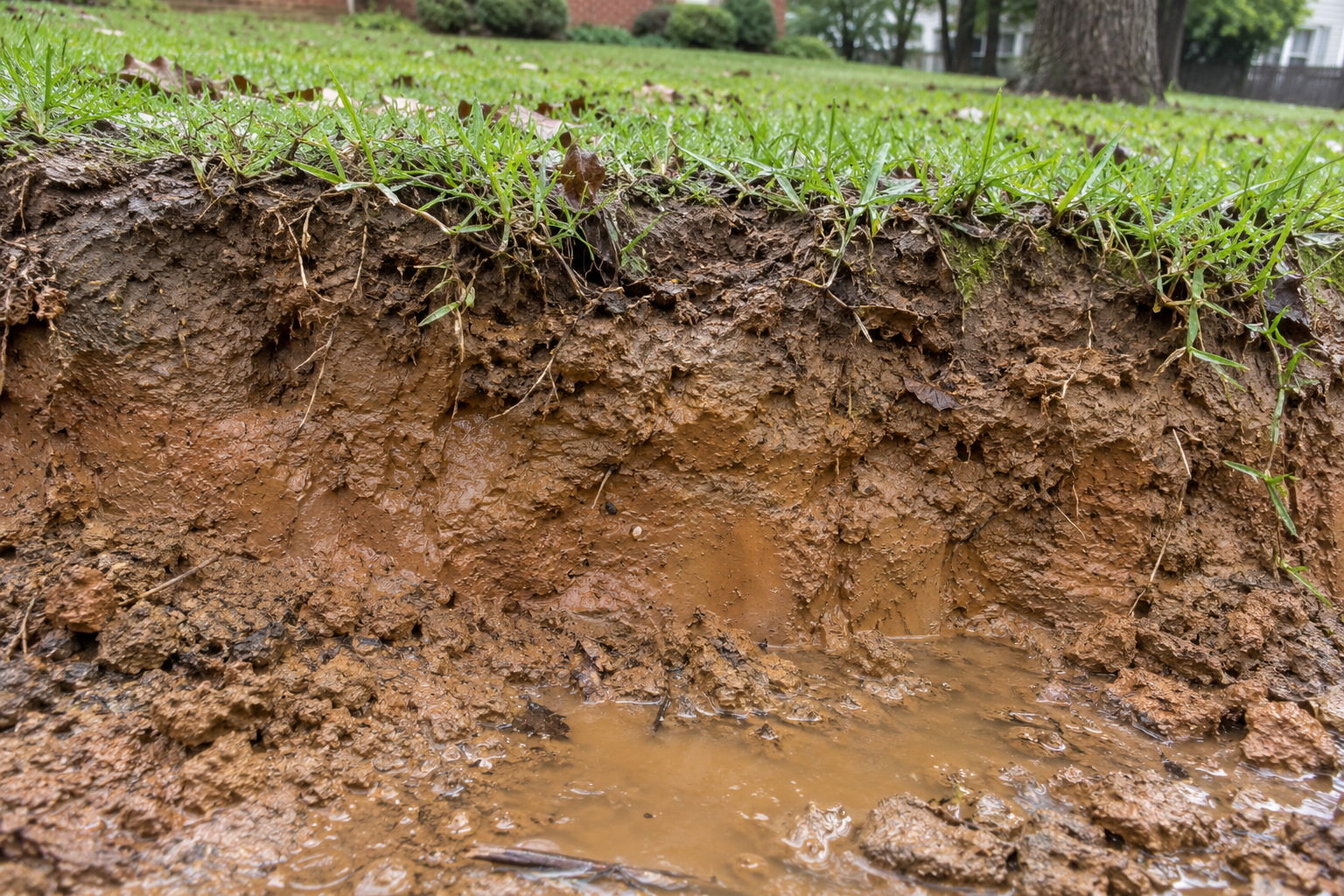
Our heavy clay soil absorbs water much more slowly than loose, sandy soil. After a hard rain, the ground can become saturated before all the water has a chance to soak in.
Once that happens, the remaining water moves across the surface and settles in the lowest areas of the yard.
Clay soil does not automatically mean you need a French drain. It does mean the system must be designed around the way water actually moves across your property.
Your Yard May Be Graded the Wrong Way
A properly graded yard should direct water away from the house and toward a safe discharge area.
Even small elevation problems can cause water to:
Pool in the middle of the yard
Collect beside the foundation
Flow across patios and walkways
Wash away mulch or soil
Keep sections of grass muddy for days
Sometimes correcting the grade is enough. Other properties need grading combined with drains that collect and carry the water away.
Your Downspouts May Be Overloading the Yard
A roof collects a tremendous amount of water during a storm. When downspouts release that water directly beside the house, it can overwhelm the surrounding soil.
Short extensions often move the problem only a few feet away.
Buried downspout extensions can carry roof runoff to a safer discharge point, helping protect the foundation and prevent water from collecting in landscaping beds or low areas.
The Water May Not Have a Proper Exit
A drain is only useful if the water has somewhere to go.
We frequently see drainage systems that collect water but do not have enough slope, use undersized pipe or end without a reliable discharge point. The yard may have drains installed and still hold water because the system cannot move it efficiently.
Before recommending any installation, we look at the full path:
Where the water originates
How it travels across the property
Where it collects
Where it can be safely discharged
That is what turns a group of drain components into a system that actually works.
Which Drainage Solution Is Right for Your Yard?
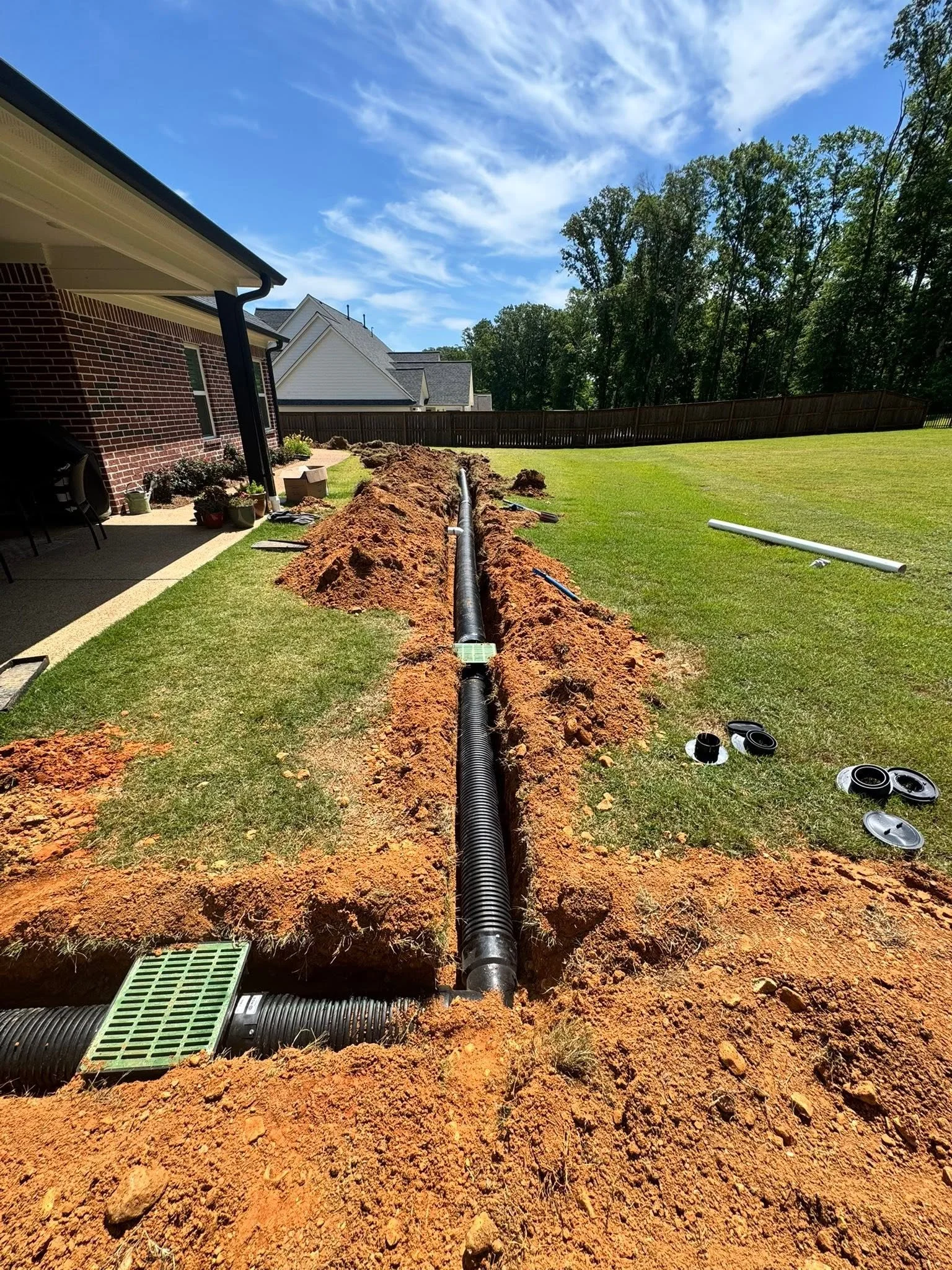
There is no single system that fixes every drainage problem.
Depending on the property, the correct solution may include:
French drains
French drains collect subsurface water and redirect it through perforated pipe. They can work well in consistently saturated areas when they are installed with the correct depth, materials, slope and discharge.
Catch basins and yard drains
Surface drains collect water from low areas where it visibly pools. They are often used when stormwater needs to be removed quickly after heavy rain.
Grading corrections
Reshaping the yard can help water flow naturally instead of sitting in place or moving toward the house.
Buried downspout extensions
These systems move concentrated roof runoff away from the foundation and landscaping.
Channel drains
Channel drains can collect water across driveways, patios, pool decks and garage entrances.
Many properties need a combination of these solutions rather than one product installed everywhere.
Why DIY Drainage Systems Often Fail
A trench filled with gravel may look like a French drain, but appearance alone does not make it functional.
Common problems include:
Not enough slope
No dependable discharge point
Incorrect pipe
Poor placement
Insufficient capacity
Fabric or gravel installed incorrectly
A system designed without considering the property’s elevations
The biggest mistake is choosing a product before identifying the cause of the problem.
Start With a Drainage Evaluation
At Drainage Solutions, we evaluate how water moves across your property before recommending a system.
We have talked homeowners out of full drainage installations when a smaller correction made more sense. Our goal is not to sell the largest system—it is to identify what will actually fix the problem.
If your yard stays wet, water collects near your foundation or runoff is damaging your property, schedule a free drainage evaluation.
We proudly serve Memphis, Germantown, Collierville, Olive Branch, Southaven, Hernando, Byhalia and surrounding areas.