Backyard Flooding After Heavy Rain in Memphis? How to Choose the Right Drainage Solution
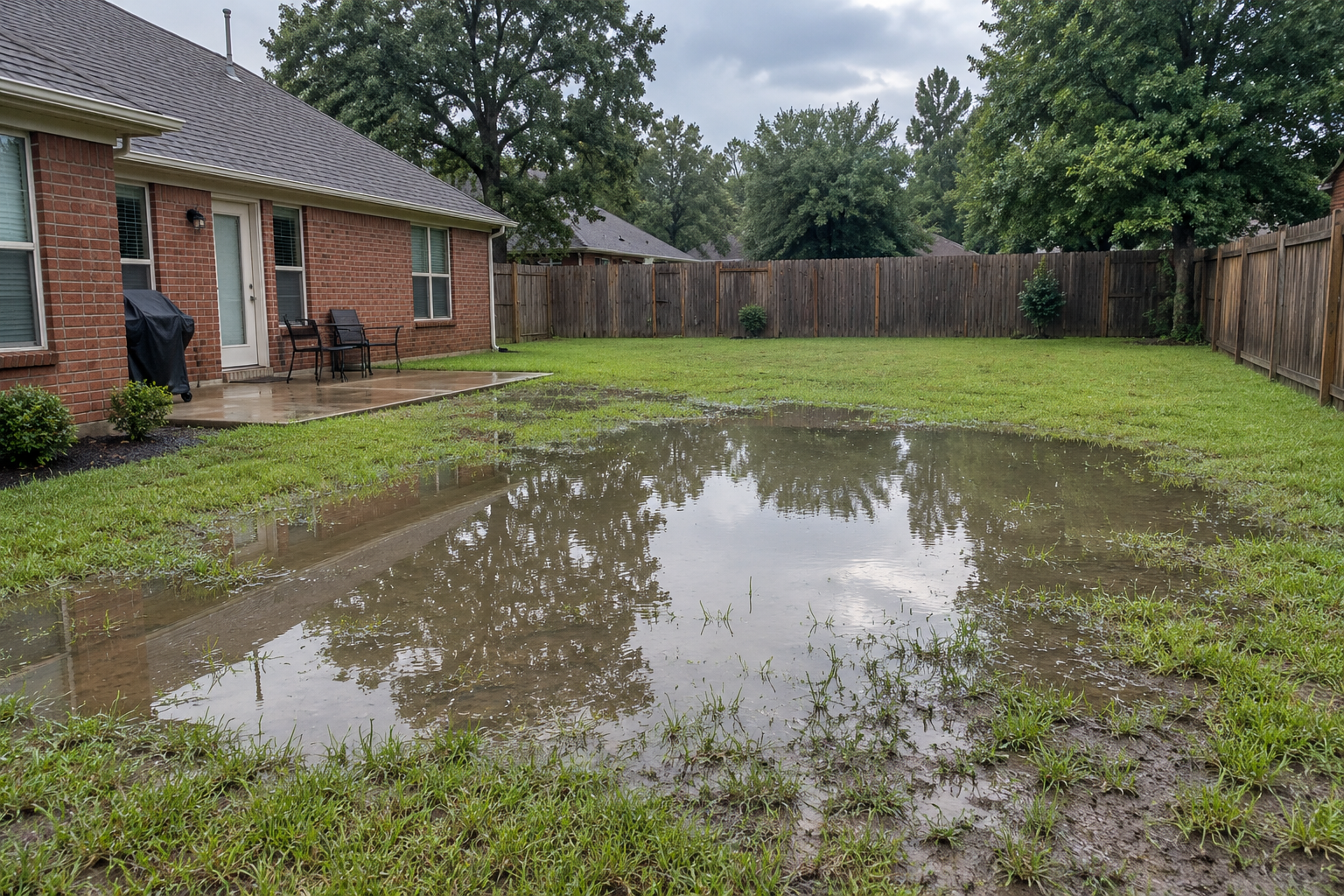
If your backyard turns into standing water every time it rains, you need to know where that water is coming from—and where it can go.
Installing a drain without answering those questions can leave you with a muddy yard and another repair bill.
At Drainage Solutions, we evaluate water flow, ground elevations, and discharge options before recommending a system. Whether your property needs catch basins, a French drain, downspout extensions, or grading, each recommendation should have a clear purpose.
Why does my backyard flood after heavy rain?
Several problems can contribute to backyard flooding. Your property may have more than one.
Low spots collect runoff
Water follows the slope of the ground. If part of your yard sits below the surrounding area, runoff can collect there without an easy exit.
Adding soil may help in some situations, but raising one area can redirect water somewhere else. The surrounding elevations matter.
Downspouts concentrate roof water
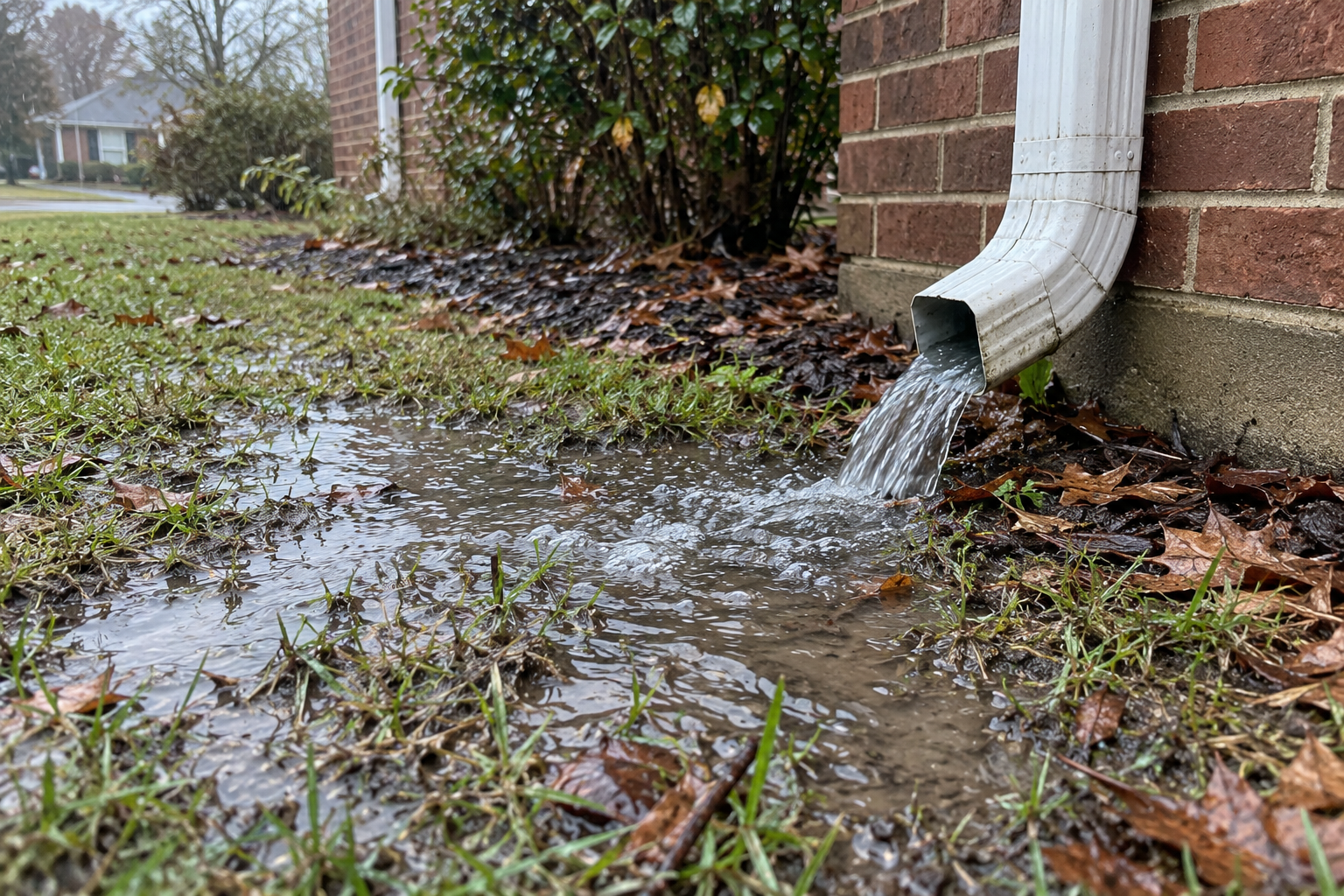
A downspout can release a large amount of roof runoff into one part of the yard. If it empties beside the foundation or into a low area, it can contribute to standing water.
A properly planned extension carries that water to a suitable discharge point.
The ground directs water toward the wrong place
A yard may slope toward the house, patio, garage, or fence line. Hard surfaces can also concentrate runoff and change how water moves through the property.
The solution needs to account for the full path of the water.
Water moves onto your property from higher ground
Runoff from surrounding land can contribute to flooding. Document where it enters and where it collects during rain.
Before changing the flow, the drainage plan should identify a suitable outlet and account for neighboring properties.
Does my yard need a French drain?
A French drain is one option, but it is not the answer to every wet yard.
French drains generally collect water through a gravel-filled trench containing perforated pipe. They can be useful for subsurface moisture and certain persistently wet areas.
If water rushes across the surface and pools in a low spot, surface collection or grading may be more appropriate.
The useful question is: What system will collect the water causing this particular problem?
When do catch basins make sense?
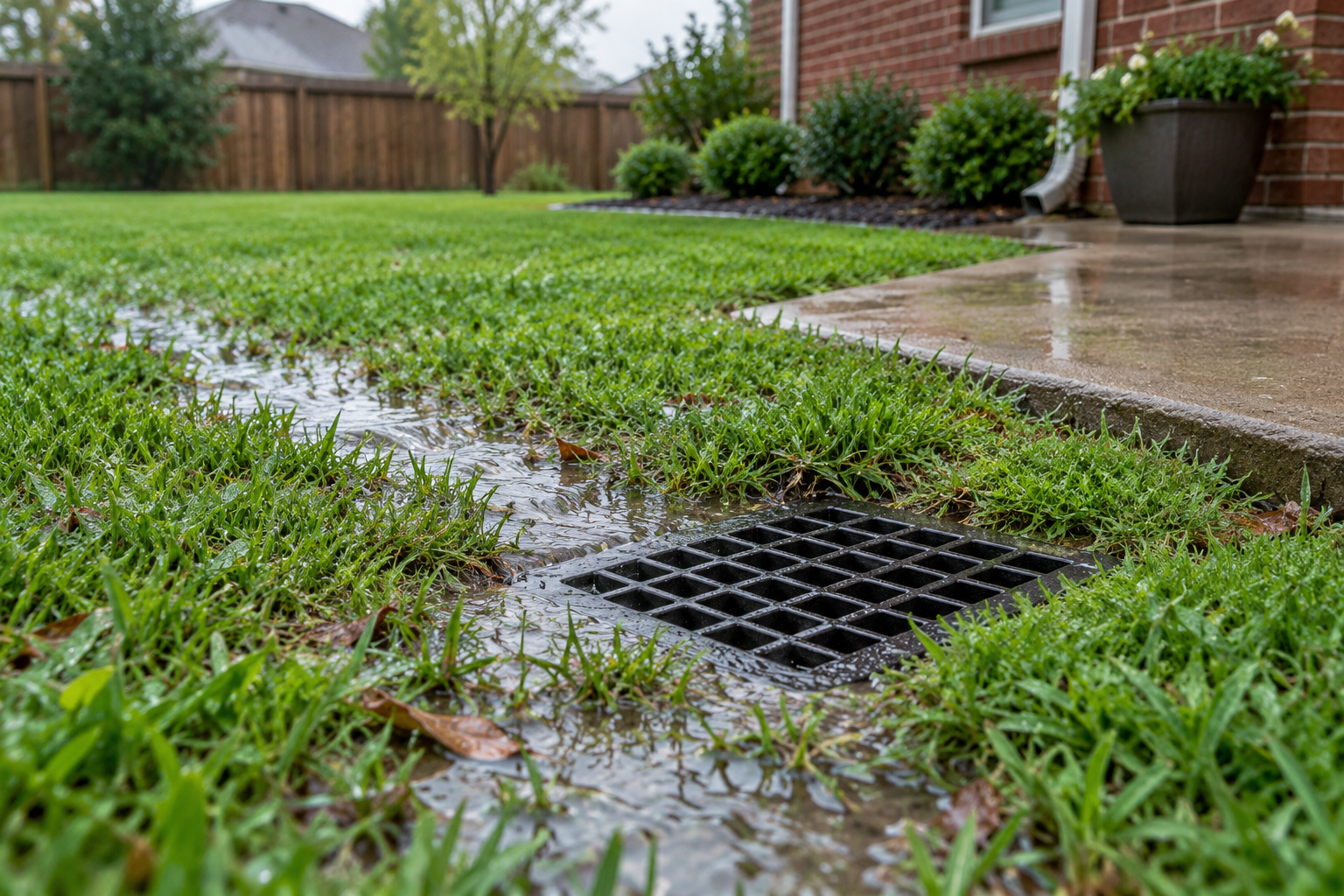
Catch basins collect surface runoff through a grate and direct it into a connected drainage line.
They may be appropriate where water collects in defined low areas or flows toward a patio, walkway, or foundation.
Placement matters. So do the pipe capacity, elevations, and outlet. A basin cannot solve the problem if water cannot reach it or discharge from it properly.
Can grading or a swale fix backyard flooding?
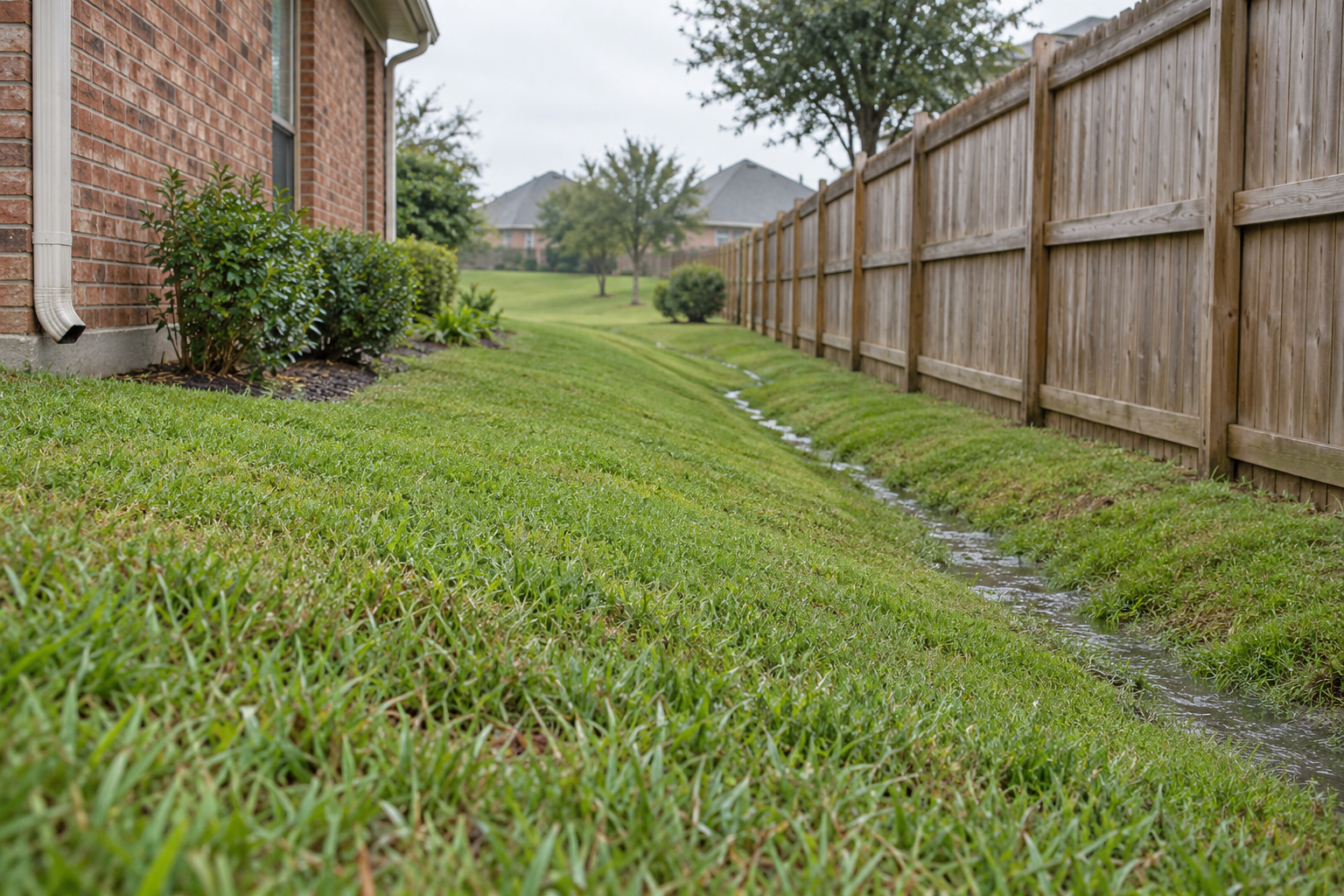
Sometimes the yard needs a better path for water to travel.
Grading changes ground elevations to improve runoff flow. A swale is a shallow channel shaped into the landscape to guide water toward an appropriate outlet.
These approaches may work on their own or alongside buried drainage.
Before recommending grading, a contractor should evaluate whether there is enough elevation difference to move water and how the changes will affect the rest of the property.
Should downspouts connect to the drainage system?
Roof runoff should be considered when planning yard drainage.
Depending on the layout, downspouts may need dedicated extensions or connections to a properly designed system. The proposal should explain how the roof water will be handled and where it will discharge.
Moving the outlet into another wet area can simply relocate the problem.
Where will the water go?
This is one of the most important questions to ask before approving drainage work.
A proposal should identify the discharge location and explain how water will reach it. Some properties allow gravity drainage; others have limited elevation or outlet options that require a different approach.
You should understand the outlet before paying for the installation.
Ask:
Where will the system collect water?
Where will it discharge?
How were the elevations evaluated?
What access will be available for cleaning or maintenance?
How will disturbed lawn areas be restored?
What should you show a drainage contractor?
Photos and short videos taken during rainfall can help show conditions that may disappear before an appointment.
From a safe location, document:
Where water first enters or collects.
The direction it travels.
Downspouts that discharge into wet areas.
Water near the house, garage, patio, or pool deck.
How long standing water remains after the rain stops.
Point out any previous drains and explain whether they ever worked properly.
Yard Drainage Help in Memphis and North Mississippi
Drainage Solutions has specialized in drainage since 2017. We bring hands-on installation experience to the evaluation, explain our recommendations, and provide a written scope and price.
Our services include French drains, catch basins, downspout extensions, channel drains, grading, and swales. Your plan is based on the conditions around your home.
We serve Memphis, Bartlett, Germantown, Collierville, Southaven, Olive Branch, Hernando, Byhalia, and surrounding areas.
Tired of losing your backyard to standing water?