Water Pooling Around Your Pool Deck? Drainage Options for Memphis Homeowners
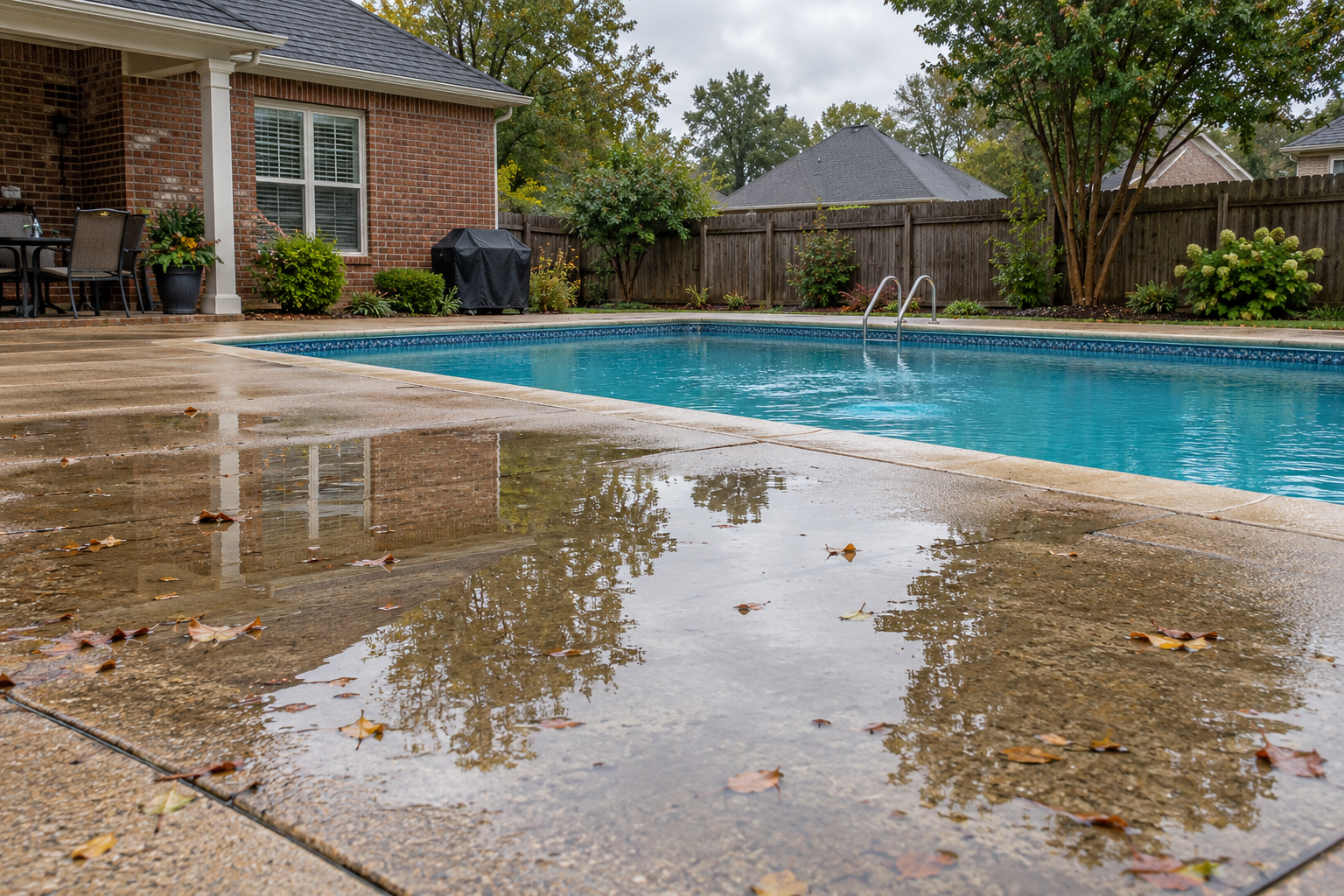
Your pool belongs full of water. Your pool deck doesn’t.
If rain leaves puddles across the concrete, washes mulch onto your deck, or sends muddy runoff toward the pool, there’s a drainage problem worth investigating.
The right repair starts with finding where the water comes from, why it collects, and where it can discharge. A drain needs to fit those conditions to do its job.
At Drainage Solutions, we evaluate those details before recommending channel drains, catch basins, grading, or a combination of solutions.
Why does water collect around my pool deck?
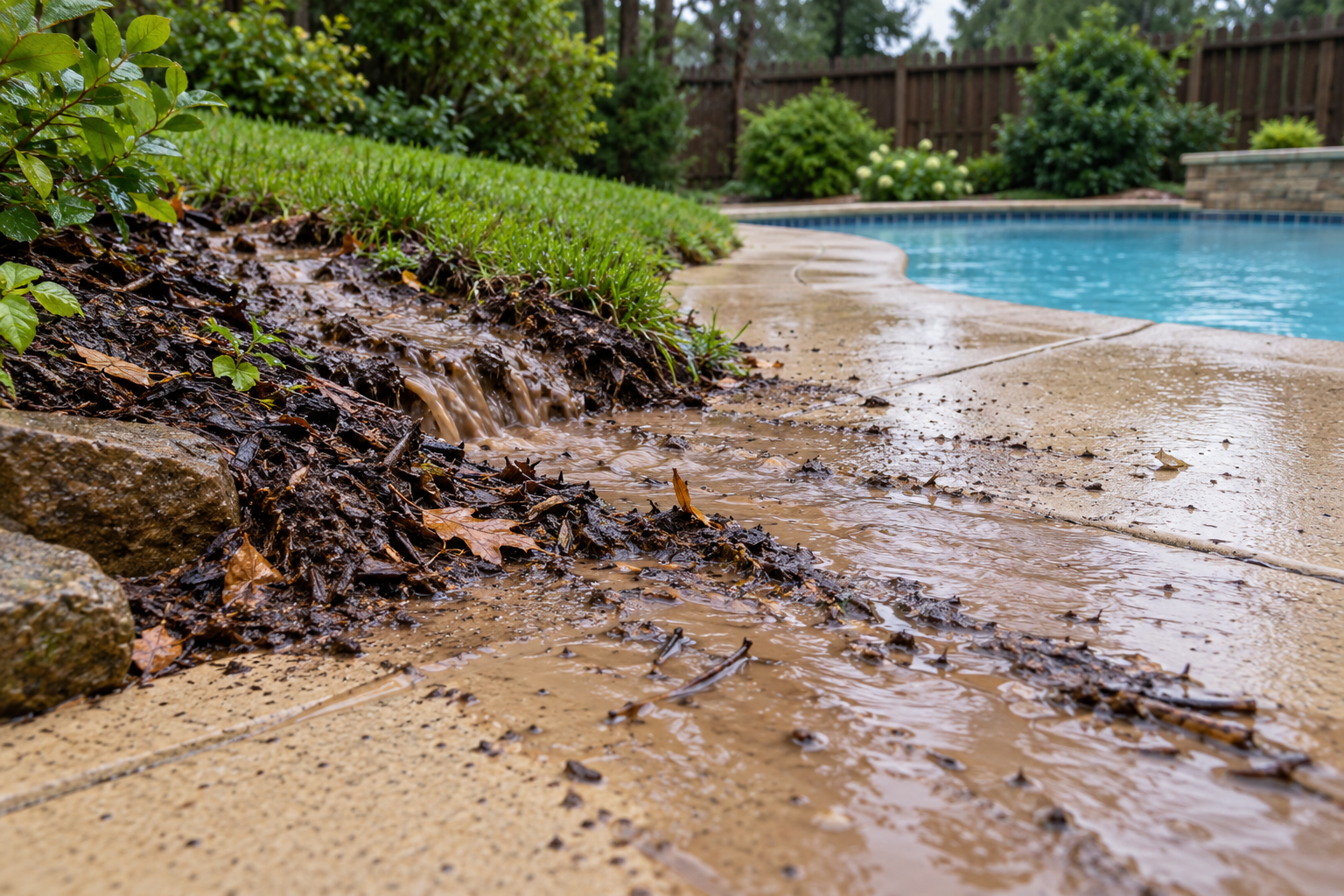
Watch what happens when it rains. Does water pool directly on the deck, or does it flow onto the concrete from the yard? That distinction helps identify what needs attention.
Low spots hold water
A low area in the concrete can trap rainwater. If the surrounding surface doesn’t provide a downhill path, the puddle stays until it evaporates or drains slowly.
Installing a drain nearby won’t necessarily help. Water has to be able to reach it.
Yard runoff flows onto the deck
Higher ground beside the pool can direct water onto the concrete. That runoff may carry soil, mulch, and leaves with it.
In this situation, the drainage plan may need to intercept water before it reaches the deck.
Downspouts send roof water toward the pool
A downspout emptying near the pool area can concentrate roof runoff in one location. Extending or rerouting that discharge may be part of the solution.
Follow the entire water path. Moving a downspout a few feet won’t help if it still empties into an area that drains toward the pool.
Existing drains aren’t keeping up
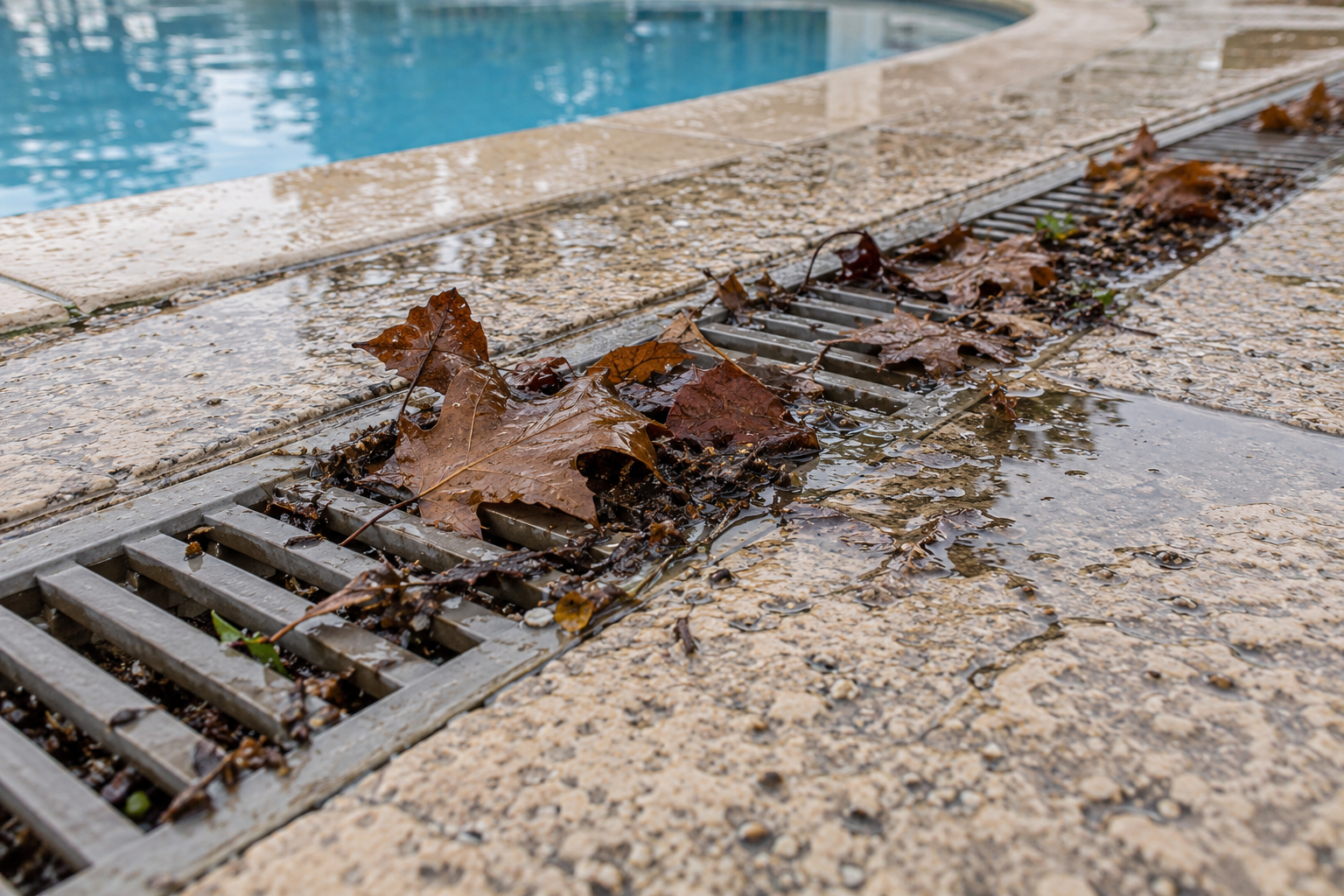
Leaves and sediment can obstruct a grate or drainage line. An existing system may also have an unsuitable outlet, insufficient capacity, or an installation problem.
If your pool deck already has drains, an evaluation should establish why they aren’t working before adding more.
When can a channel drain help?
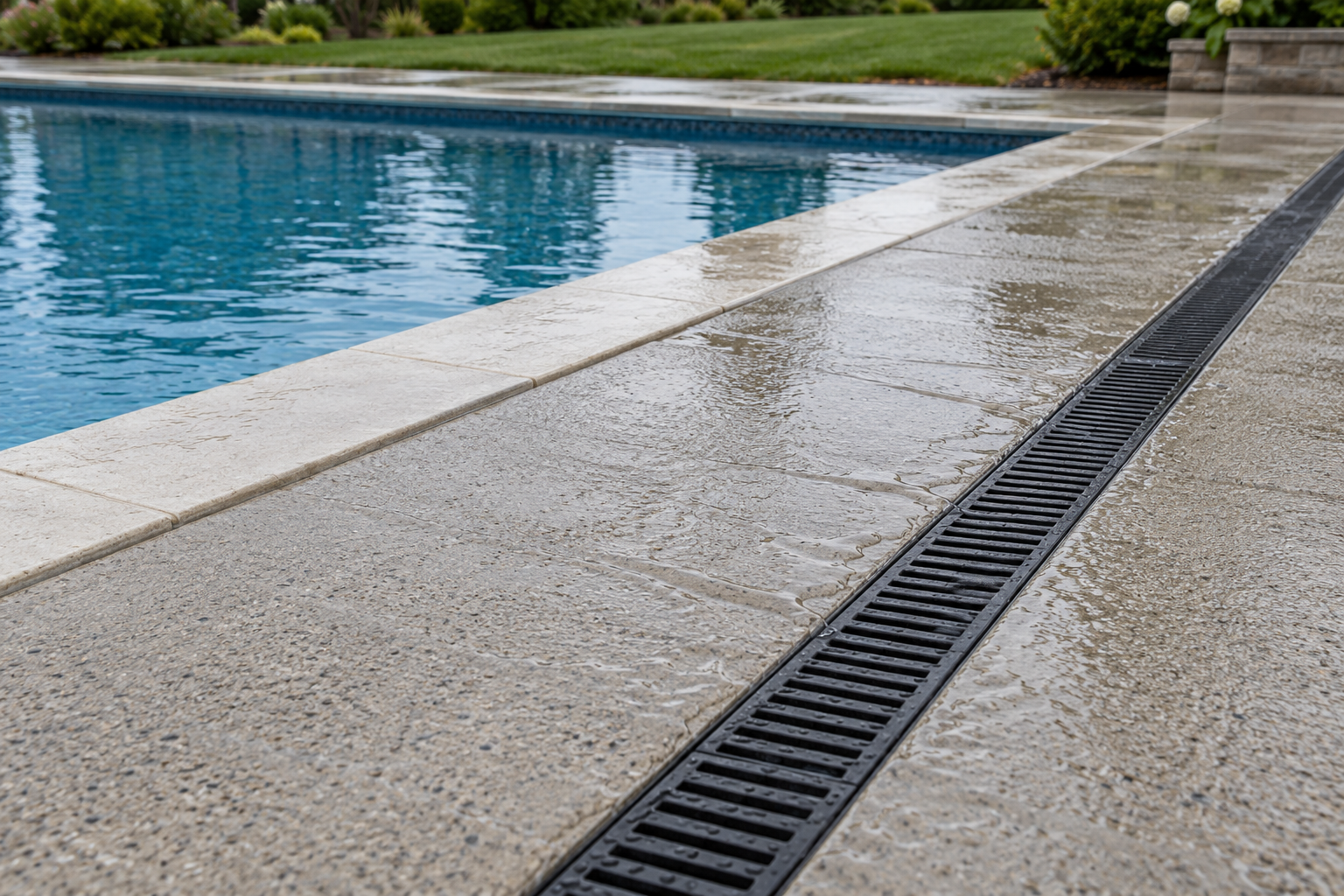
A channel drain collects surface water along a narrow, grated opening. It connects to a drainage line that carries the collected water to a suitable outlet.
Around a pool deck, it may be used to intercept runoff crossing the concrete or collect water along a low edge.
Placement matters as much as the drain itself. The surface must direct water into the channel, and the connected system must be able to carry that water away.
Drain selection should account for expected runoff, grate suitability, foot traffic, and maintenance access. A narrow drain that looks unobtrusive still needs enough capacity for the conditions.
Can you add a drain to an existing concrete pool deck?
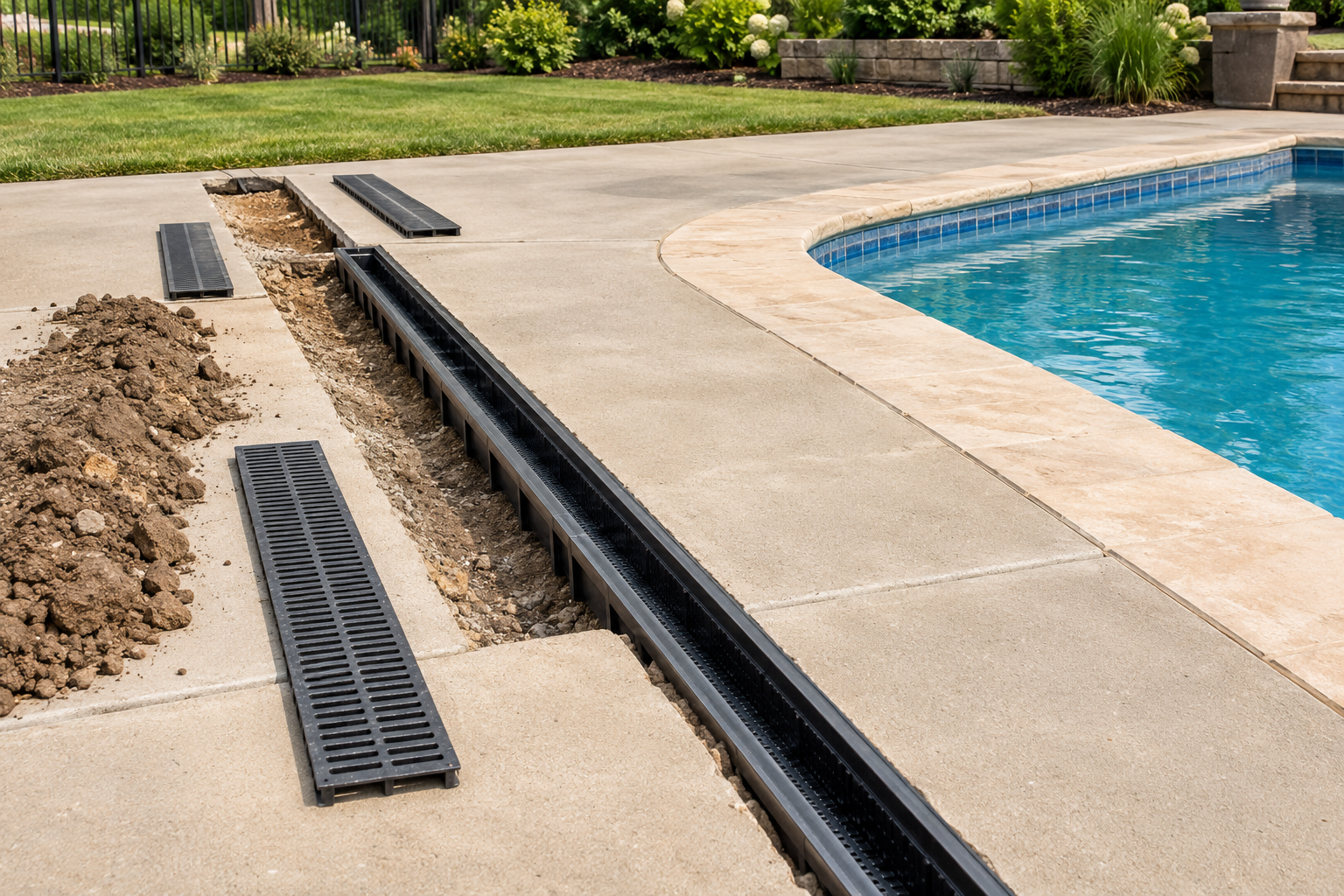
In some cases, yes. Adding a channel drain can involve cutting and removing a strip of concrete, installing the drain and discharge piping, and repairing the surrounding surface.
Before approving the work, ask how the contractor will address:
The location and elevation of the drain.
Existing pool plumbing, electrical lines, and other buried features.
The route of the discharge pipe.
Concrete removal and replacement.
Access for future cleaning.
Ask about the finished appearance, too. A concrete patch may look different from the existing deck, particularly if it has a decorative finish.
What if the water is coming from the yard?
A deck drain may collect the water after it arrives, but the surrounding landscape may need attention as well.
Depending on the property, options can include:
Catch basins to collect runoff at specific low points.
Grading to change how water approaches the pool area.
A swale to guide surface water along a suitable route.
Downspout extensions to redirect concentrated roof runoff.
Some properties need more than one measure. For example, intercepting yard runoff and collecting water on the deck may address two separate sources.
Will a French drain fix pool deck puddles?
A French drain generally collects water through a gravel-filled trench containing perforated pipe. It may help with persistently wet ground beside a pool area.
For water sitting on concrete, the first question is how to collect that surface water. A channel drain, another surface inlet, or changes to the surrounding elevations may be more appropriate.
Describe the problem before choosing the product. Tell the contractor where water collects, how it gets there, and how long it stays.
Where will the collected water go?
Every proposed drain should come with an explanation of its outlet.
Connecting a channel drain to a buried pipe is only part of the installation. The contractor should establish how that pipe will discharge and whether the elevations allow water to move through the system.
If the proposal connects to an existing drain, ask how its condition and capacity will be checked.
The goal is to solve the pool deck problem without creating another wet area elsewhere on the property.
How much does pool deck drainage cost?
The scope determines the price. Factors can include:
The length and type of drain.
How much concrete must be removed and repaired.
The distance to a suitable outlet.
Excavation access around the pool.
Changes needed to existing drainage or grading.
A short connection to a suitable nearby drainage line involves different work from a new system requiring extensive concrete cutting and a long discharge route.
A written estimate should explain the collection points, piping, outlet, and surface restoration so you can understand what you’re paying for.
What should you photograph before an evaluation?
Photos taken during rain can show water movement that disappears before a contractor arrives.
From a safe location, capture where runoff enters the pool area, where puddles form, and any debris washing onto the deck. Include nearby downspouts and existing drains.
Note how long the water remains after rainfall stops. If the problem happens only during heavier storms, explain that when scheduling your evaluation.
Pool Deck Drainage in Memphis and North Mississippi
Drainage Solutions has specialized in drainage since 2017. We install channel drains, catch basins, downspout extensions, and yard drainage systems based on the conditions around your home.
We serve Memphis, Bartlett, Germantown, Collierville, Southaven, Olive Branch, Hernando, Byhalia, and surrounding areas.
If every storm leaves your pool deck covered in puddles, let’s find out why. Call (901) 864-6855 or request an evaluation here.