Will New Sod Fix a Muddy Yard? What Memphis Homeowners Should Address First
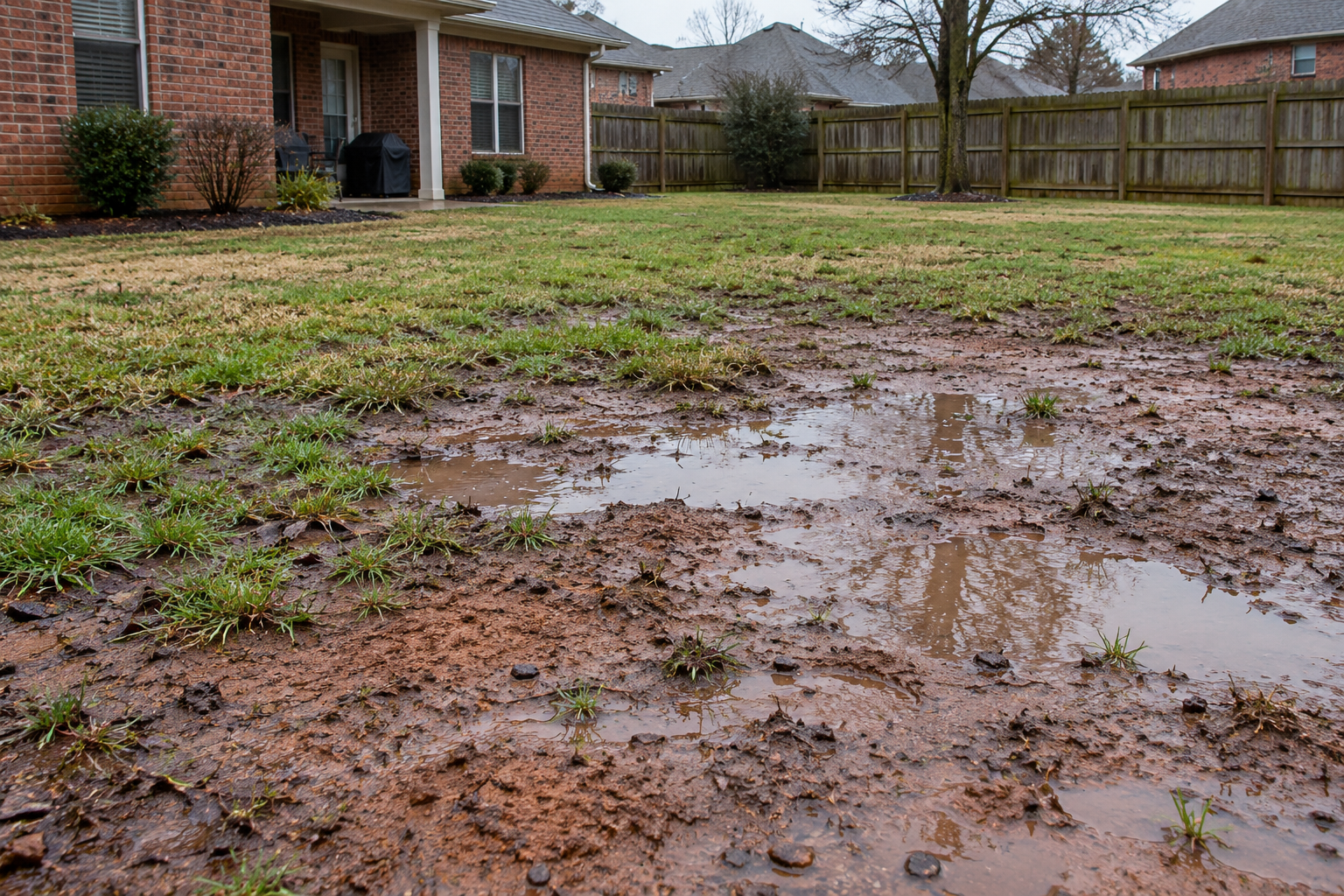
Before you pay for a new lawn, find out why the old one won’t grow.
Fresh sod can transform a bare yard. But if water keeps collecting in the same low spot or washing across the property, replacing the grass leaves that problem underneath.
For homeowners in Memphis and North Mississippi, a muddy lawn may need drainage work, grading, soil preparation, or a combination of improvements before sod goes down.
At Drainage Solutions, we evaluate the water problem and the lawn restoration together so the work happens in the right order.
Can sod help with a muddy yard?
Yes—when bare ground is part of the problem and the site is suitable for grass.
Once established, healthy turf helps hold surface soil in place and gives you a usable lawn. Sod can be a good way to restore areas disturbed by construction, drainage installation, or grading.
Sod alone won’t give trapped water an outlet. If your yard floods after rain, the cause needs attention before you invest in replacement grass.
Why does my yard stay muddy?
Start by noticing when and where the mud appears.
Water collects in a low spot
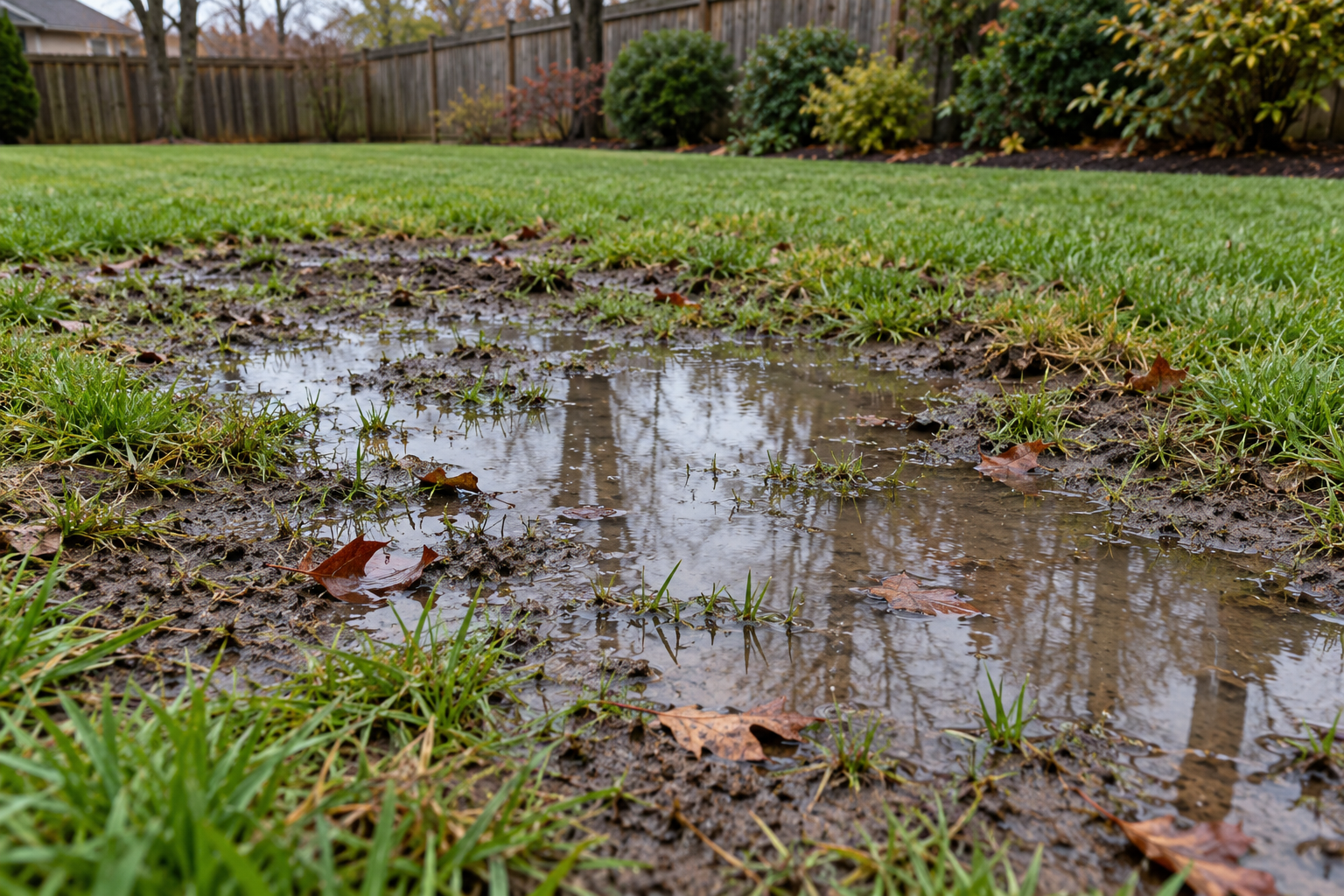
A depression can hold runoff from the surrounding lawn. New grass laid over that depression doesn’t change the direction water travels.
The area may need grading, a collection point, or another way to move water to a suitable outlet.
Downspouts discharge into the lawn
Roof runoff can repeatedly saturate one area beside the house. Look for wet ground around downspout outlets and paths where water crosses the yard.
Handling that concentrated runoff may be part of preparing the lawn for sod.
Soil is compacted
Construction equipment, vehicles, and repeated foot traffic can compact soil. Compaction makes it harder for water and air to move through the ground and can restrict root growth.
Soil preparation may be needed, but it should be considered alongside the drainage conditions.
Grass struggles for another reason
Poor drainage isn’t the only cause of bare ground. Shade, heavy traffic, watering problems, and unsuitable grass varieties can also contribute.
A lawn that receives too little sunlight may need a different planting approach. Installing the same grass again without addressing the growing conditions can lead to the same disappointment.
Does my yard need grading before sod?
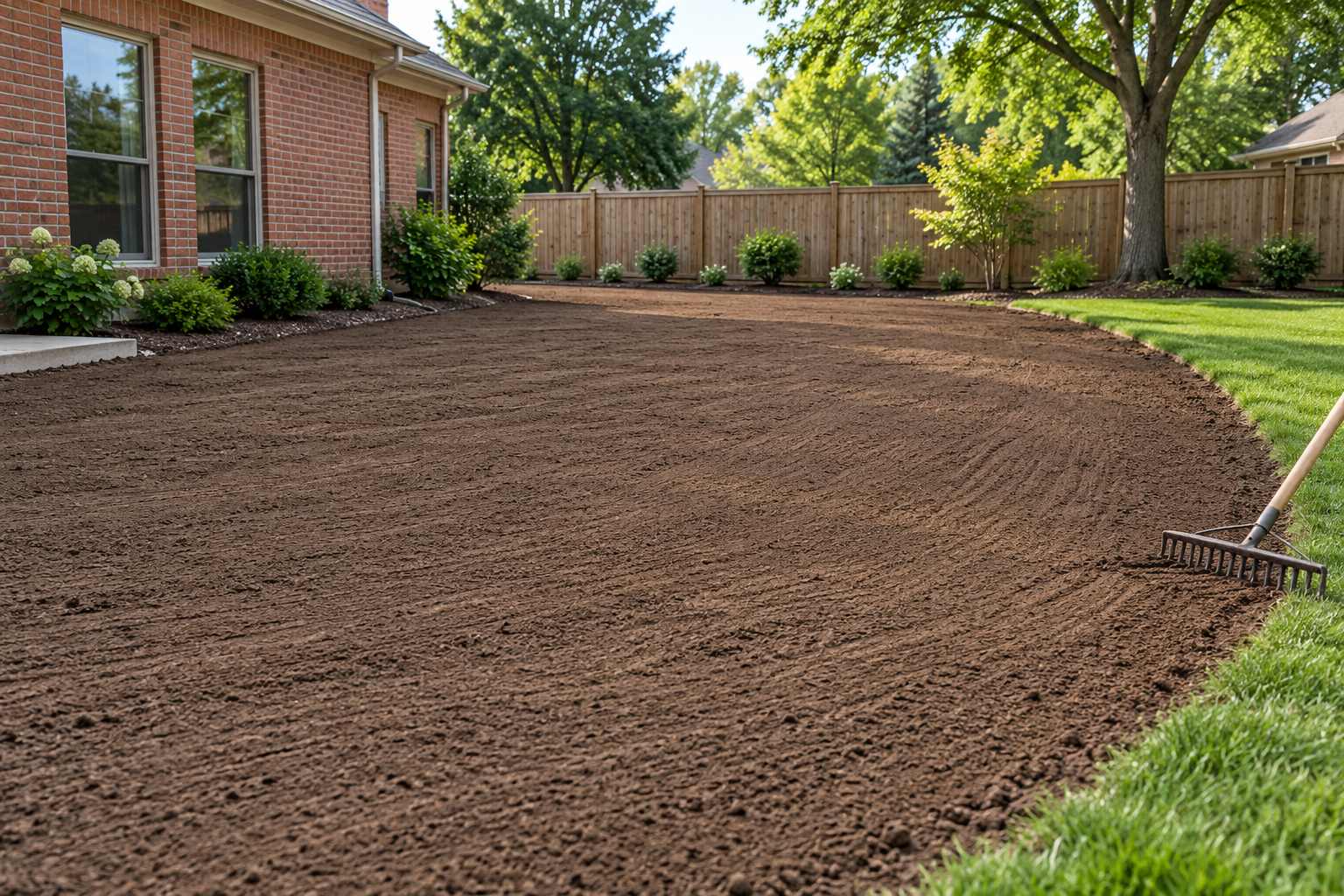
It may, especially if water collects in depressions or flows toward the house.
Grading reshapes the ground to improve the path of surface water. The work should account for the whole area, including patios, walkways, drainage inlets, and neighboring properties.
Adding soil to one muddy spot can move the puddle somewhere else. Before raising an area, establish where the water will travel afterward.
The finished elevation also needs to account for the thickness of the sod so it fits properly beside existing surfaces.
Should drainage go in before the new lawn?
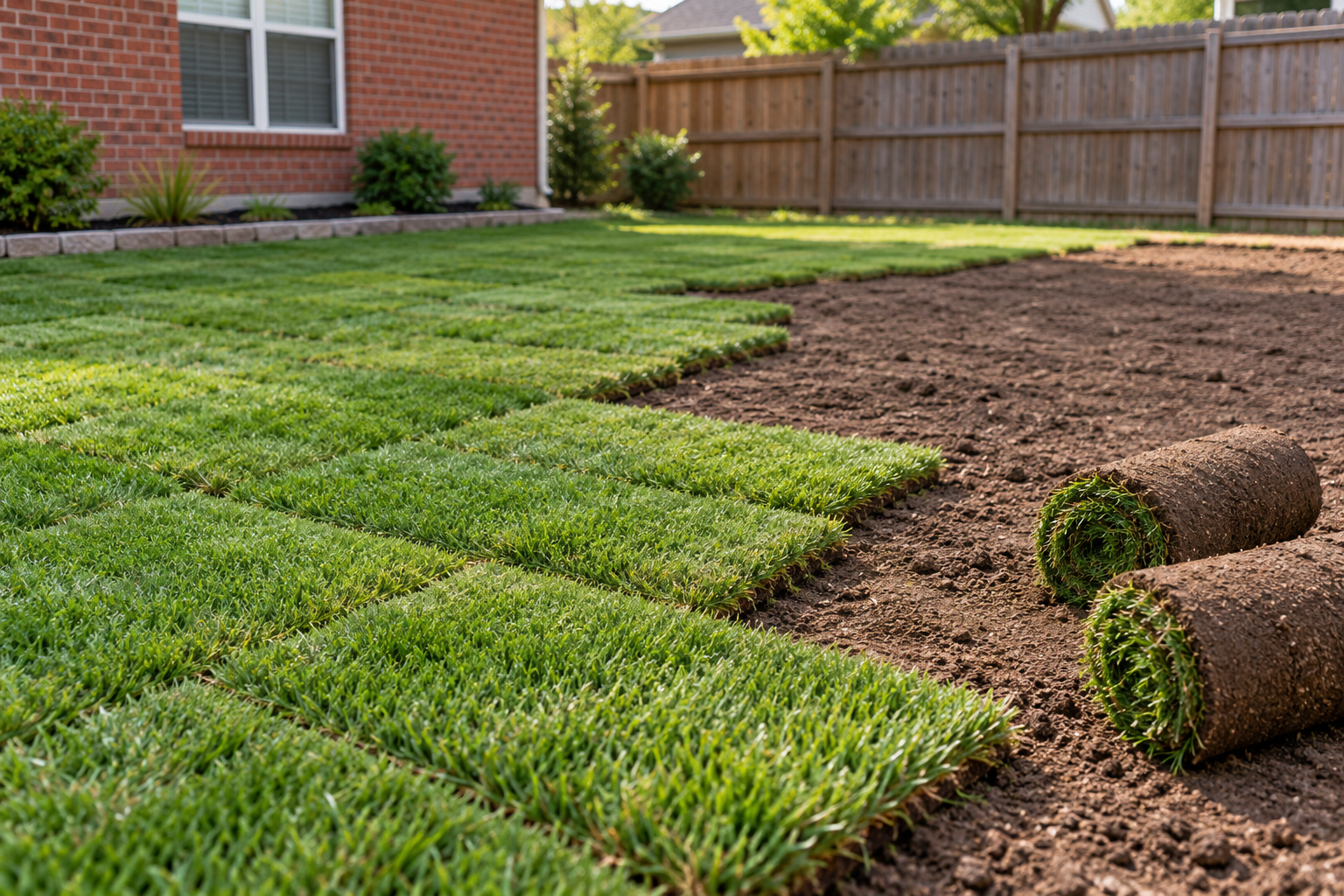
When drainage work is needed, completing it before the final lawn installation usually avoids digging through freshly laid sod.
Depending on the property, the work may include:
Extending downspouts to a suitable discharge point.
Installing catch basins to collect surface runoff.
Adding a French drain for appropriate wet-ground conditions.
Shaping a swale to guide runoff.
Adjusting elevations where practical.
The system should be chosen for the source of the water, the ground elevations, and the available outlet.
Some yards need only soil preparation and lawn restoration. Others need drainage work first. An evaluation helps establish which applies.
What if I already replaced the grass and it’s muddy again?
Before ordering another pallet of sod, look for the reason the area keeps failing.
Does the same patch stay wet after every storm? Is roof water emptying nearby? Does runoff enter from higher ground? Is the grass getting enough sunlight?
Photograph the area during rain and again afterward. Those photos can help show whether the problem is standing water, flowing runoff, or something else.
Replacing the grass repeatedly can become expensive when the underlying conditions remain unchanged.
What should a grading and sod estimate include?
A useful proposal should explain more than the amount of sod being delivered.
Ask:
What is causing the muddy or bare area?
Is drainage work included?
What soil preparation will be completed?
Will the elevations change?
What grass variety is proposed, and does it suit the sunlight?
How will the lawn meet existing concrete and landscaping?
What watering and care will be required afterward?
Clear answers help you compare the actual work included in each estimate.
New sod still needs an establishment plan
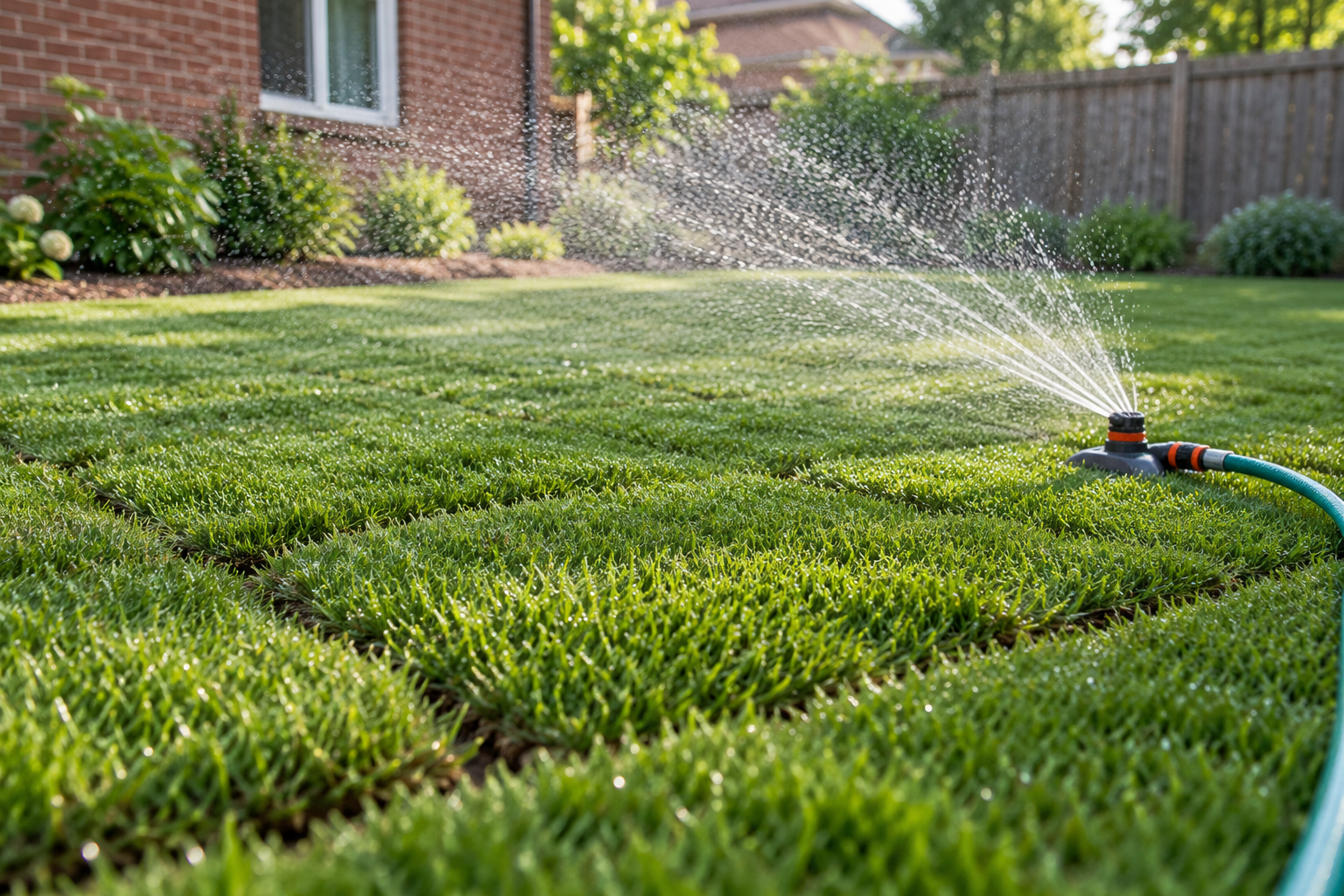
A newly installed lawn needs care while it develops roots.
Watering requirements depend on the grass, weather, soil, and installation conditions. Make sure you have a way to water the entire area and understand the installer’s instructions before delivery.
Too little water can dry out new sod. Excessive watering can keep the ground overly wet. Drainage improvements and establishment watering need to work together.
Drainage, Grading, and Sod Installation in Memphis and North Mississippi
Drainage Solutions has specialized in drainage since 2017. We provide yard drainage, grading, and sod installation so homeowners can address water problems and restore their lawns with a coordinated plan.
We serve Memphis, Bartlett, Germantown, Collierville, Southaven, Olive Branch, Hernando, Byhalia, and surrounding areas.
Tired of paying for grass that never lasts? Let’s find out what your yard needs before you replace it again.