Water Behind Your Retaining Wall? Warning Signs Memphis Homeowners Should Know
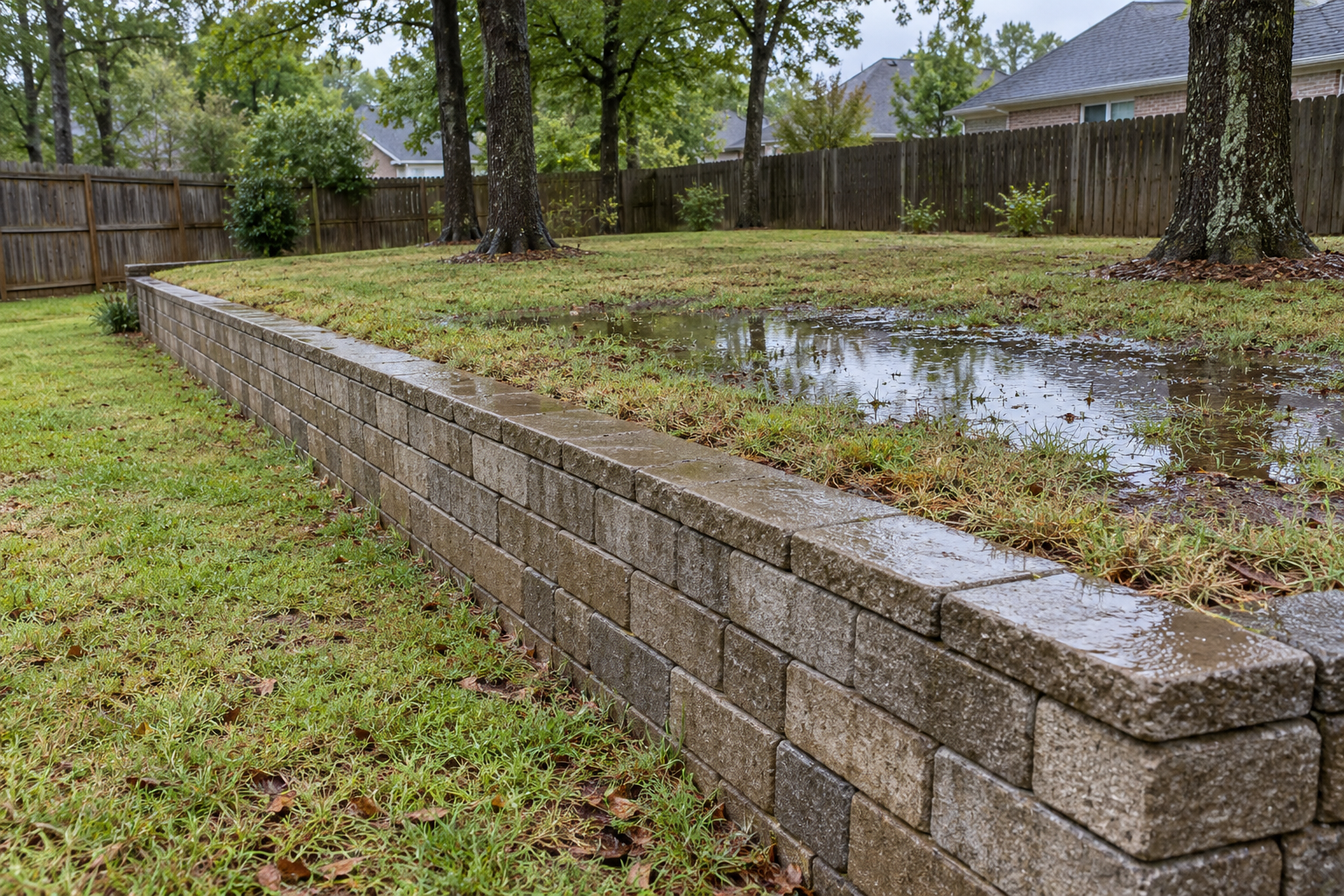
A retaining wall holds back soil. The drainage around it needs to give water somewhere to go.
If rain leaves standing water above your wall, washes soil around its ends, or repeatedly saturates the ground below it, the water problem deserves attention.
A wall can look finished from the front while important drainage details remain hidden behind it. Before building a new retaining wall—or repairing an existing one—understand how water will be managed.
At Drainage Solutions, we consider the surrounding runoff, ground elevations, and discharge options when planning retaining wall work.
Why does drainage matter around a retaining wall?
Water changes the conditions a retaining wall must handle. When water accumulates behind a wall, it can add pressure. Saturated soil and erosion can also affect the wall’s performance.
A drainage plan should account for water moving across the surface and water entering the soil behind the wall.
The approach depends on the wall system, its height, the surrounding slopes, and what sits above it. A small landscape wall and a wall supporting a driveway require different considerations.
What signs should homeowners watch for?
These conditions warrant an evaluation. They don’t establish the cause by themselves.
Standing water above the wall
Puddles behind the top of the wall may indicate that runoff has no suitable path out.
Look at whether higher ground, a downspout, or a paved surface directs water into that area.
Soil washing around the ends
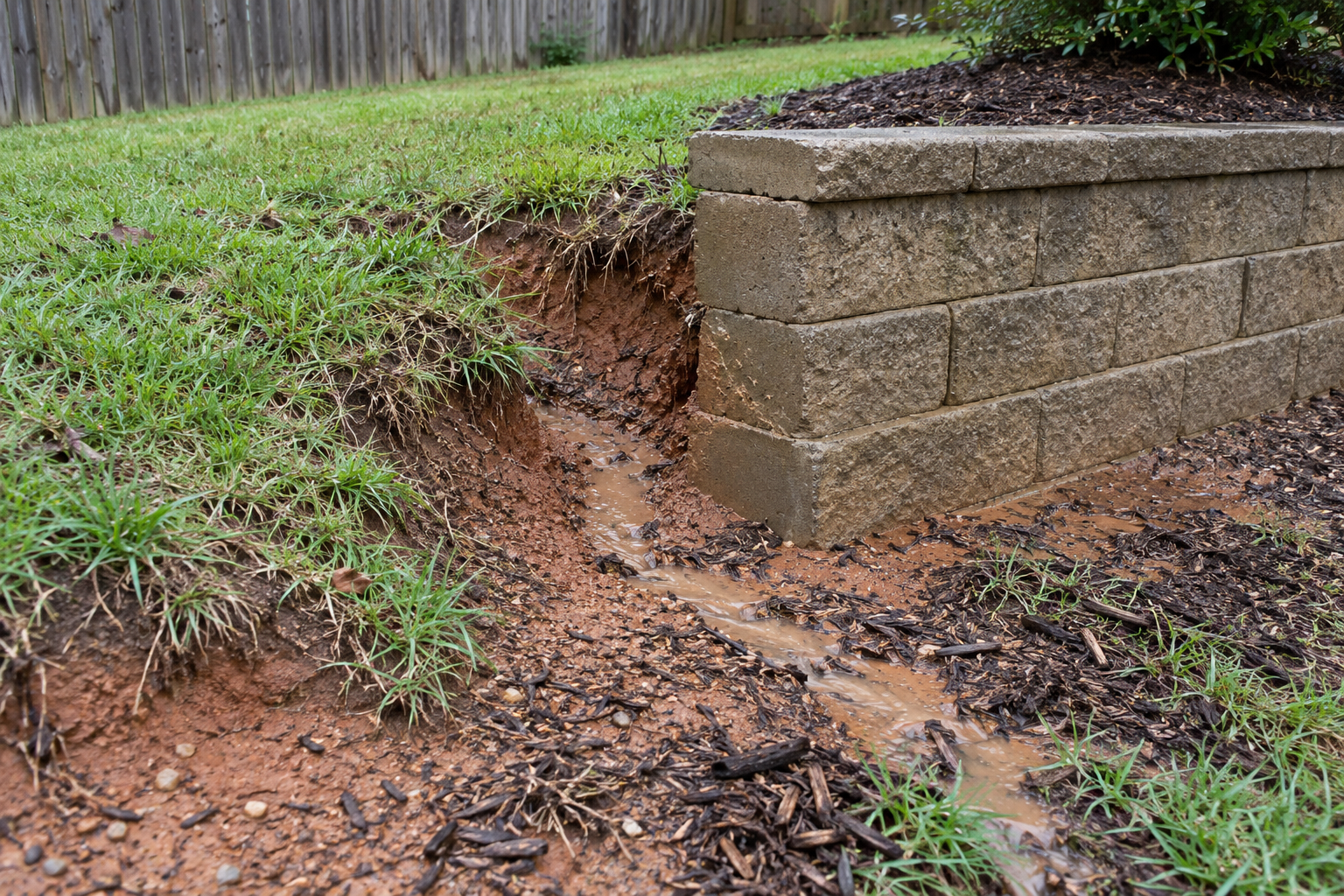
Water may flow around a wall and carry soil or mulch with it. Repeated washouts can change the surrounding landscape and expose areas that were previously covered.
Photograph where the water enters and the route it follows during rain.
Persistent wet ground below the wall
A drain outlet may release water as intended, but persistent saturation deserves a closer look.
The source could be runoff, drainage discharge, irrigation, or another water issue. The location and timing help distinguish between them.
New leaning, bulging, or separation
Visible movement requires attention. Drainage may contribute, but movement can also involve the base, soil conditions, reinforcement, construction, or loads above the wall.
An actively moving wall needs a qualified assessment. Adding a drain alone may not make it stable. Keep people away from the affected area until it has been evaluated.
Is water coming out of the wall always a problem?
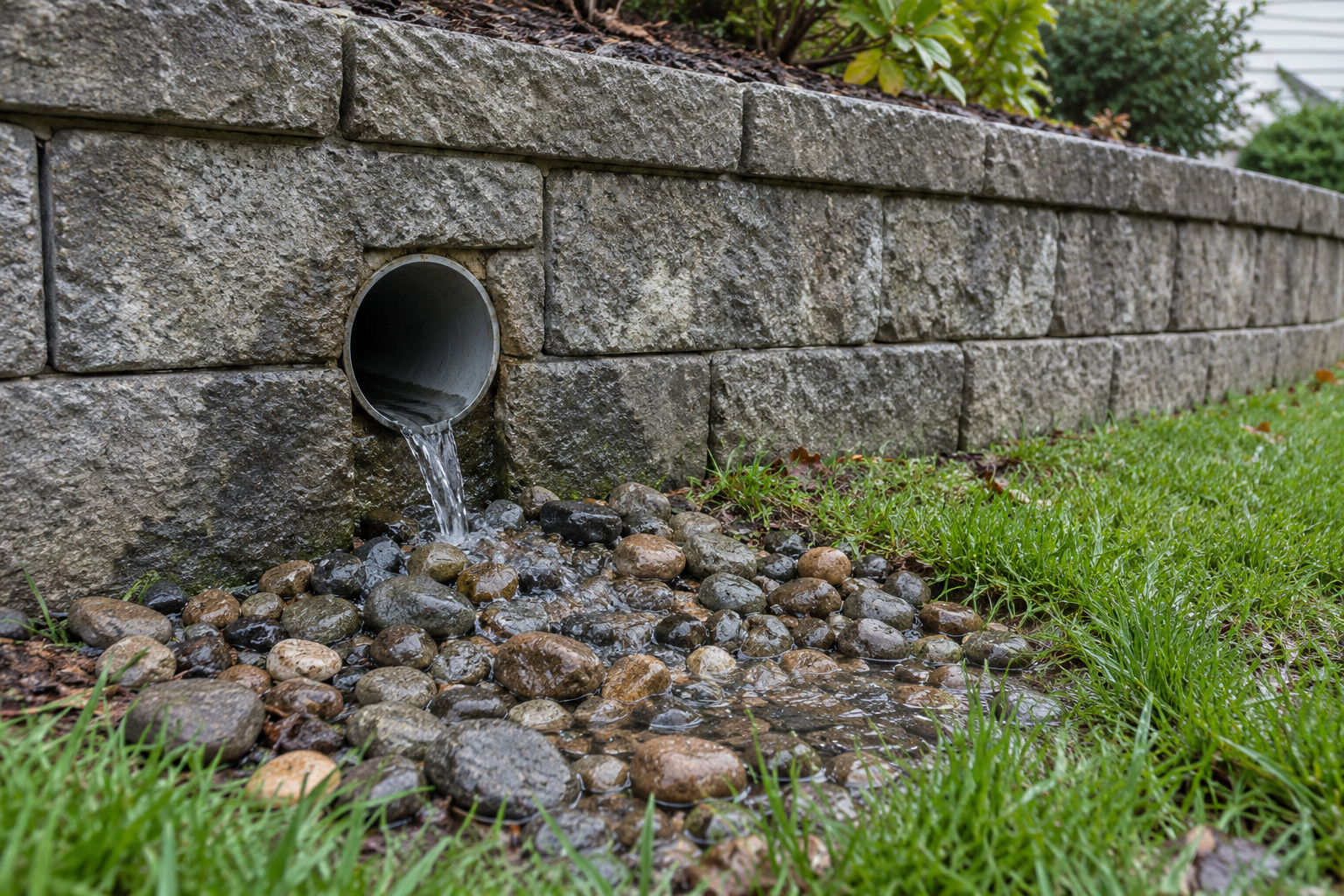
Not necessarily.
Some retaining wall systems have drainage outlets that allow collected water to escape. Water leaving through a designed outlet during rainfall may be expected.
What matters is whether the water follows the intended route and whether the wall and surrounding ground remain stable.
Water carrying soil, creating erosion, or appearing alongside new wall movement should be investigated.
What belongs in a retaining wall drainage plan?
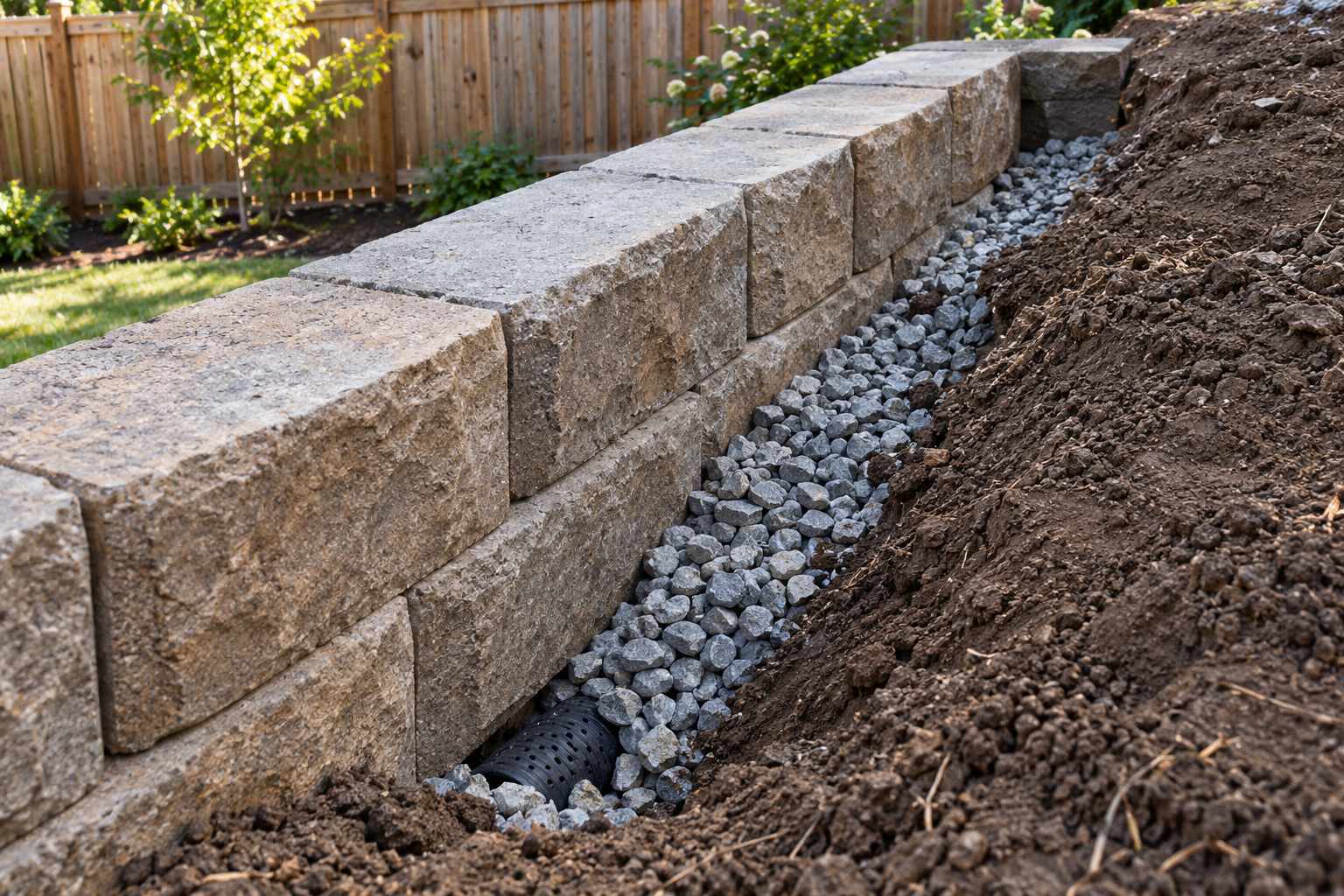
The details should suit the wall and the property. A plan may include drainage stone, collection piping, suitable outlets, and measures that manage surface runoff before it reaches the wall.
These components have different jobs. A drainage pipe behind a wall should not automatically be treated as the outlet for all the roof and yard runoff nearby.
Ask the contractor to explain both:
How water entering the soil behind the wall will be handled.
How concentrated surface runoff will be directed around or away from the wall.
Can grading or a swale help?
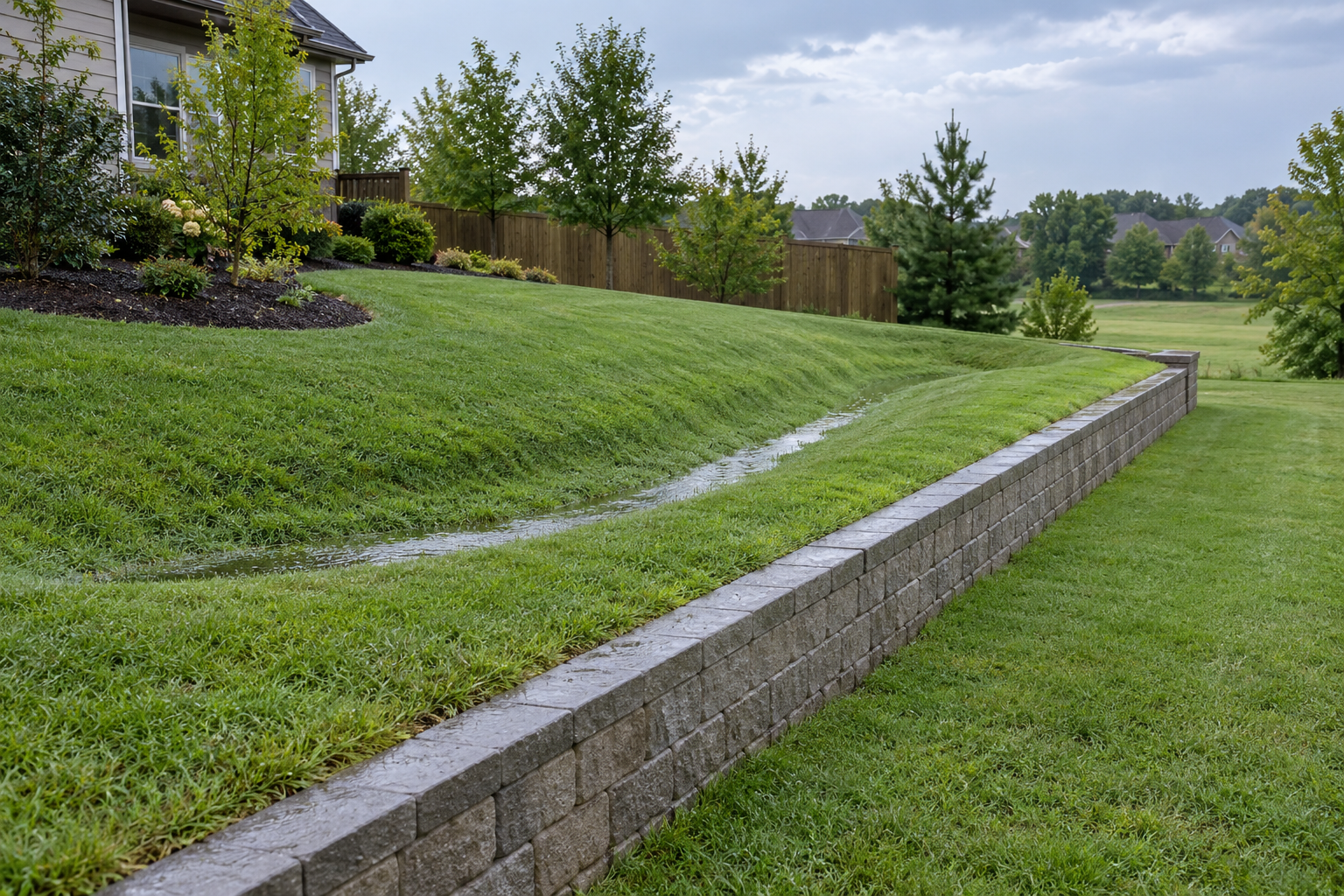
In some situations, changing the path of surface water can reduce the amount flowing toward a retaining wall.
Grading, a shallow swale, or a separate collection system may help manage runoff from higher ground.
The proposed changes should account for the rest of the property. Redirecting water toward the house or a neighboring yard can create another problem.
Should downspouts discharge behind a retaining wall?
A downspout can concentrate roof runoff into a small area. If it empties behind a wall, that water source needs to be considered in the drainage plan.
The same applies to nearby sump pump outlets, irrigation, and runoff from driveways or patios.
A suitable solution may involve rerouting that water separately rather than expecting the wall’s drainage system to handle it.
Can you improve drainage around an existing wall?
Sometimes, but access and the wall’s condition matter.
Work may involve correcting surface runoff, addressing an accessible outlet, or undertaking more extensive repairs. Hidden drainage components may be difficult to reach without excavation or partial reconstruction.
If the wall has moved or supports significant loads, a qualified engineer may need to assess it and guide the repair.
A useful evaluation should explain what can be determined from the visible conditions and what remains uncertain behind the wall.
What should you ask before hiring a retaining wall contractor?
Before approving a proposal, ask:
How will runoff above the wall be managed?
What drainage components are included?
Where will collected water discharge?
How will the base and surrounding ground be prepared?
Do the wall height, slope, or loads require engineering?
Are permits required for this project?
How will disturbed lawn and landscaping be restored?
The estimate should explain the work behind the wall as clearly as the finished appearance.
Retaining Walls and Drainage in Memphis and North Mississippi
Drainage Solutions has specialized in drainage since 2017. Our services include retaining walls, yard drainage, grading, catch basins, French drains, and downspout extensions.
We serve Memphis, Bartlett, Germantown, Collierville, Southaven, Olive Branch, Hernando, Byhalia, and surrounding areas.
Planning a retaining wall or dealing with runoff around an existing one?