
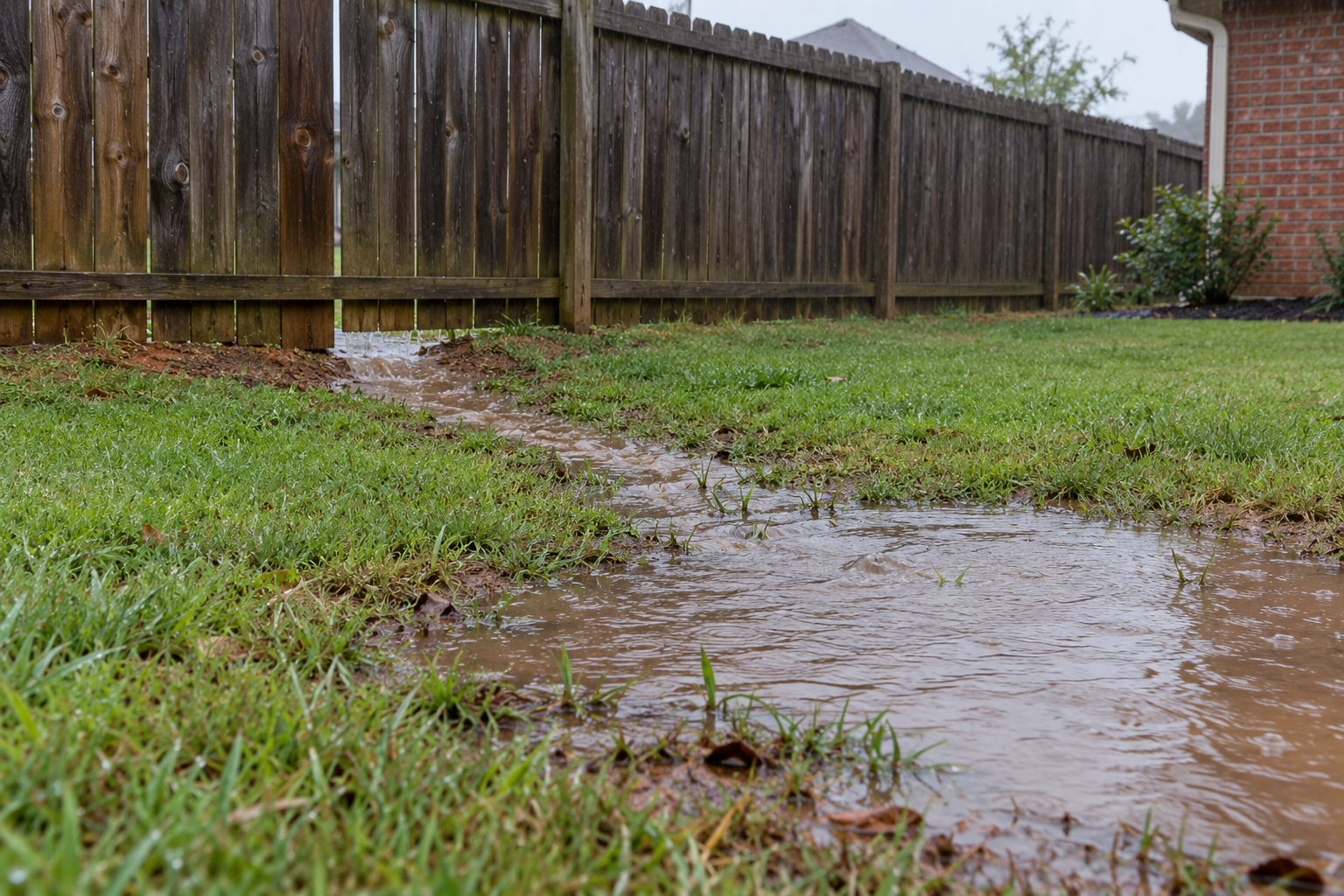
Your yard looks fine until it rains. Then water comes through the fence, flows down the side of your house, or collects across the backyard.
You can see where it’s coming from. What’s harder to figure out is how to stop it from taking over your property.
Runoff from neighboring ground can be a frustrating drainage problem. The right solution starts with understanding the water’s path, the elevations across your yard, and where that water can safely discharge.
At Drainage Solutions, we evaluate those conditions before recommending a system. Here’s what homeowners in Memphis and North Mississippi should know.
Why water flows into your yard
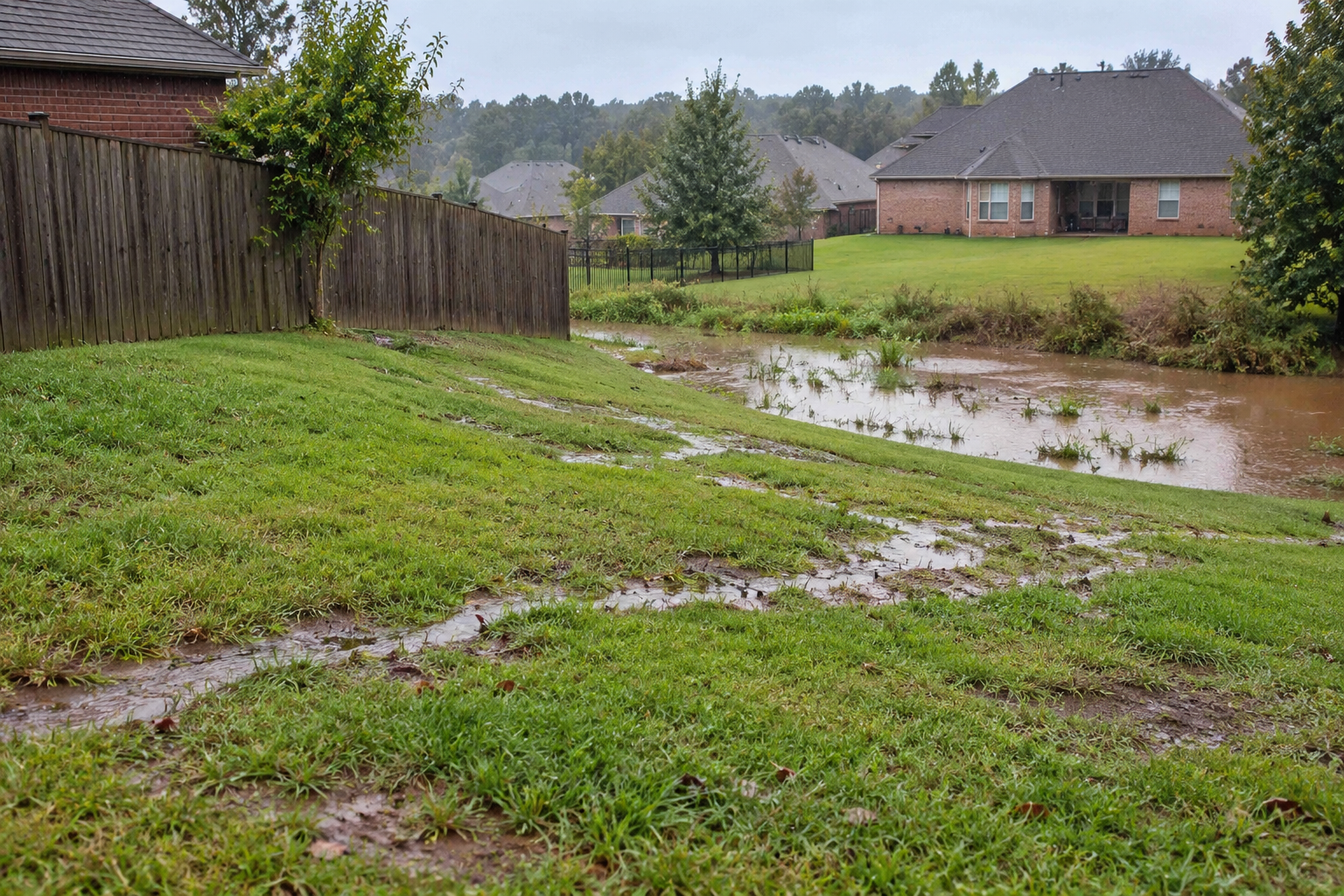
Water follows the slope of the ground. If your property sits below nearby land, it may receive runoff during rain—even when your own gutters and downspouts are working correctly.
Several conditions can contribute:
Higher ground behind or beside your home
Downspouts discharging near a property line
Driveways or patios directing runoff toward your yard
Low areas along fences
Changes to landscaping or grading
An existing drainage path that has become blocked
The source matters. A concentrated stream from a downspout requires a different approach than water spreading across the entire back of a sloped lot.
First, watch what happens during rain
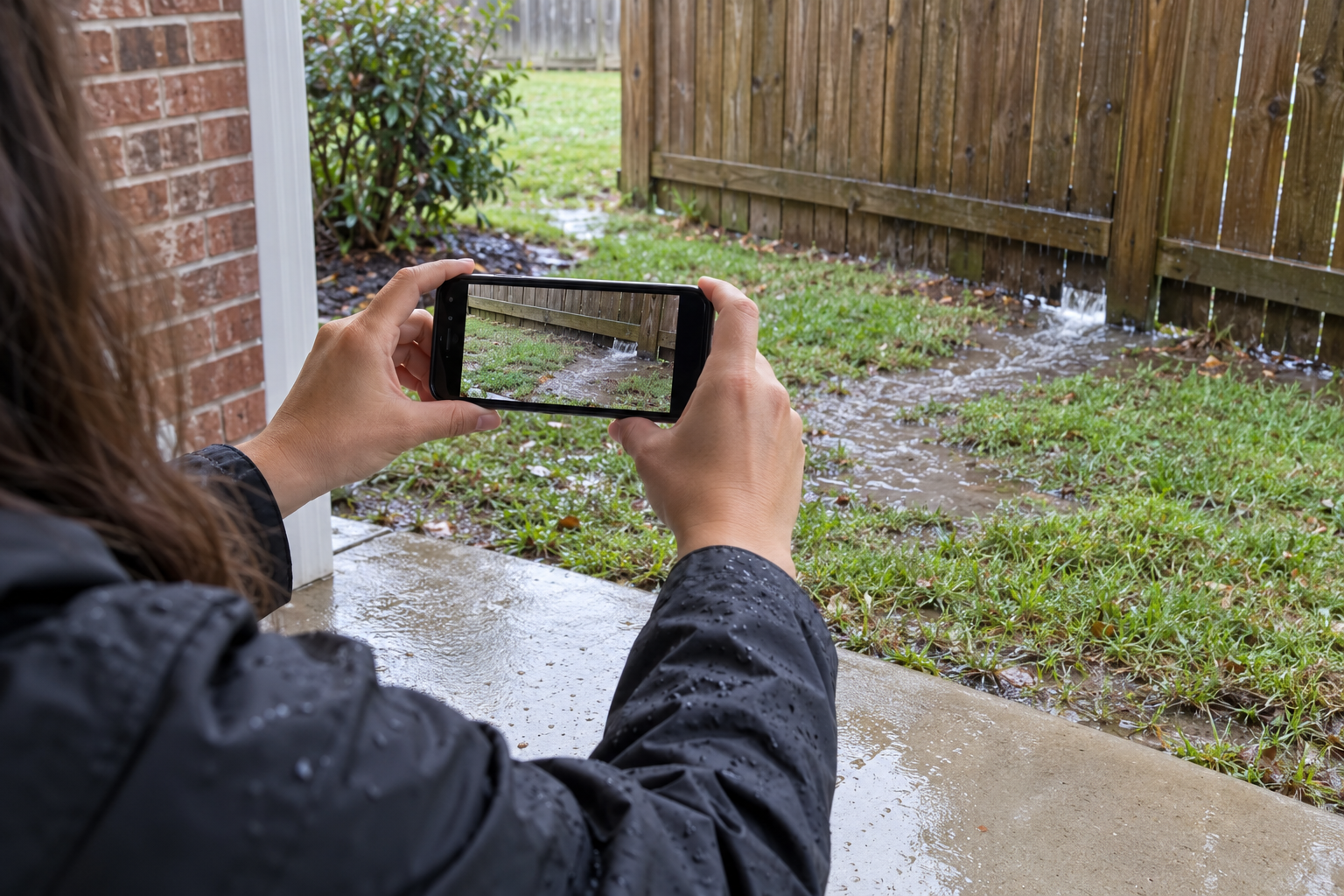
A dry-yard inspection is useful, but photos or video during a storm can reveal details that are easy to miss later.
From a safe location, capture:
Where water first enters your property
Whether it arrives as a stream or spreads across a wide area
The route it takes through your yard
Where it collects
Whether it reaches your house, garage, or crawlspace
Take another photo after the rain stops. That helps distinguish water passing through during a storm from areas that remain saturated afterward.
You don’t need to diagnose the problem yourself. You’re documenting what happens so the drainage evaluation starts with better information.
Can a swale redirect the runoff?
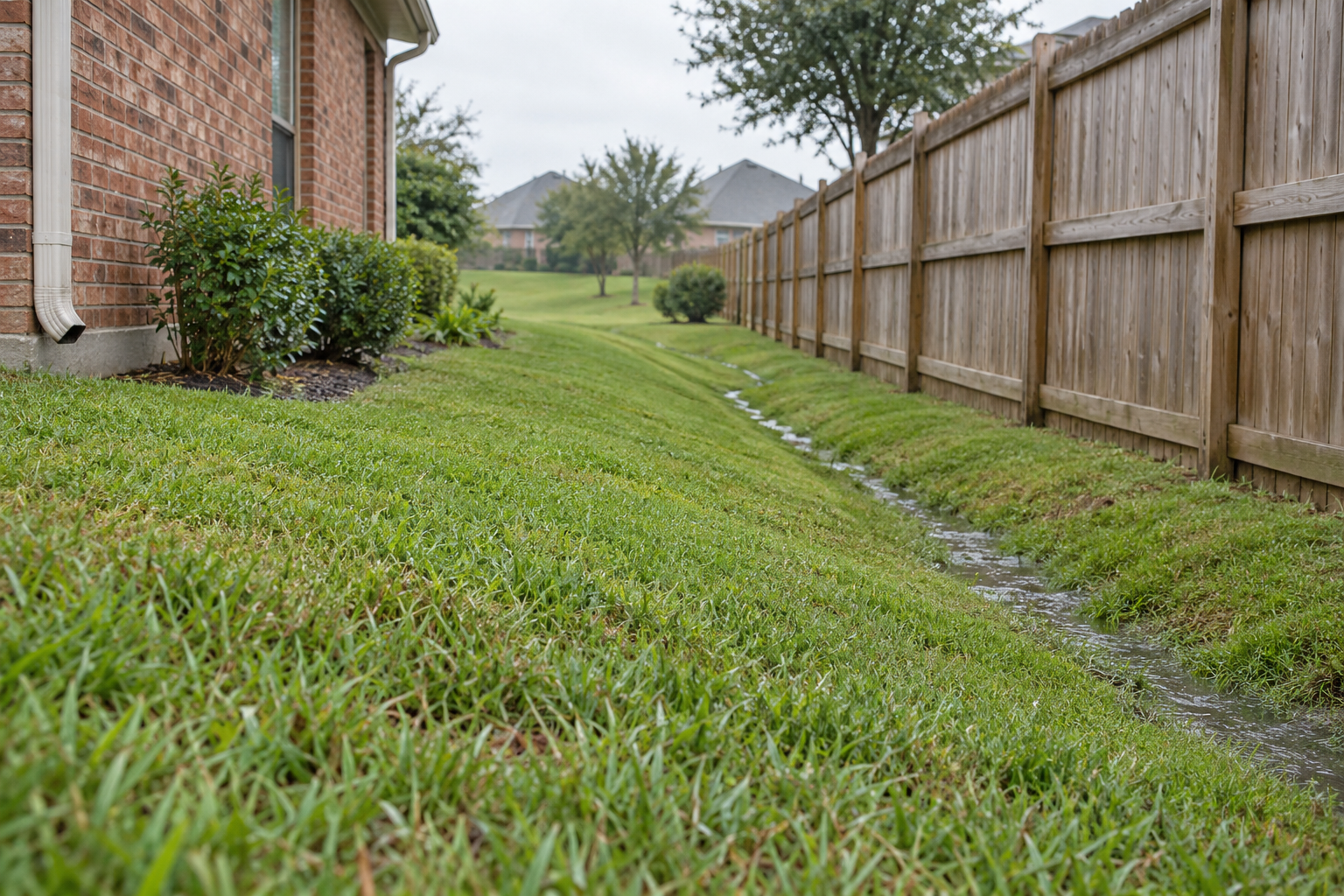
A swale is a broad, shallow channel shaped into the ground. It gives surface water a defined route through the property.
Where elevations and space allow, a swale may intercept incoming runoff and guide it around vulnerable areas.
The important part is the complete route. The water needs somewhere suitable to go, and the swale must avoid creating a new problem beside your home or on another property.
Simply digging a ditch along the fence is not a complete drainage plan.
When catch basins may help
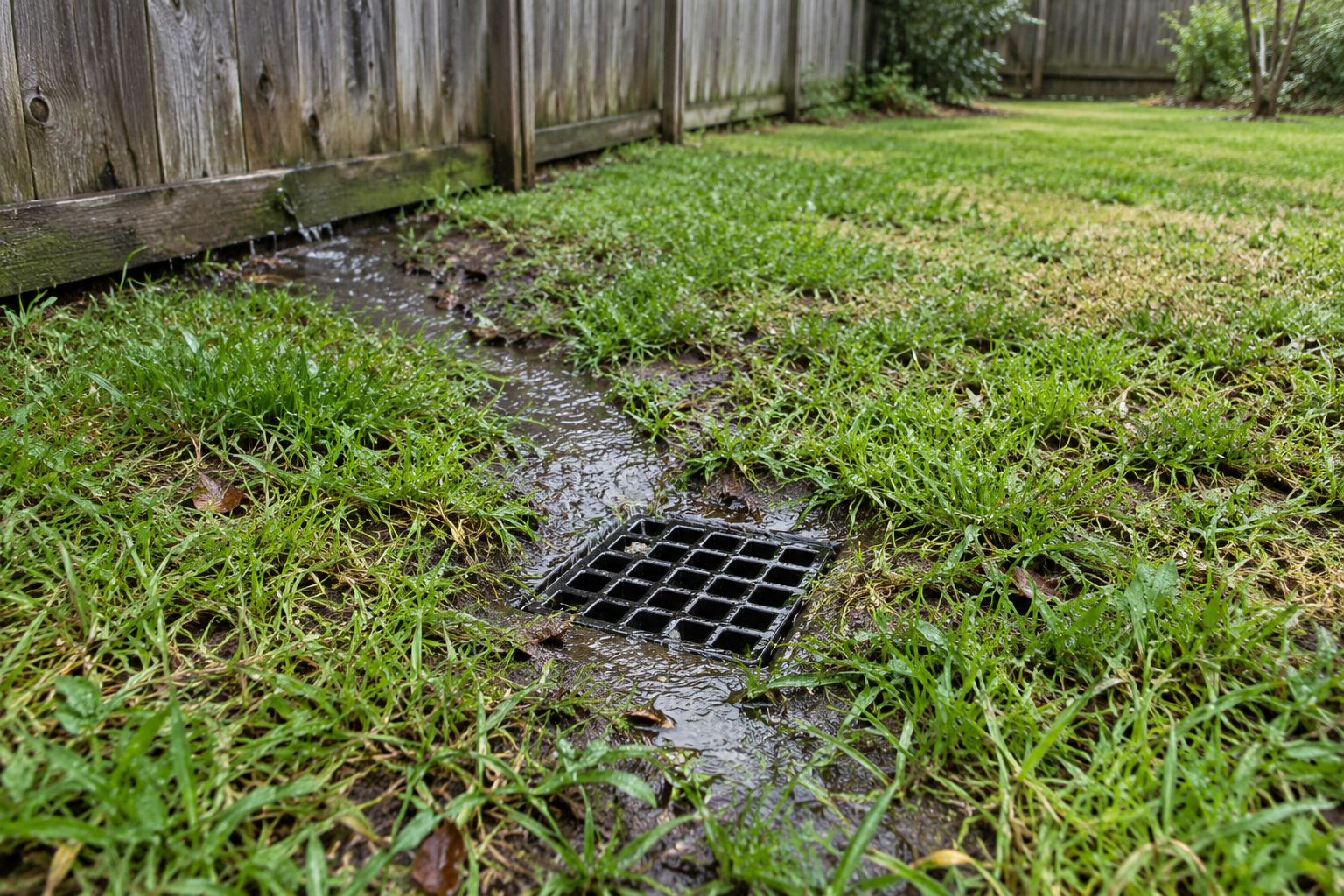
Catch basins collect surface water through a grate and carry it away through buried piping.
They may make sense where runoff collects in a predictable low spot or where a concentrated flow can be intercepted.
Placement, basin capacity, pipe sizing, and the outlet all affect how the system performs. A grate installed where water rarely reaches it will do little for the area that keeps flooding.
For runoff spread across a broad area, grading may be needed to direct water toward the collection points.
Would a French drain solve it?
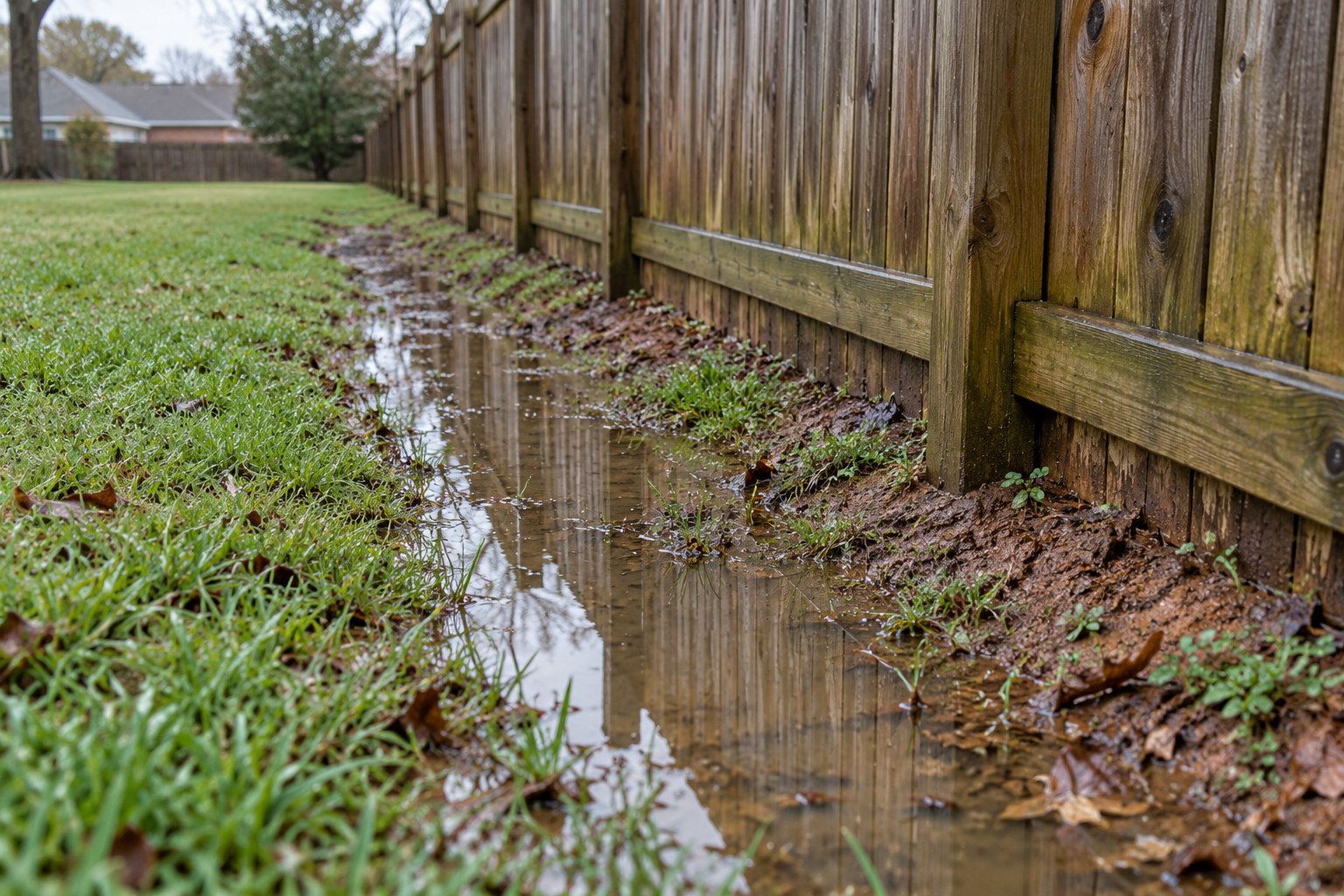
A French drain is designed to collect water moving through saturated soil.
It may help when incoming runoff leaves a strip of ground persistently wet or when water seeps through the soil along a slope.
However, a buried French drain alone may not capture a fast-moving stream crossing the surface. That situation can call for surface collection, grading, or a combination of systems.
The recommendation should match how the water actually reaches your yard.
Sometimes the best approach combines several fixes
One property might need a swale to guide runoff toward catch basins. Another might need a grading correction and a separate system for a persistently soggy area.
Your own roof runoff may also be contributing to the same low spot. Addressing that source can reduce the amount of water the yard drainage system must handle.
We look at the whole property because fixing one entry point may leave another water source untouched.
Be careful with barriers along the fence
It’s tempting to pile soil, add landscape edging, or build a barrier where the water comes through.
Before doing that, consider where the blocked water will go. A barrier can trap water beside your house or redirect it toward another vulnerable area.
Changes to runoff can also involve local requirements and property rights. Before altering drainage across a property boundary or using a public outlet, verify the applicable requirements with your municipality. Questions about responsibility for a neighbor’s runoff require advice specific to the situation.
What a drainage evaluation should answer
Before approving work, you should understand:
Where is the incoming water coming from?
The contractor should identify the observed flow and any other sources contributing to the problem.
How will the proposed system collect or redirect it?
The recommendation should explain why the selected drains, basins, or grading suit your yard.
Where will the water discharge?
The outlet needs to be suitable for the property and the proposed system.
What will installation and restoration involve?
You should know the access requirements, disturbed areas, and what is included in the written price.
Get a plan for the water crossing your property
If runoff from next door keeps leaving your yard muddy, unusable, or wet beside the house, we can evaluate the flow and explain your options.
Drainage Solutions LLC has specialized in drainage since 2017. We serve Memphis, Collierville, Germantown, Bartlett, Southaven, Olive Branch, Hernando, Byhalia, and surrounding communities.
You work directly with experienced installers who evaluate the property and are responsible for the proposed solution.
Take a photo or short video of where the water enters your yard, then request a drainage evaluation. We’ll assess its path and recommend a solution suited to your property.