Why Is Water Coming Into My Garage When It Rains? Causes & Permanent Solutions
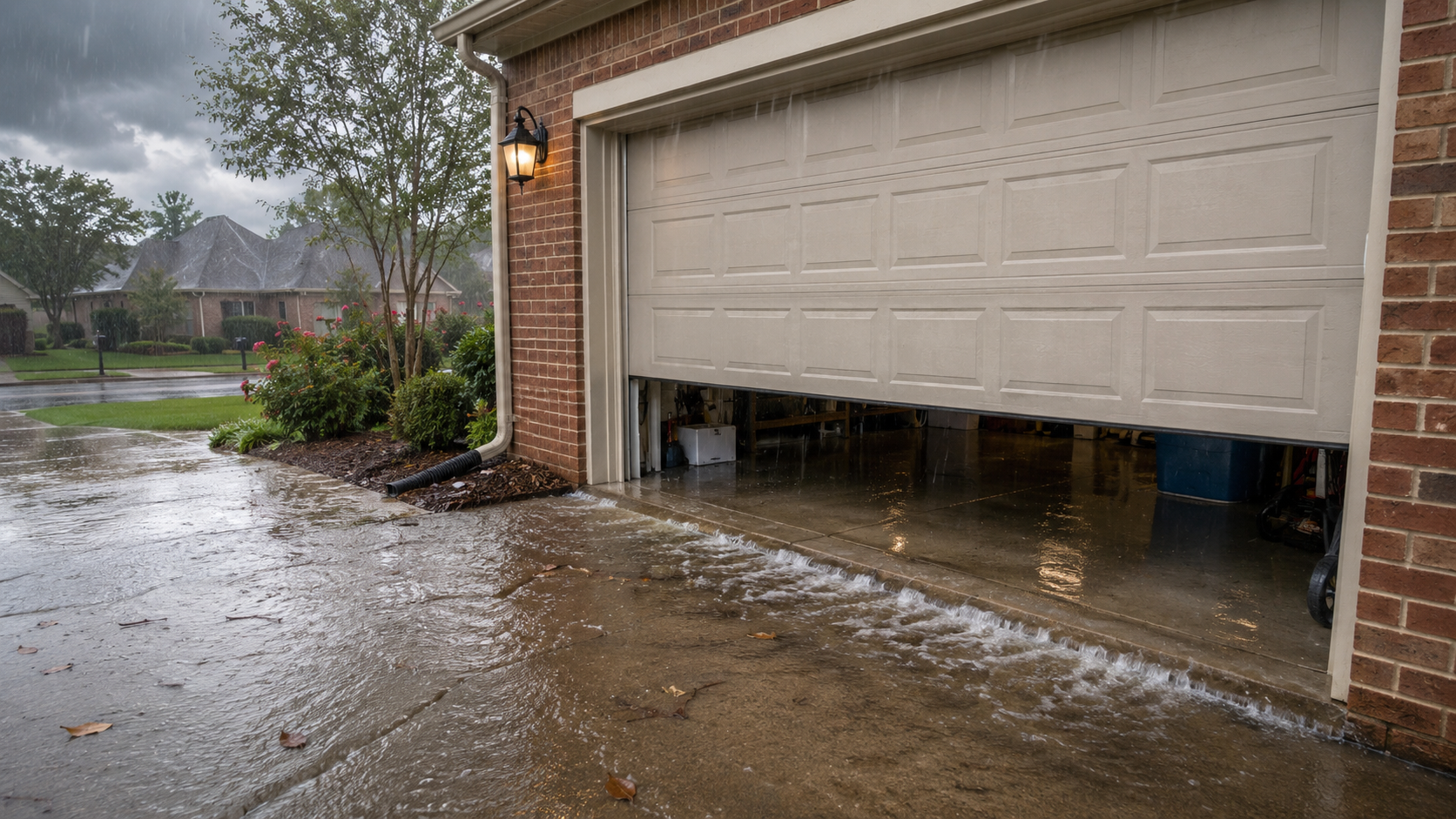
Nothing is more frustrating than opening your garage after a heavy rain and finding water on the floor.
Maybe it's just a small puddle today. Maybe you've started keeping towels by the garage door every time storms are in the forecast. Either way, water coming into your garage is a warning sign that something outside your home isn't draining correctly.
For homeowners throughout Memphis, Germantown, Collierville, Bartlett, Arlington, Lakeland, Southaven, Olive Branch, Hernando, Byhalia, and the surrounding Mid-South, garage flooding is one of the most common drainage problems we see.
The good news? It can usually be solved permanently once the source of the water is identified.
Why Is Water Coming Into My Garage?
Your garage isn't supposed to be waterproof.
Instead, your property should be designed so rainwater never reaches the garage door in the first place.
When water consistently enters your garage, it's almost always because your yard, driveway, gutters, or drainage system is directing water toward your home instead of safely away from it.
In many cases, the garage simply happens to be the lowest point where all the water collects.
7 Common Reasons Water Is Getting Into Your Garage
1. Your Driveway Slopes Toward the Garage
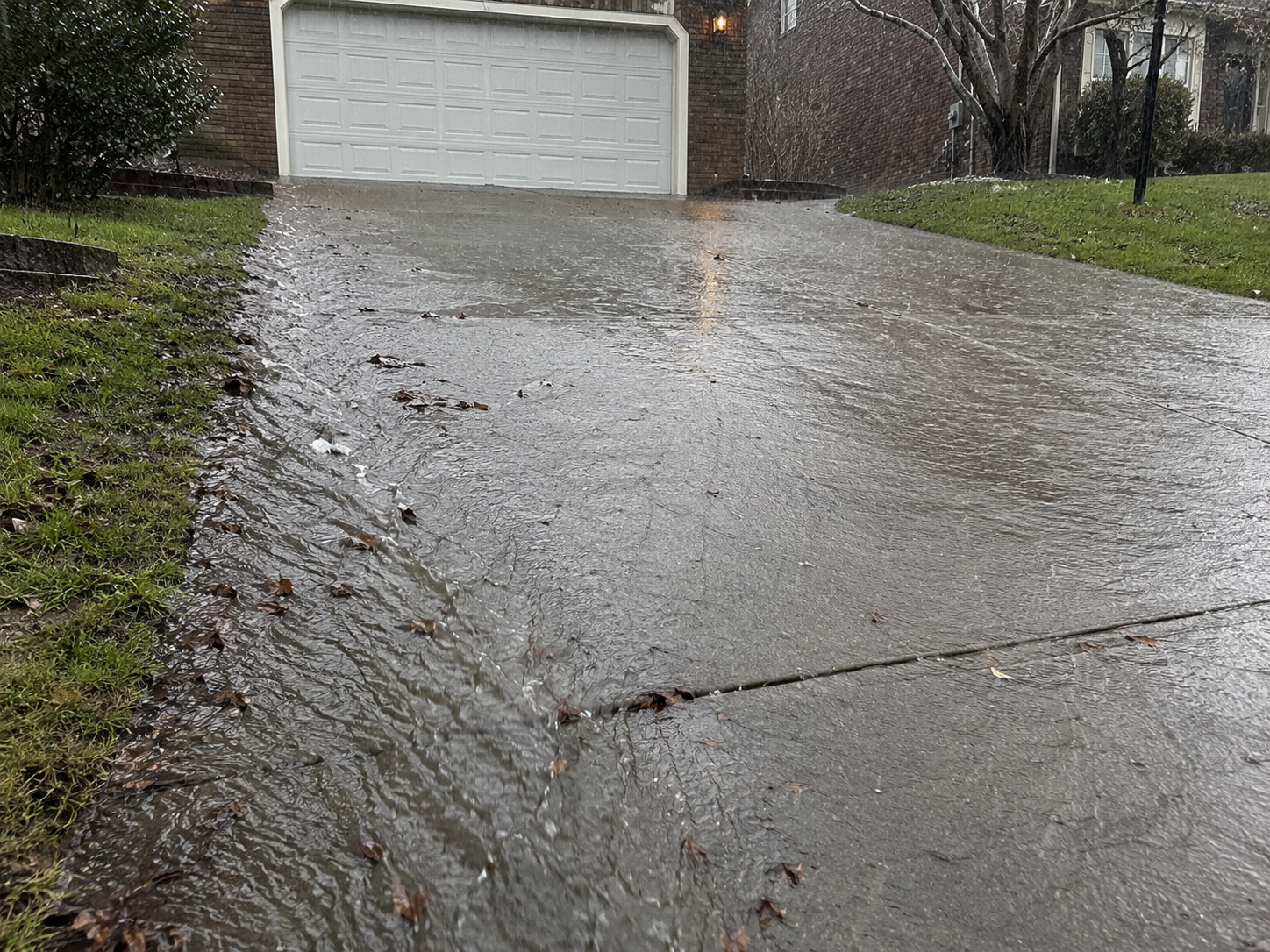
One of the biggest causes of garage flooding is improper driveway slope.
During heavy rain, your driveway becomes a channel that funnels water directly to the garage door. If the water has nowhere else to go, it eventually finds its way underneath the door.
Signs of this problem:
Water running down the driveway toward the garage
Puddles forming directly in front of the garage door
Garage flooding only during heavy rain
2. Poor Yard Grading
Your yard should slope away from your home—not toward it.
Unfortunately, many homes in Memphis have grading issues caused by:
Builder grading mistakes
Settling soil
Landscaping changes
Years of erosion
Even a slight slope toward your garage can send hundreds of gallons of water in the wrong direction during a storm.
3. Downspouts Are Dumping Too Much Water Near the Garage
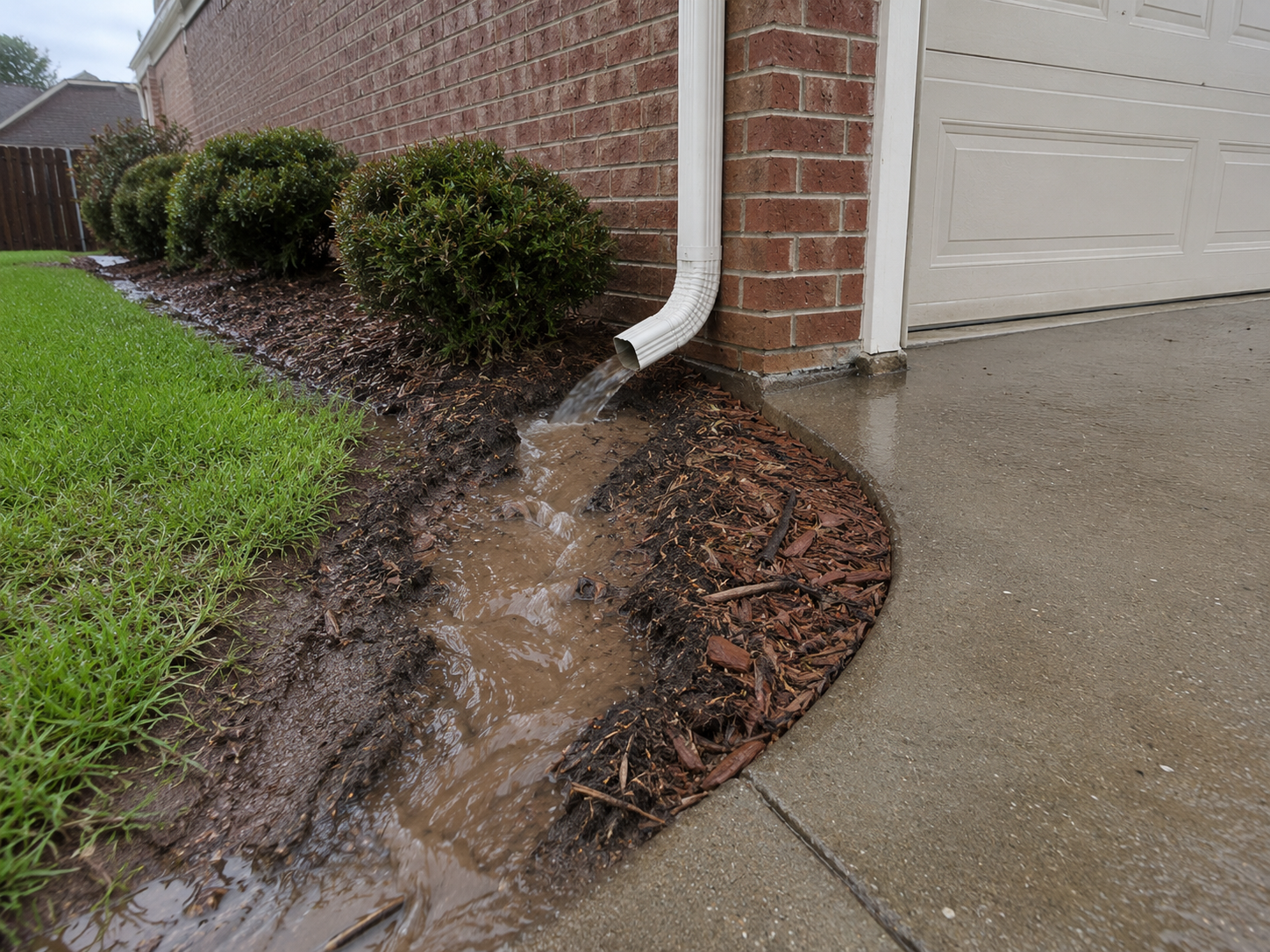
Many homeowners don't realize how much water their roof produces.
A single thunderstorm can send thousands of gallons of water through your gutters.
If that water exits only a few feet from the garage, it quickly saturates the soil and begins flowing toward your foundation and garage entrance.
Watch for:
Downspouts ending beside the garage
Washed-out mulch
Erosion near gutter outlets
Constantly wet flower beds
4. Memphis Clay Soil Doesn't Drain Well
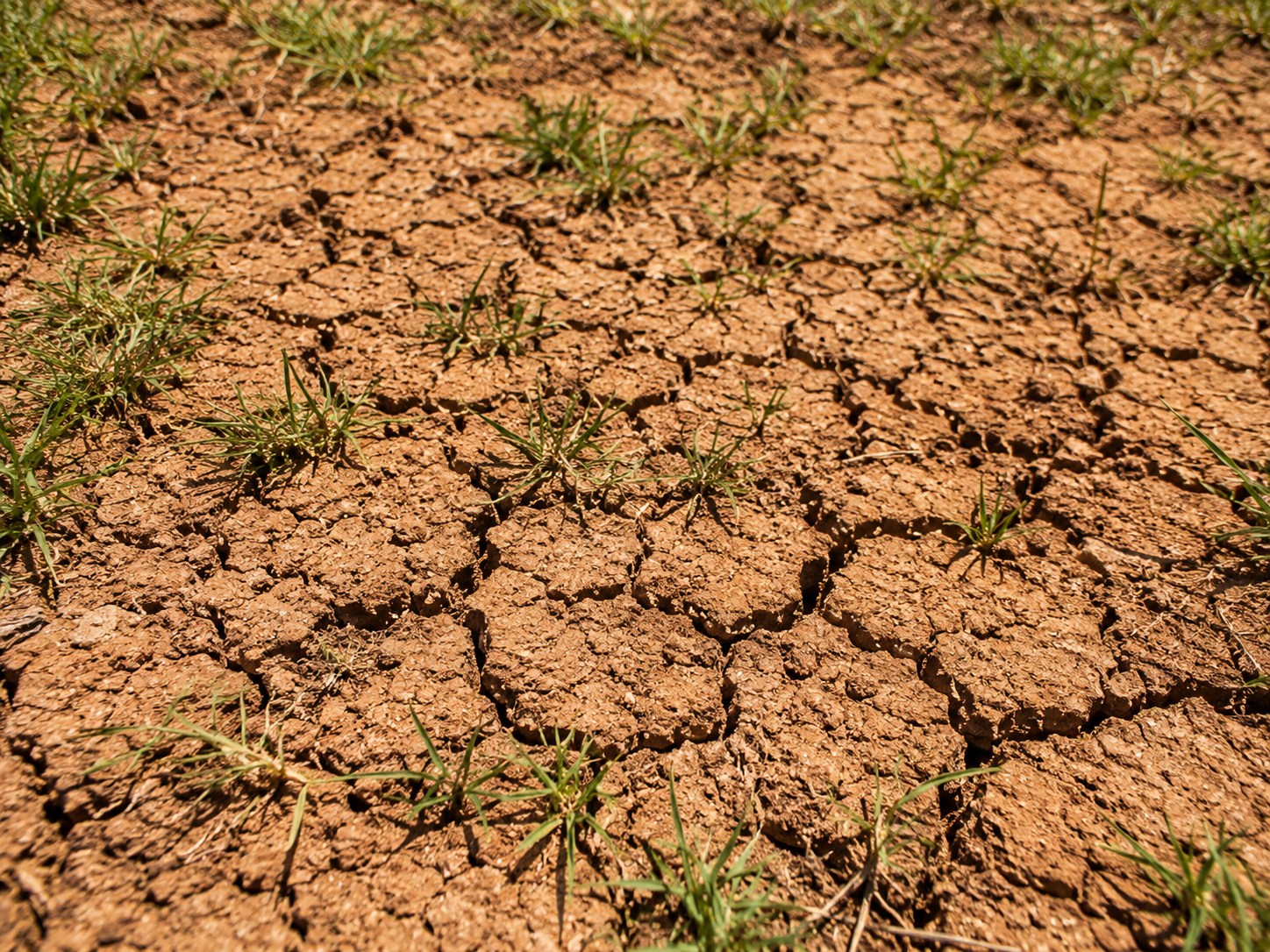
The Mid-South is known for heavy clay soil.
Unlike sandy soil, clay absorbs water slowly.
After long periods of hot weather, the soil becomes hard and compacted. When the next heavy rain arrives, much of the water runs across the surface instead of soaking into the ground.
This is one reason homeowners often notice garage flooding after summer storms.
5. Low Spots Around the Garage
Over time, yards naturally settle.
Small depressions begin collecting water.
As those puddles grow larger, they eventually overflow and travel toward the garage.
If you notice standing water near your driveway for more than 24 hours after rain, it's a sign your drainage system isn't working properly.
6. Clogged or Missing Drainage
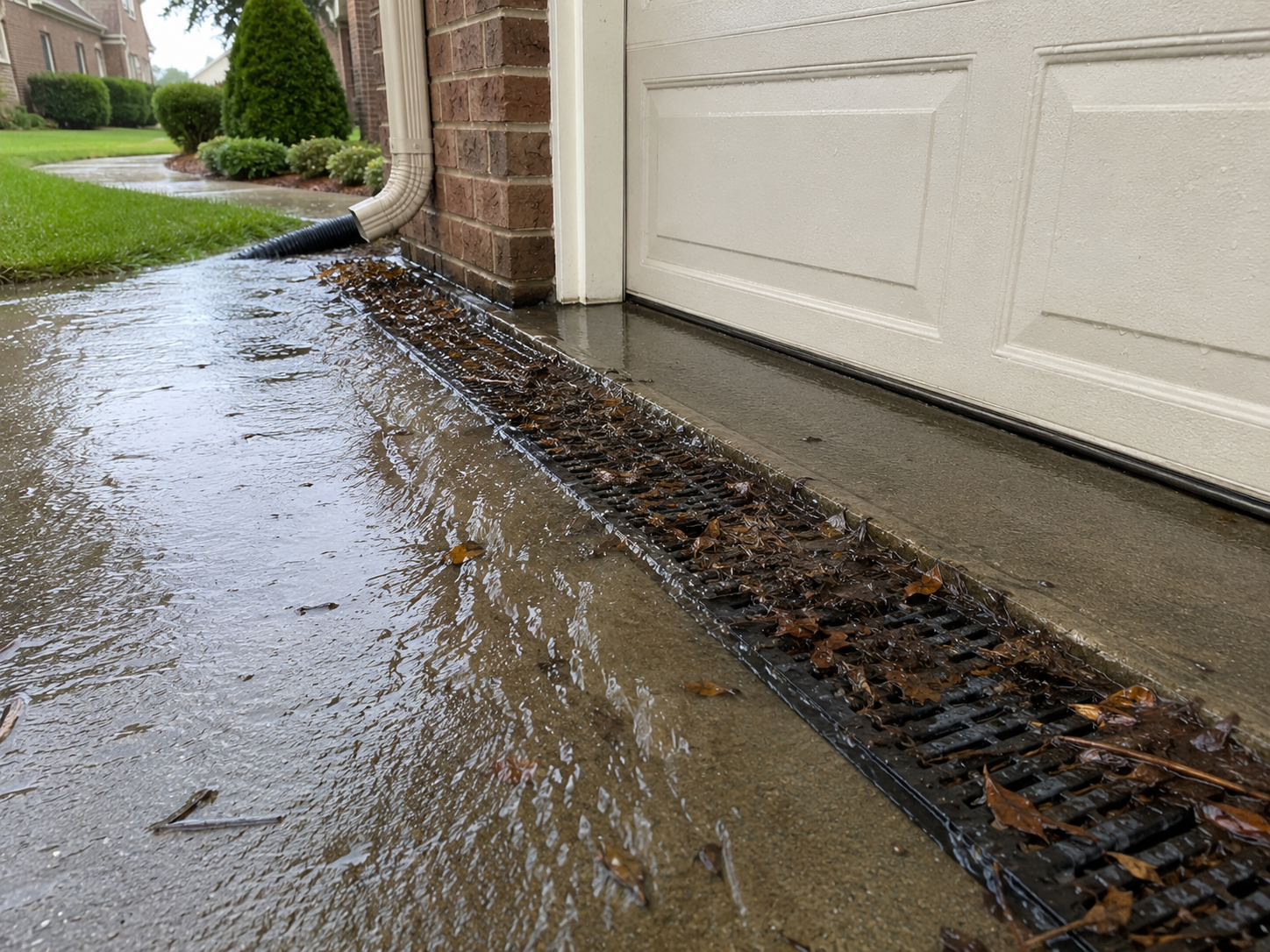
Some homes already have drainage systems—but they stop working because they're clogged with:
Leaves
Mud
Tree roots
Debris
Other homes simply never had proper drainage installed.
Without catch basins, channel drains, or underground drainage pipes, stormwater has nowhere to go except toward your garage.
7. Temporary Repairs Are Hiding the Real Problem
Many homeowners try to stop garage flooding by using:
Towels
Sandbags
Foam weather stripping
Extra caulk
Bags of gravel
Corrugated black pipe
These fixes might reduce water temporarily.
But they don't solve why water is reaching your garage in the first place.
Why Temporary Fixes Usually Fail
Water always follows the path of least resistance.
If your property is directing water toward your garage, sealing the garage door won't stop thousands of gallons of stormwater.
Instead, the water needs to be intercepted and redirected before it ever reaches your home.
That's why so many DIY drainage projects only work for one or two storms before the problem comes back.
What Happens If You Ignore Garage Flooding?
Water entering your garage isn't just inconvenient.
Over time it can cause:
Mold and mildew
Musty odors
Damaged drywall
Rusted tools and equipment
Ruined storage boxes
Concrete staining
Increased moisture around your foundation
Expensive structural repairs
The longer the problem continues, the more expensive it often becomes.
Permanent Drainage Solutions
Every property is different, which is why there isn't one solution that works for every home.
After evaluating your property, we may recommend one or more of the following.
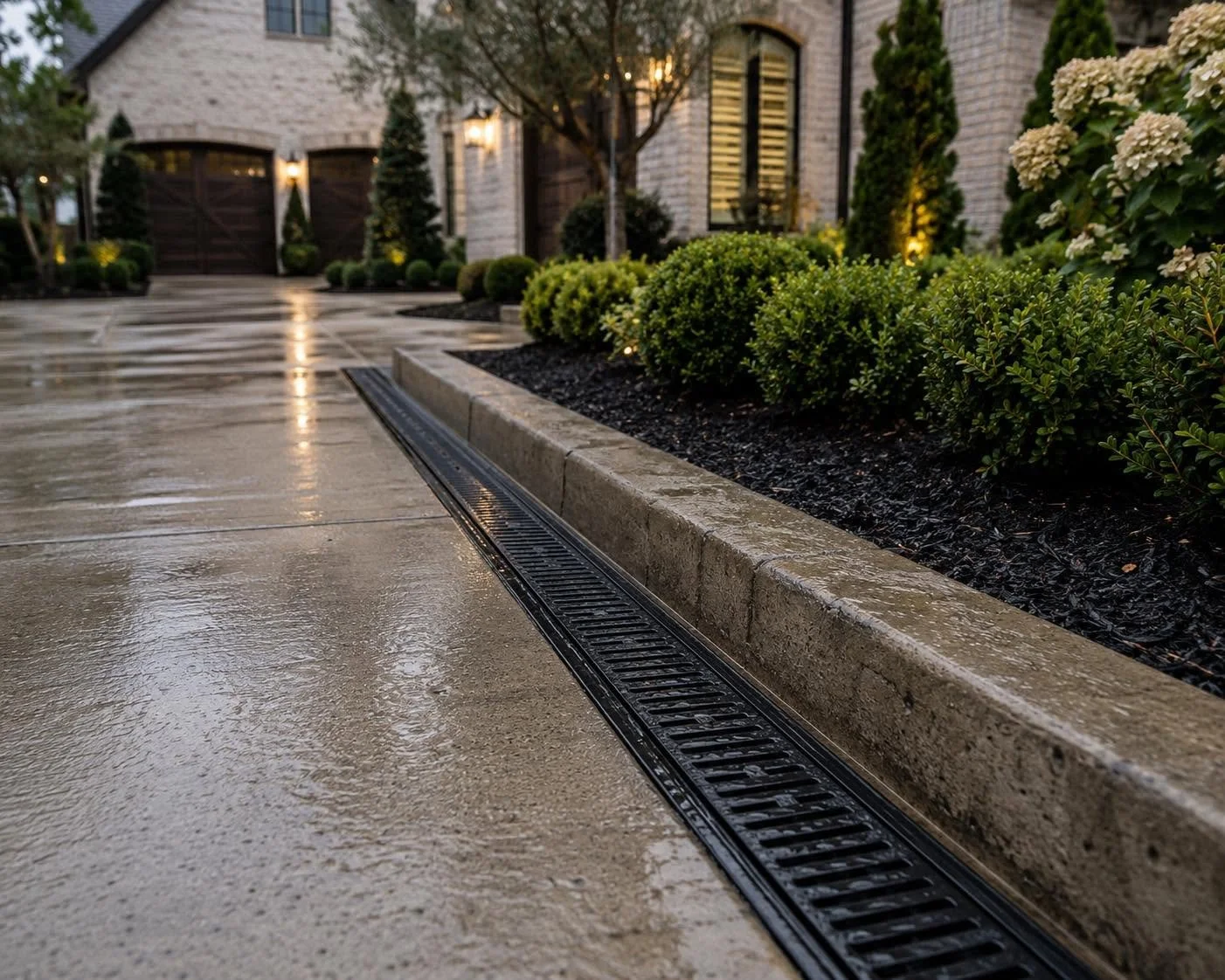
Channel Drains
Installed across the garage entrance, channel drains collect water before it reaches the garage door and direct it into underground drainage piping.
They're ideal when water is flowing down a driveway.
French Drains
French drains collect groundwater and surface runoff before it reaches your garage or foundation.
They're one of the most effective solutions for properties with recurring drainage problems.
Catch Basins
Catch basins collect large amounts of surface water and move it safely through underground piping.
They're especially useful where water naturally collects in low areas.
Underground Downspout Extensions
Instead of allowing roof water to dump beside your home, underground drainage carries it safely away from your garage and foundation.
Yard Grading
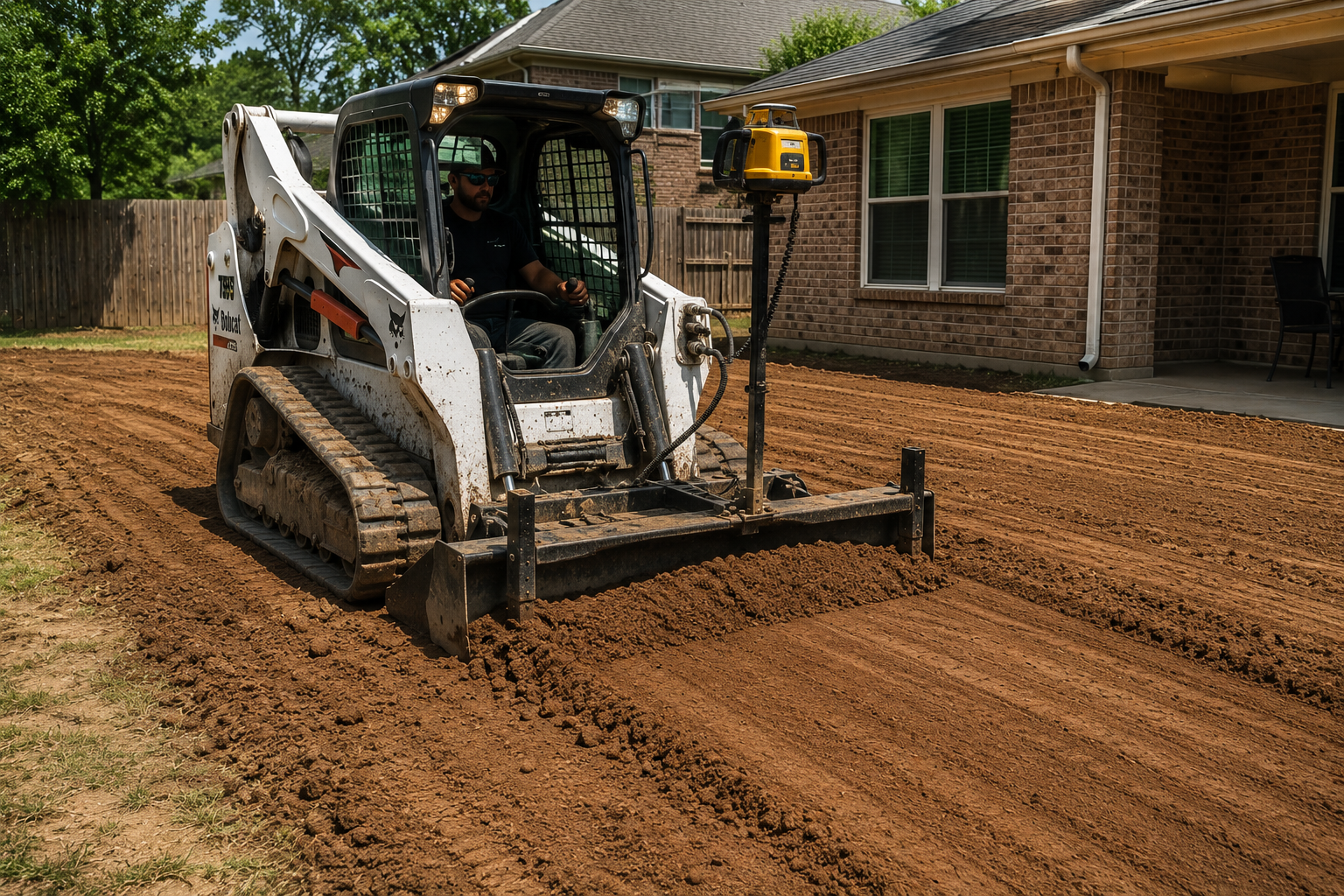
Sometimes the best solution is simply correcting the slope of the yard.
Proper grading ensures rainwater flows away from your home instead of toward it.
Why Homeowners Trust Drainage Solutions LLC
At Drainage Solutions LLC, drainage isn't just another service we offer.
It's our specialty.
We don't believe in guessing or installing the same system on every property.
Instead, we evaluate how water moves across your lot and design a drainage solution specifically for your home.
Our systems are built using professional-grade materials designed to provide long-term performance—not temporary relief.
Areas We Serve
We proudly serve homeowners throughout:
Memphis, TN
Germantown
Collierville
Bartlett
Arlington
Lakeland
Millington
Southaven, MS
Olive Branch
Hernando
Byhalia
DeSoto County
Shelby County
Schedule Your Drainage Evaluation
If water is coming into your garage every time it rains, don't wait until the next storm causes more damage.
A properly designed drainage system can protect your garage, foundation, landscaping, and home for years to come.
Contact Drainage Solutions LLC today to schedule your professional drainage evaluation and discover the permanent solution for your property.
Frequently Asked Questions
Can a garage door seal stop flooding?
A new bottom seal can help with light wind-driven rain, but it won't stop water flowing toward the garage. The drainage issue outside must still be corrected.
Is garage flooding covered by homeowners insurance?
It depends on your policy and the cause of the water intrusion. Most policies have limitations for flooding or recurring drainage issues, so it's important to review your coverage.
Should I install a French drain or a channel drain?
It depends on how the water reaches your garage. Driveway runoff often requires a channel drain, while water moving through the yard or soil may call for a French drain. Some homes need both.
How do I know if my yard has a grading problem?
Signs include standing water after rain, erosion, water flowing toward your home, soggy grass, or mulch washing away after storms.
How much does it cost to fix garage drainage?
The cost depends on your property's layout, the source of the water, and the drainage system required. A professional drainage evaluation is the best way to determine the right solution and provide an accurate estimate.