Why Your Yard Floods Worse After a Heat Wave (The Clay Soil Effect in Memphis)
If you've lived in the Memphis area long enough, you've probably noticed something strange.
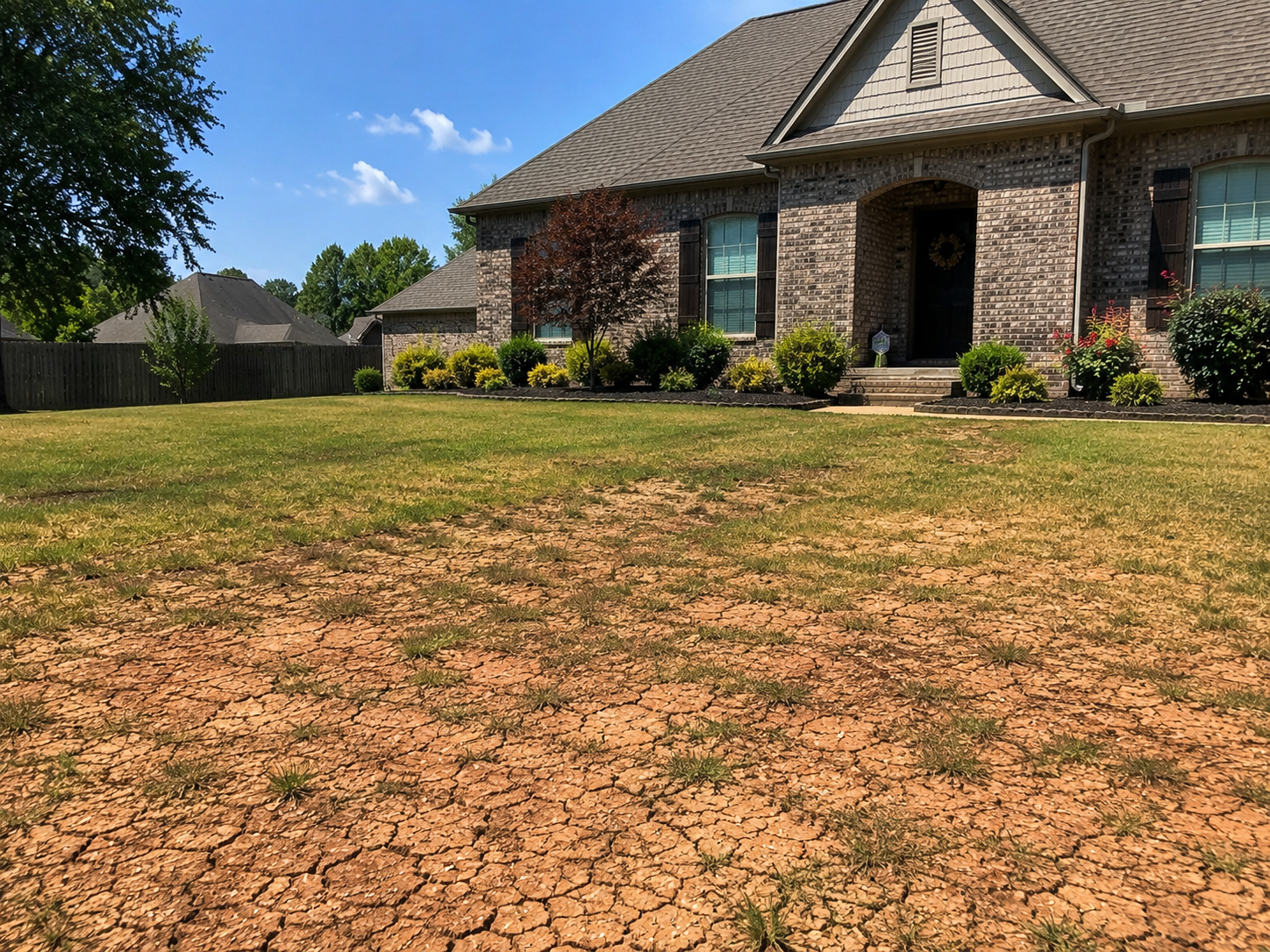
After weeks of hot, dry weather, the first heavy rain doesn't always soak into the ground. Instead, water suddenly starts pooling in the yard, running toward the house, or sitting around your foundation.
Many homeowners assume something has changed overnight.
In reality, it's often the result of how our Mid-South clay soil responds to extreme heat.
Why Does This Happen?
Most properties throughout Memphis, Germantown, Collierville, Bartlett, Arlington, Southaven, Olive Branch, Hernando, and surrounding communities are built on clay-heavy soil.
Unlike sandy soil, clay behaves very differently throughout the year.
During extended periods of hot weather:
The ground dries out.
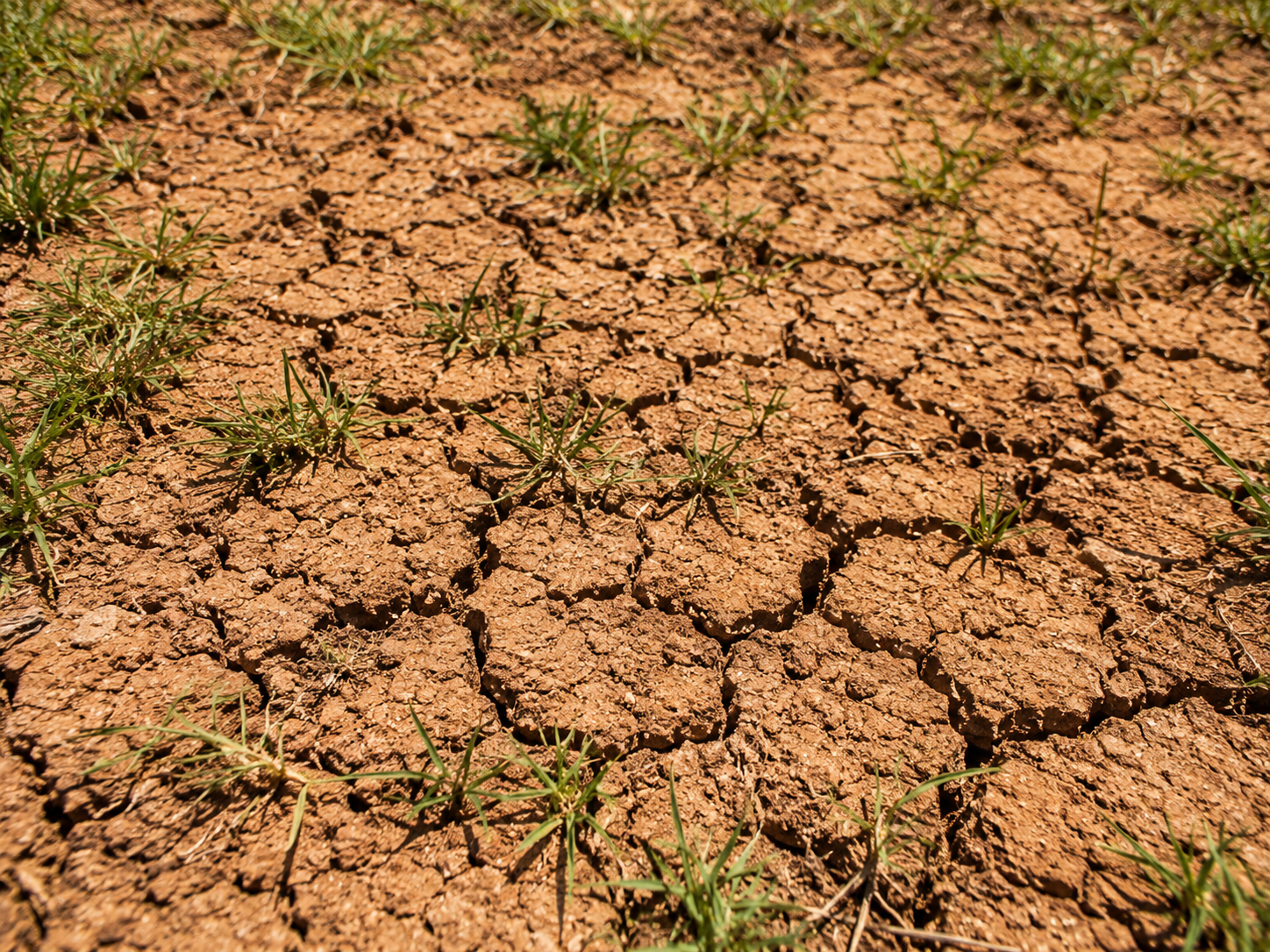
Clay soil shrinks and becomes extremely hard.
Small cracks can develop throughout the yard.
Water has a much harder time soaking into the surface.
When the next thunderstorm arrives, the ground often can't absorb rainfall quickly enough.
Instead of soaking in, water begins flowing across the surface, collecting in low areas and exposing drainage problems that may have gone unnoticed earlier in the season.
Signs Your Property Is Affected
You may notice:
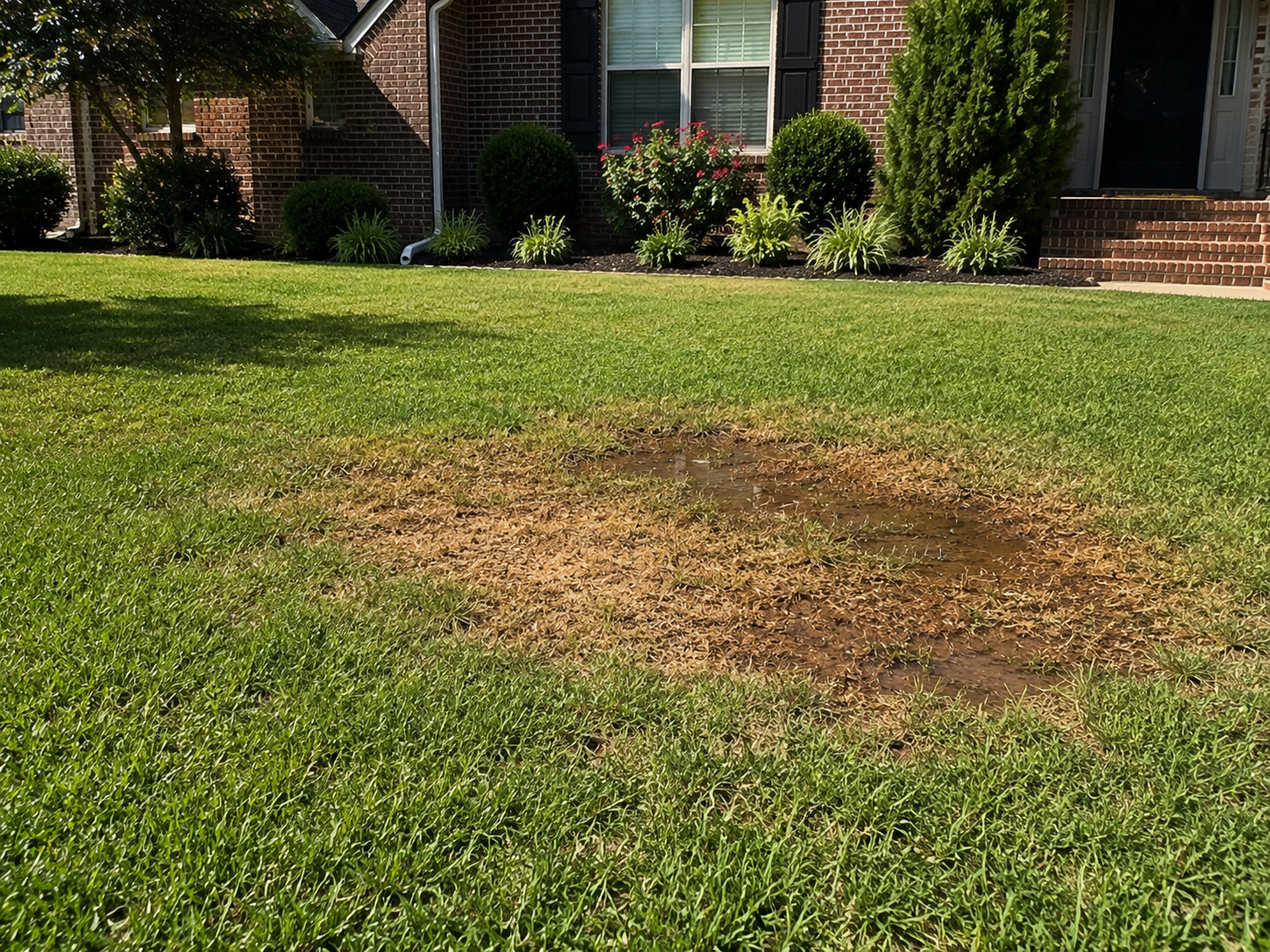
Standing water that remains for days after rain
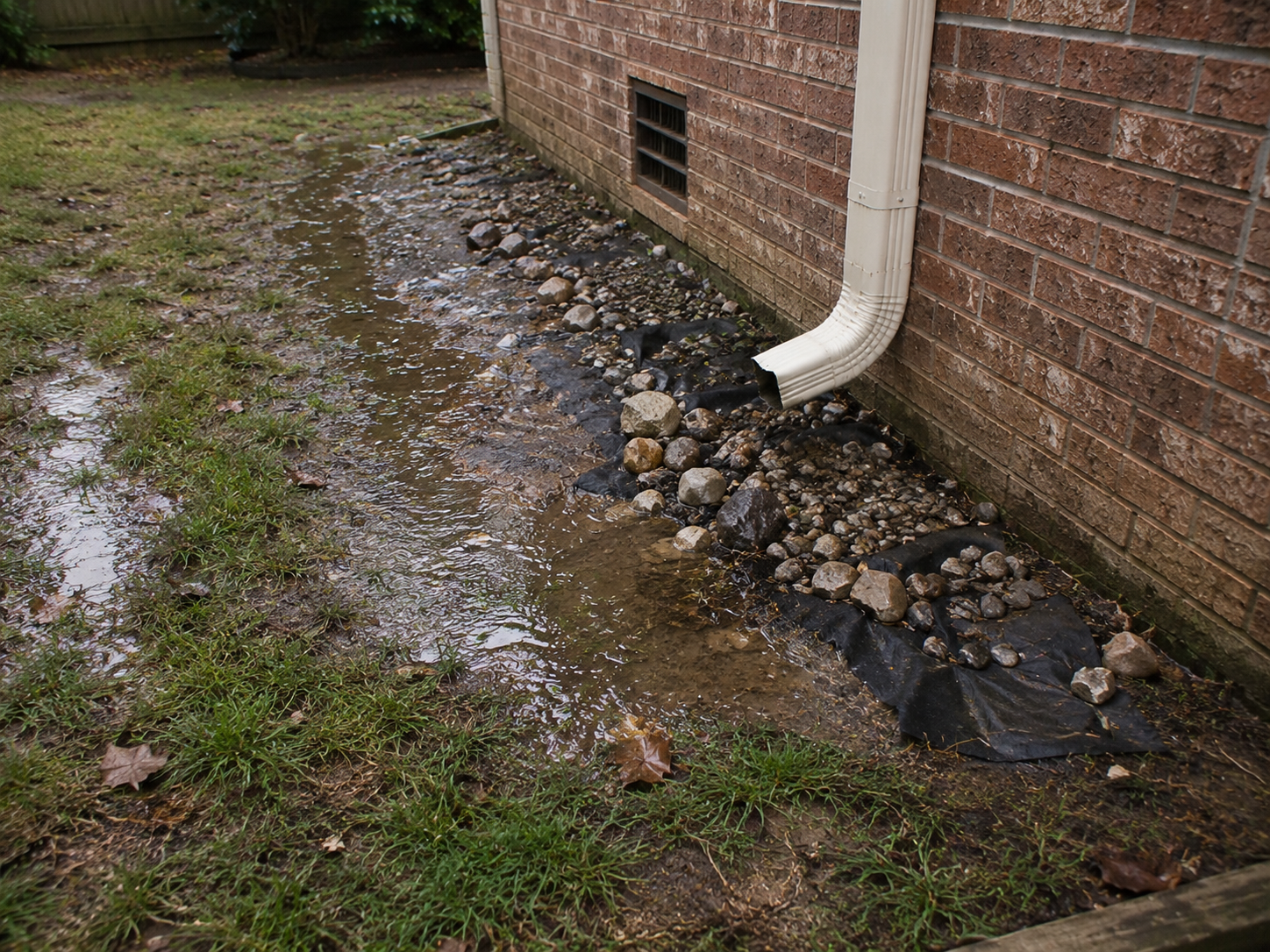
Water flowing toward your home's foundation
Muddy areas where grass won't grow
Mosquitoes becoming more common
Mulch washing out of flower beds
Water collecting around patios, sidewalks, or driveways
Crawlspace moisture after heavy storms
These are all signs that your property's drainage system isn't keeping up with the amount of runoff being created.
Why Temporary Fixes Usually Don't Work
Many homeowners try to solve the problem with:
Adding more topsoil
Filling low spots every year
Extending a single downspout
Digging shallow trenches
Installing corrugated pipe from a home improvement store
While these solutions may help temporarily, they rarely address why water is collecting in the first place.
Without proper grading and an engineered drainage plan, the problem usually returns with the next heavy rain.
The Long-Term Cost of Poor Drainage
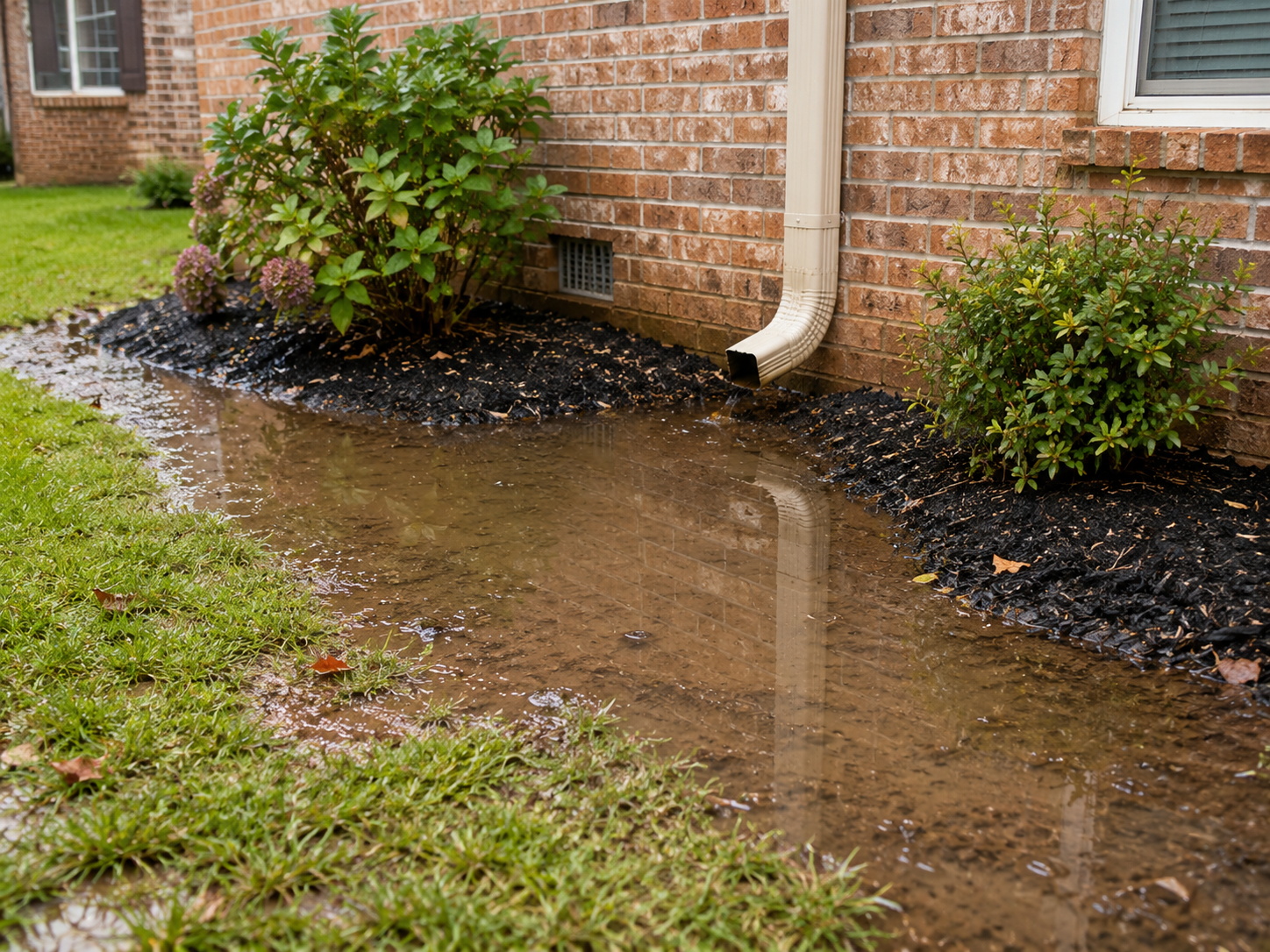
Standing water is more than an inconvenience.
Over time, it can contribute to:
Foundation settlement
Crawlspace moisture
Mold growth
Soil erosion
Dead or thinning grass
Landscape damage
Mosquito breeding areas
The sooner drainage issues are corrected, the easier—and often less expensive—they are to fix.
How We Solve It
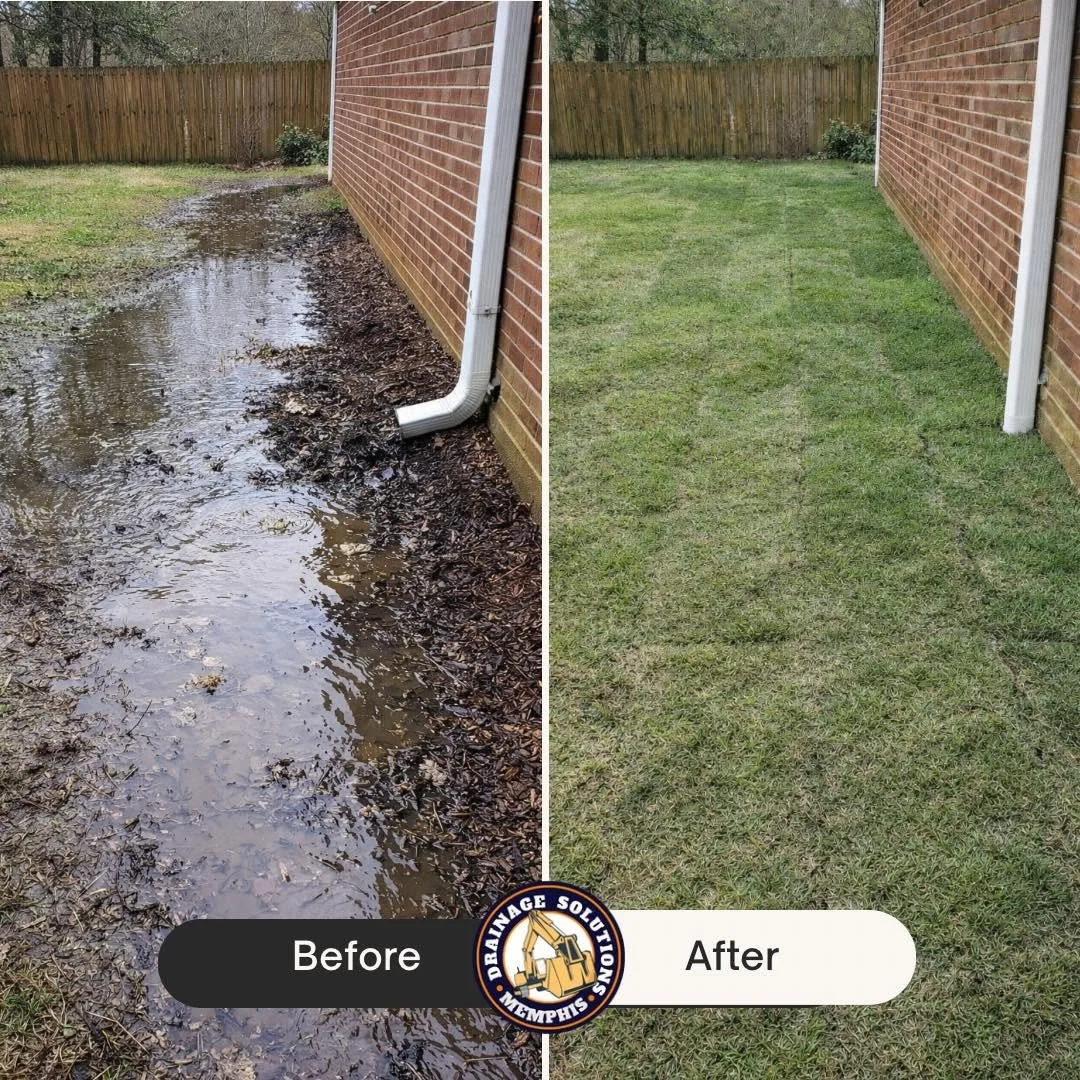
At Drainage Solutions LLC, every property begins with a drainage evaluation.
Rather than recommending the same solution for every yard, we identify where the water is coming from, where it's trying to go, and the best way to move it safely away from your home.
Depending on your property, solutions may include:
Our goal isn't simply to move water—it's to solve the drainage problem permanently.
Don't Wait Until the Next Storm
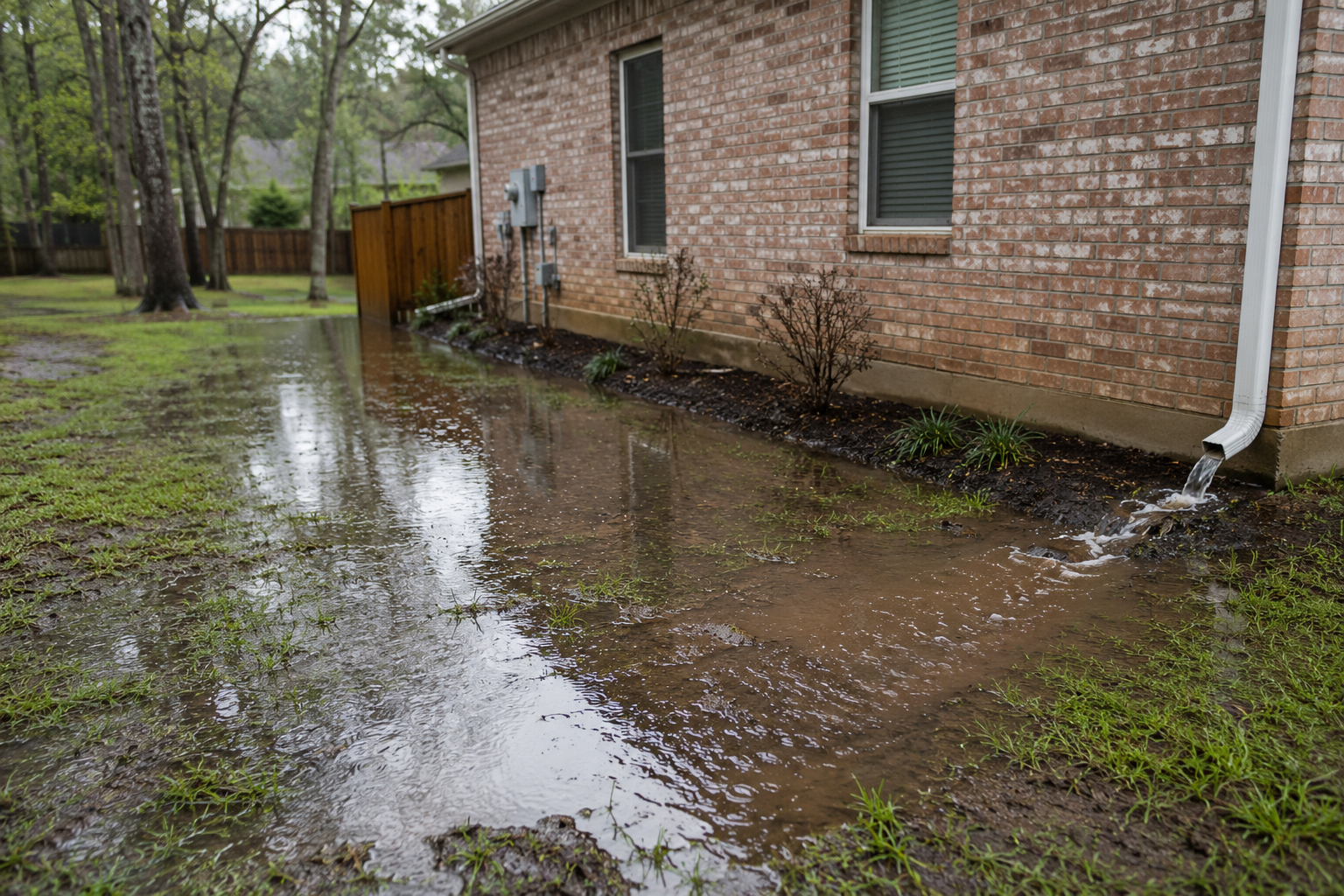
If your yard floods after every heavy rain, the best time to fix it is before the next one arrives.
Extreme summer heat often exposes drainage problems, but waiting until your yard is underwater limits your options and usually means living with the problem even longer.
A properly designed drainage system protects your home, your landscaping, and your investment year-round.
Schedule Your Drainage Evaluation
Drainage Solutions LLC proudly serves homeowners throughout Memphis, Germantown, Collierville, Bartlett, Arlington, Lakeland, Southaven, Olive Branch, Hernando, Byhalia, and the surrounding Mid-South.
If standing water keeps coming back after every storm, we'll identify the cause and recommend a permanent solution that fits your property.
Contact us today to schedule your drainage evaluation before the next heavy rain.