Your Fall Home Checklist Should Include the Crawlspace
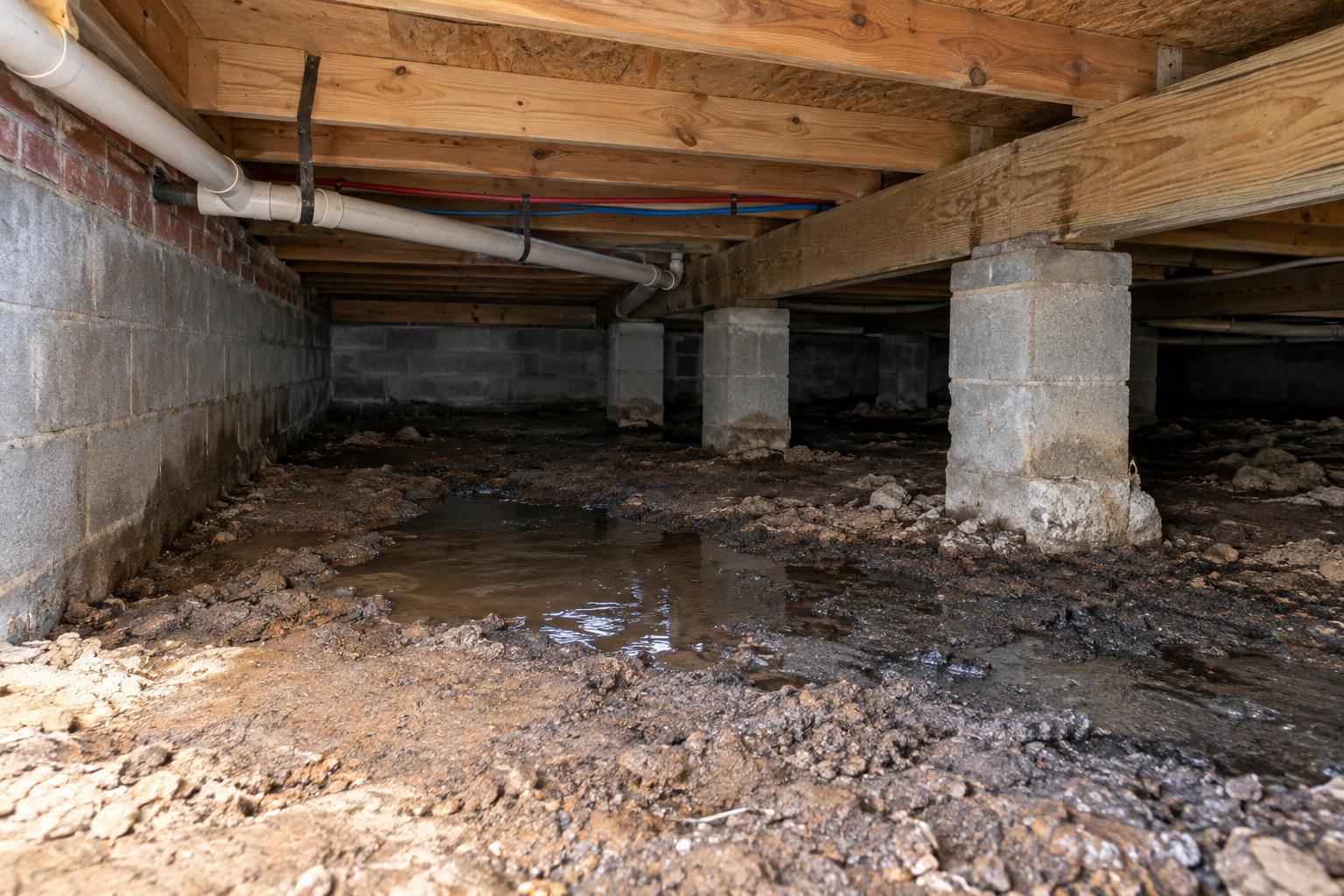
You’ve cleaned the gutters, picked up the leaves, and started getting the house ready for cooler weather. But when was the last time someone checked underneath it?
A crawlspace can hold moisture without leaving an obvious puddle in the yard. Fall is a useful time to find out what’s happening below your floors—especially after rain.
At Drainage Solutions LLC, we evaluate crawlspace water and moisture problems across Memphis and North Mississippi. Here’s what deserves a closer look.
Start With What Happens After Rain
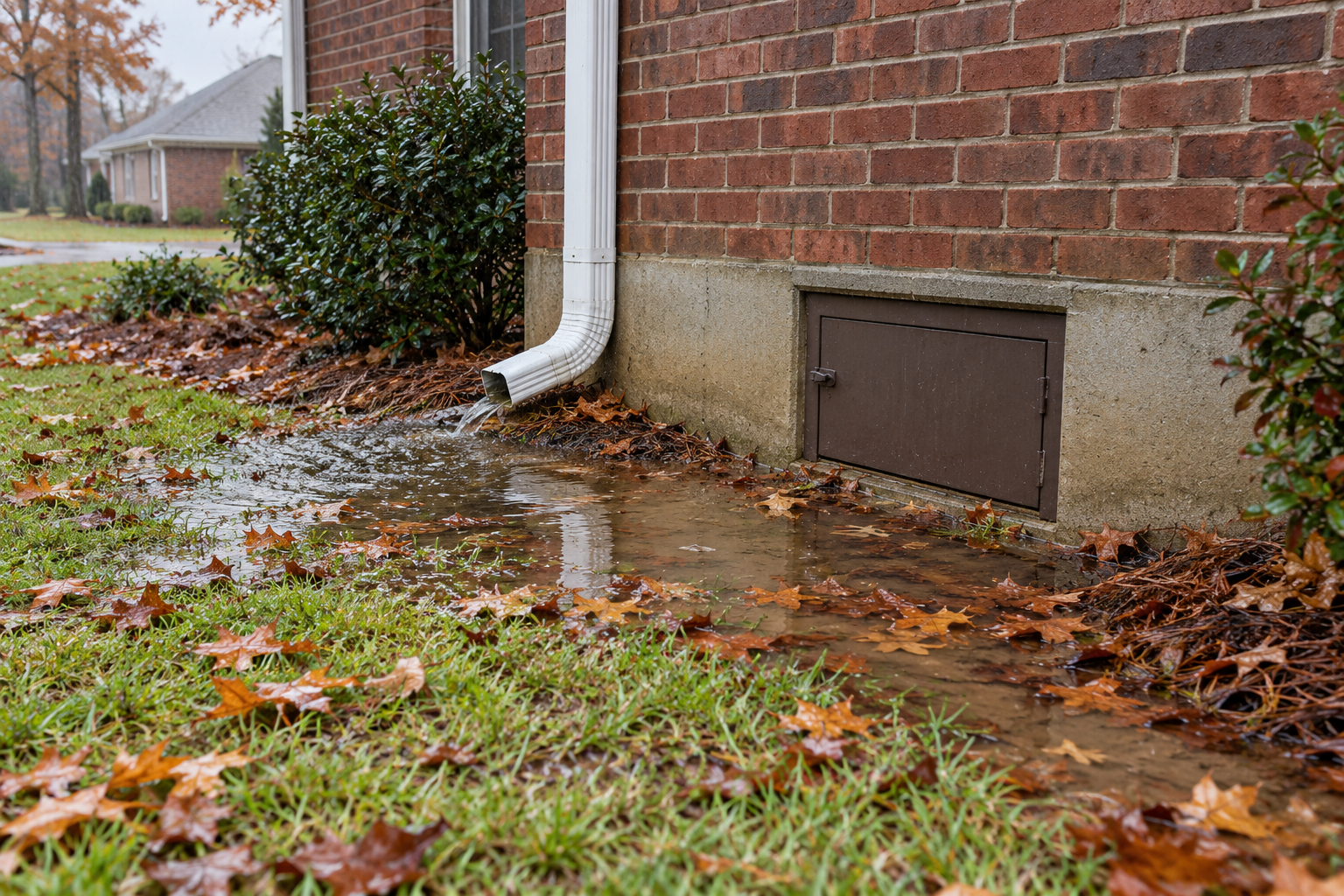
Does water collect near the crawlspace entrance? Are downspouts emptying beside the house? Does the ground slope toward the foundation?
Those conditions can help explain water underneath the home. During an evaluation, we look at the surrounding yard along with the crawlspace itself.
Photos taken during rain are useful. They can show runoff that has disappeared by the time we arrive.
A Crawlspace Can Be Damp Without Flooding
Standing water is an obvious concern, but it isn’t the only sign of a moisture problem.
Exposed soil can release moisture into the air beneath the house. Plumbing leaks and condensation can also contribute. That means a crawlspace may need attention even when you don’t see active water flowing through it.
A musty odor is a reason to investigate. It doesn’t identify the source by itself.
What Needs Checking?
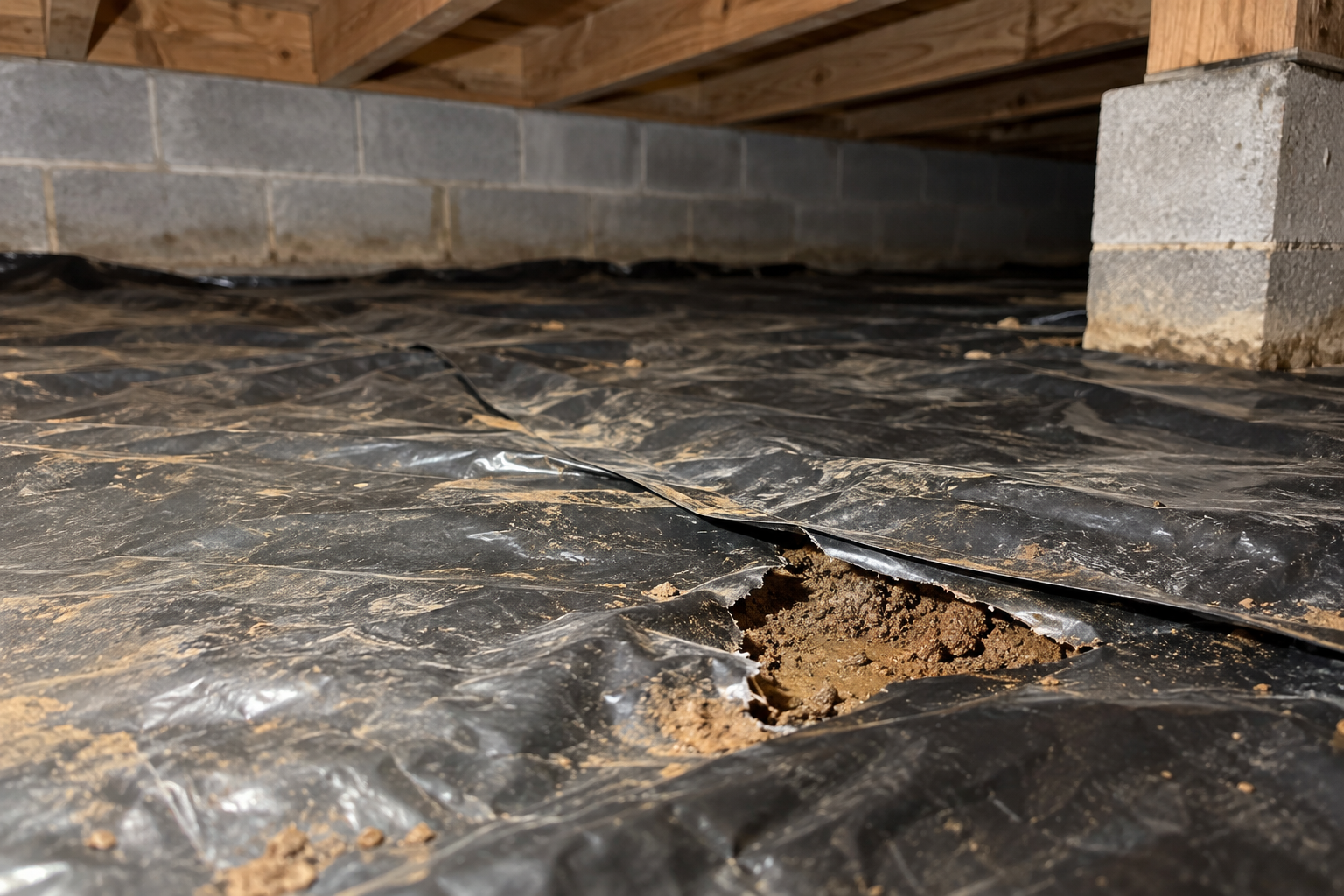
A crawlspace evaluation should consider:
Standing water, damp soil, and evidence of previous water entry
The condition and coverage of the existing vapor barrier
Plumbing leaks or condensation
Damp insulation and visible changes to wood surfaces
Humidity levels
Any existing drainage, sump pump, or dehumidifier
You don’t need to crawl through a wet or difficult space to collect this information. Photos from an accessible entrance can be a starting point; the evaluation should cover the areas you can’t easily see.
Drainage, Encapsulation, and Dehumidification Do Different Jobs
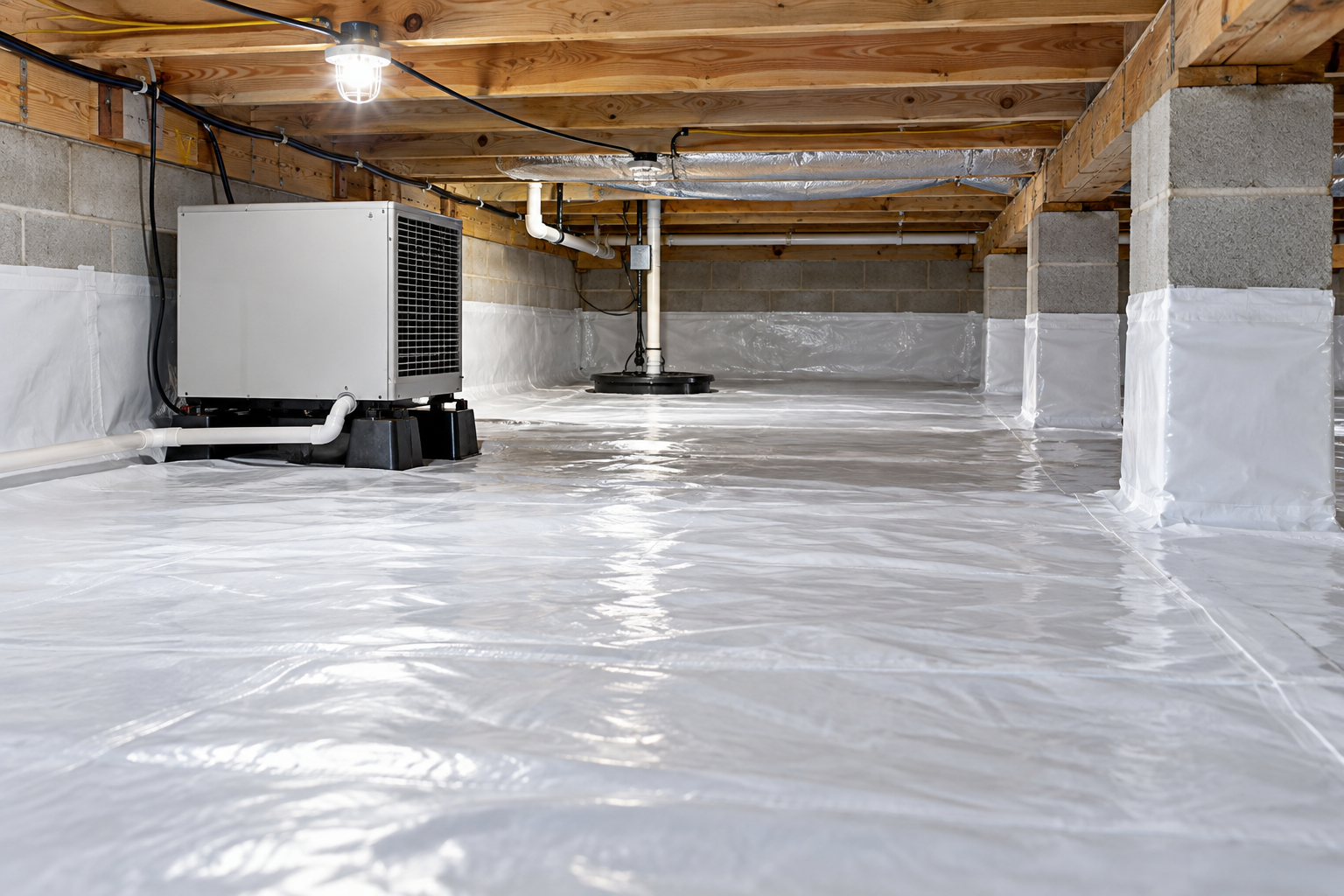
The recommendation should match the source of the moisture.
Drainage manages liquid water. Depending on the property, that may involve exterior grading, downspout routing, crawlspace drainage, or a sump pump.
Encapsulation uses a continuous sealed barrier as part of a system designed to control moisture entering from the ground and surrounding surfaces.
Dehumidification removes moisture from the air. It needs appropriate sizing and a reliable route for the collected water.
Some properties need several of these measures working together. A dehumidifier won’t repair a plumbing leak, and a new liner alone won’t resolve every source of standing water.
Already Have a System? Check Its Condition

An encapsulated crawlspace still needs maintenance.
Look for a displaced or damaged liner, new water entry, equipment alarms, and changes in odor. Have existing pumps and dehumidifiers checked according to their manufacturer’s maintenance instructions.
If conditions have changed, find out why before adding more equipment.
Get a Clear Plan Before Winter
Drainage Solutions LLC has focused on drainage since 2017. We evaluate the source of the problem and explain what the proposed work is intended to accomplish.
We serve Memphis, Germantown, Collierville, Bartlett, Southaven, Olive Branch, Hernando, Byhalia, and surrounding communities.
Request a crawlspace evaluation and find out what’s happening beneath your home.