Before the Leaves Fall: Get Your Yard Drainage Ready for Fall
Leaves look good on the trees. They’re less welcome packed over a drain grate.
Fall is a good time to check the parts of your drainage system you can see—and pay attention to the areas that stay wet even when those drains are clear. A little maintenance can keep an inlet working. A recurring drainage problem needs a closer look.
At Drainage Solutions LLC, we help homeowners across Memphis and North Mississippi understand the difference.
Start With the Drain Grates
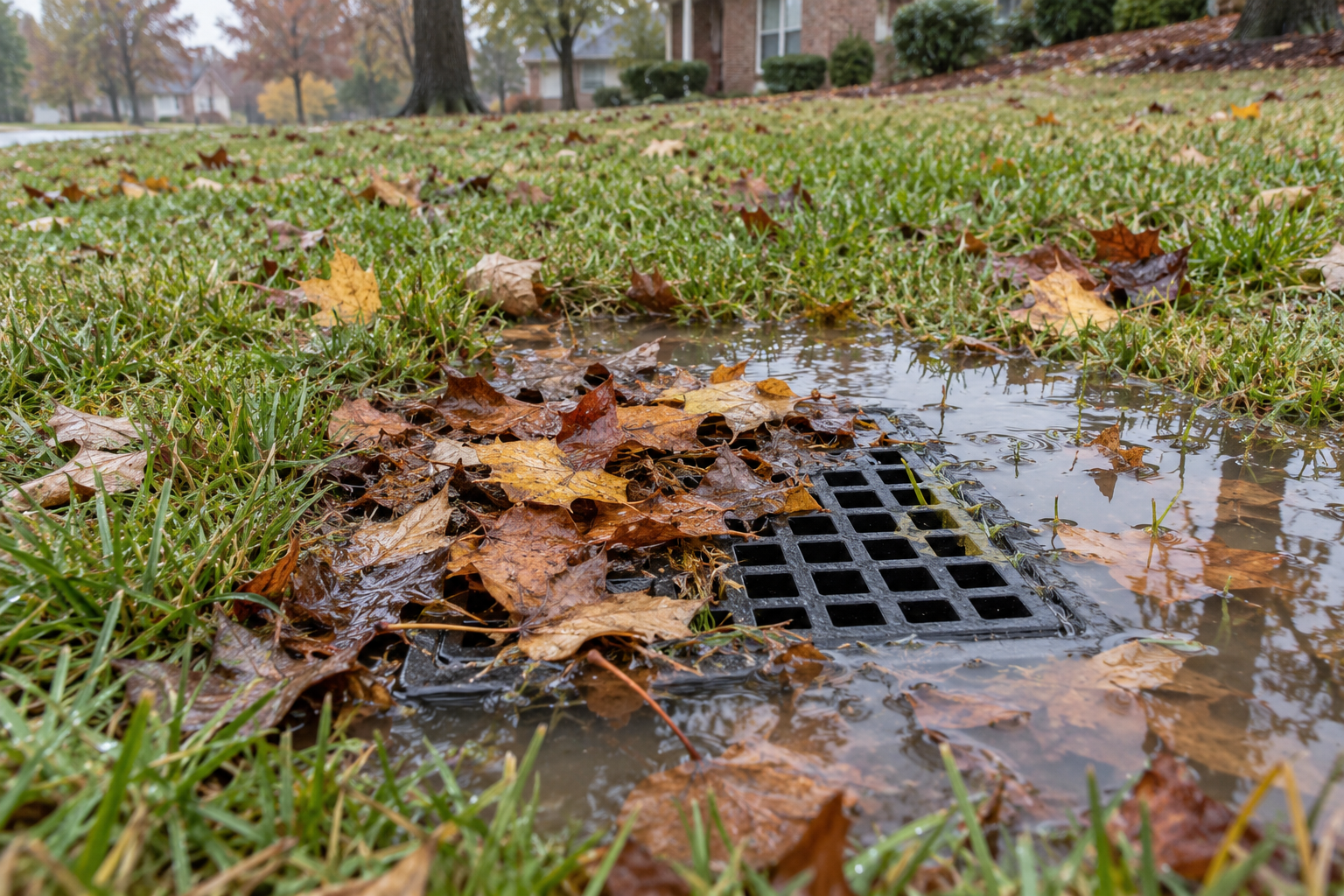
Walk around your property and look for catch basins, channel drains, and other drainage inlets. Clear leaves and loose debris from the surface so water can enter.
Check again after mowing, leaf cleanup, or windy weather. Grass clippings and leaves can collect over a grate even when the rest of the yard looks clean.
If an inlet is clear but water still collects around it, the blockage may be farther down the line—or the system may need evaluation.
Watch Your Gutters and Downspouts
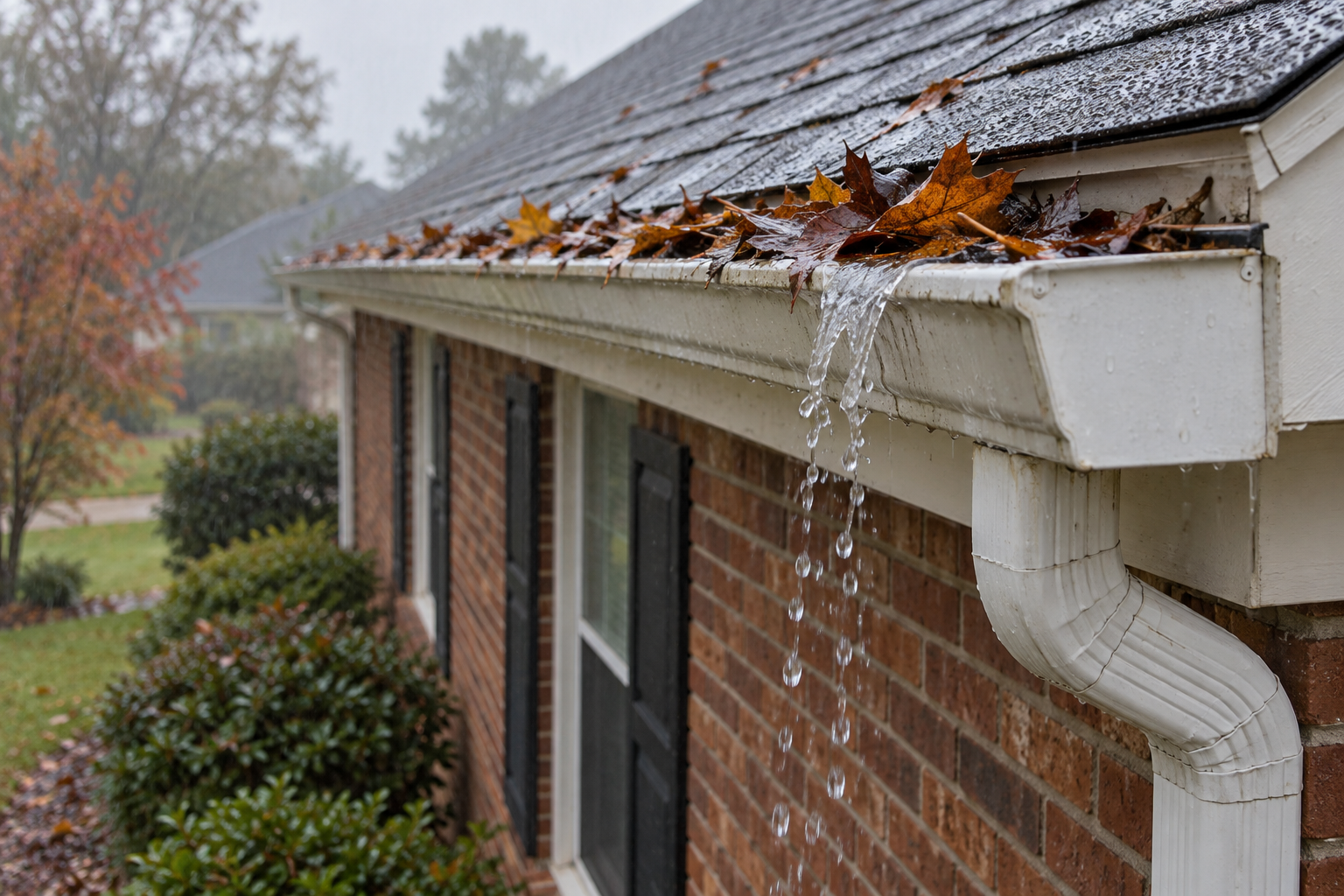
Leaves in gutters can interrupt the path roof water should take. During rain, look for water spilling over the gutter edge, leaking at a connection, or pooling where a downspout empties.
If your downspouts connect to underground drainage, don’t assume an overflowing gutter means the gutter itself is clogged. The connection or buried line may also need attention.
Have gutters cleaned safely, and document any runoff that continues afterward.
Keep Drainage Paths Open
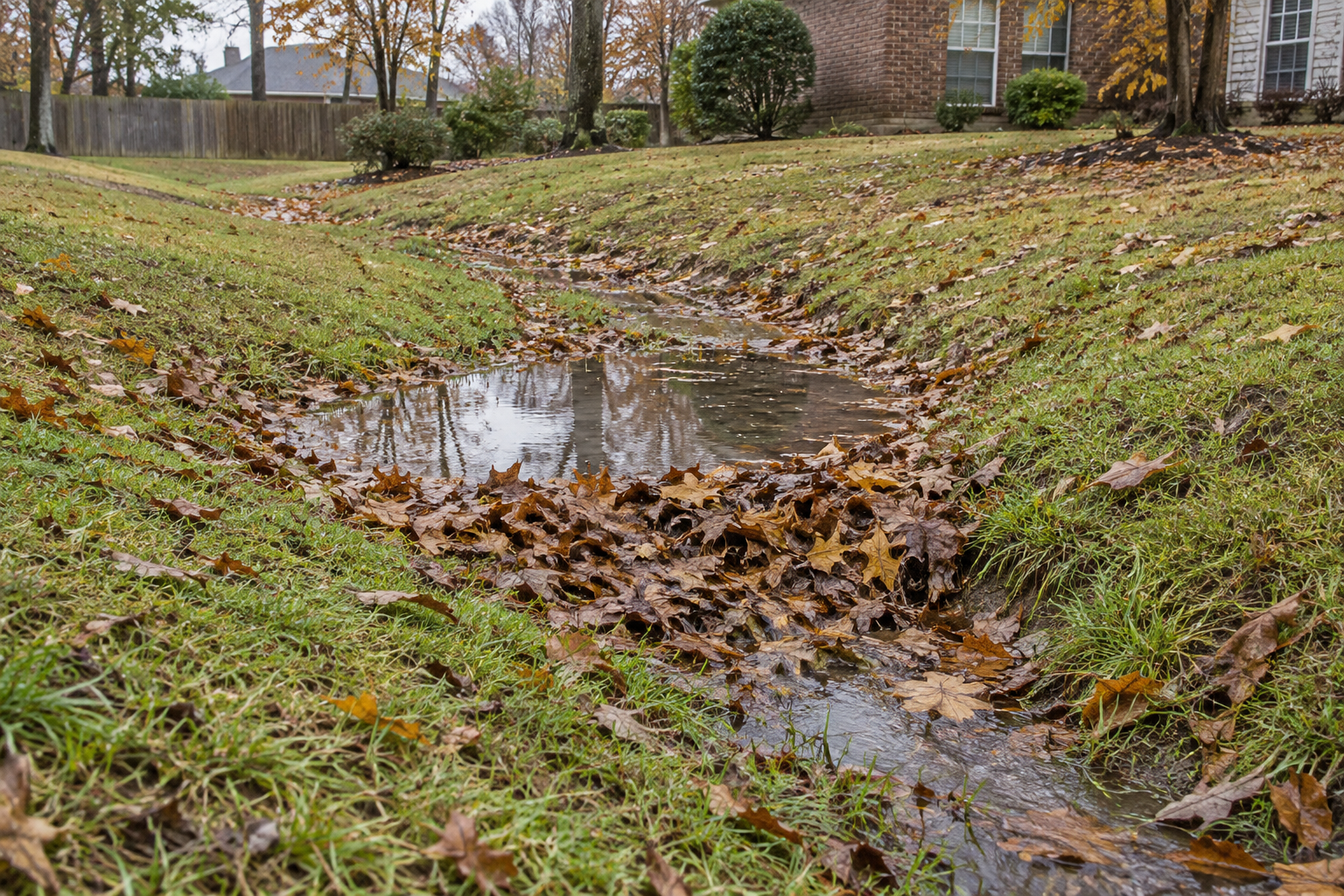
Not every drainage route has a grate. A shallow swale or graded section of lawn may carry water across the property.
Piles of leaves, added soil, landscaping materials, and other obstructions can interfere with that route. Before filling a low area or changing a flower bed, consider whether it’s part of the way water leaves the yard.
A low spot that carries runoff during rain serves a different purpose from a depression that simply holds water.
Check the Outlet, Too
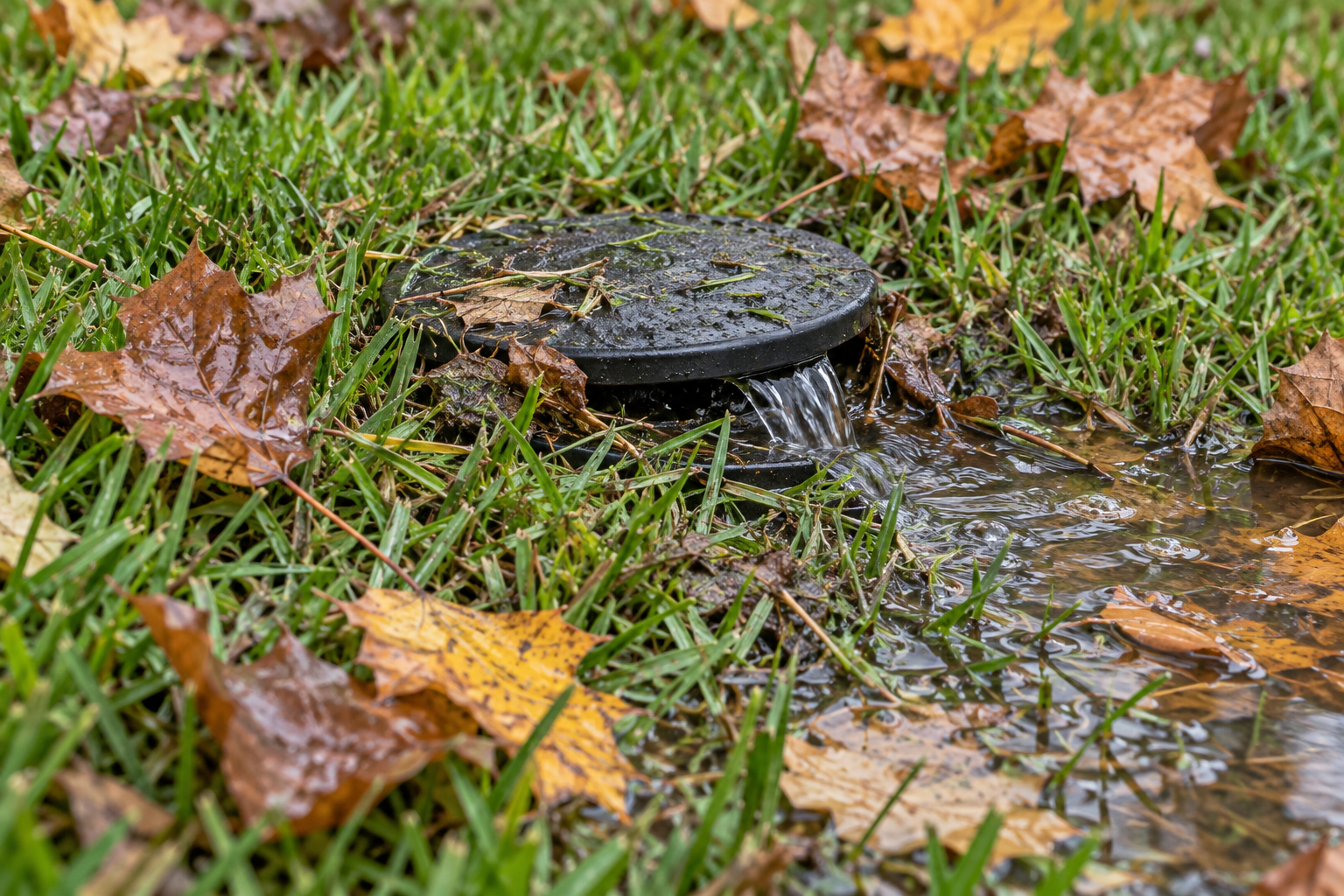
A drain needs somewhere to discharge.
If you know where your system empties, check the visible outlet for leaves, sediment, or damage. Don’t open unfamiliar structures or make changes to shared drainage. If you can’t find the outlet—or aren’t sure where the line goes—that’s useful information to bring to an evaluation.
The inlet and outlet should be considered together.
Clearing Leaves Won’t Fix Every Wet Yard
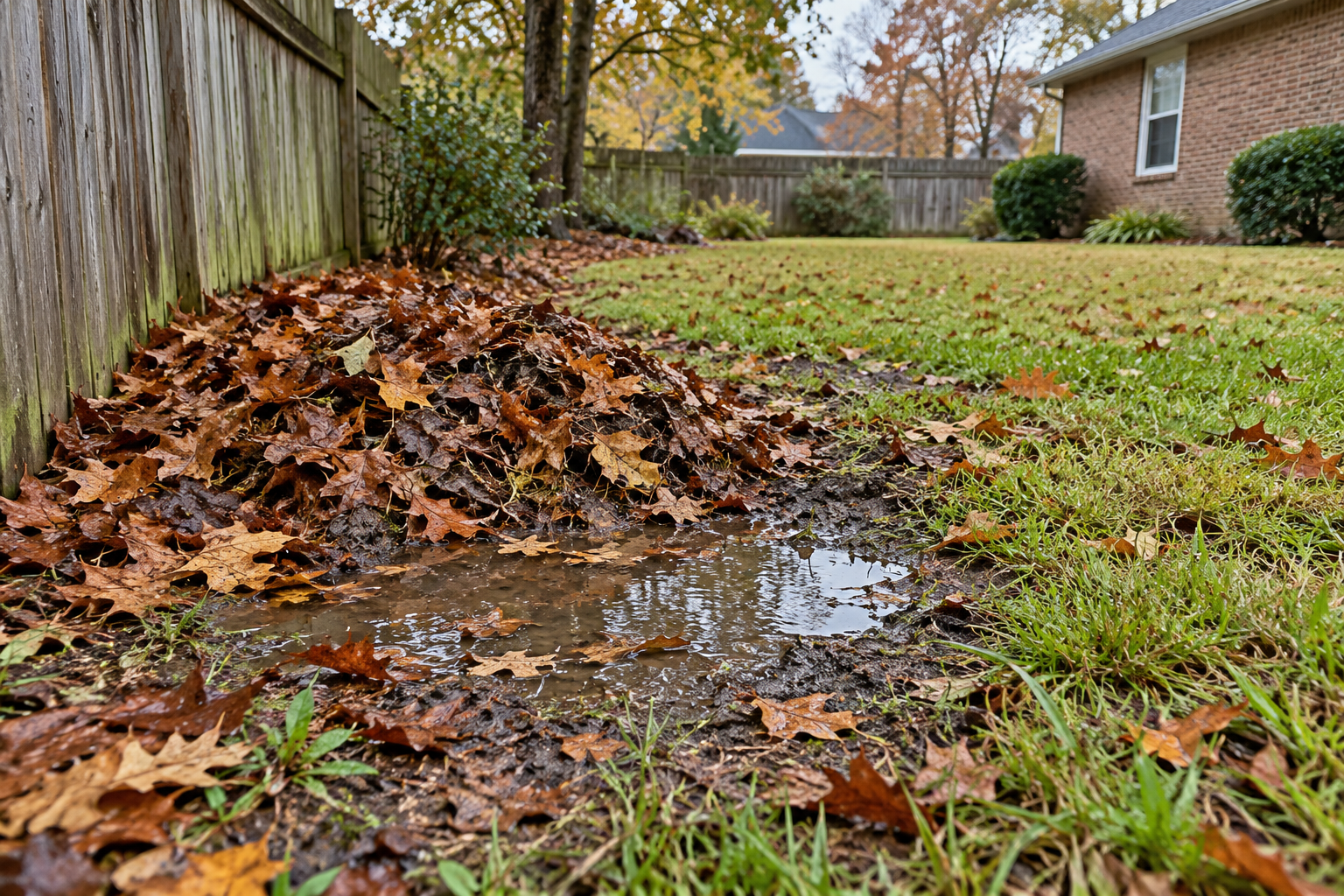
If the same area stays soggy after each rain, clearing debris may help you rule out a maintenance issue. It won’t correct every problem with grading, water collection, or discharge.
Persistent standing water, runoff toward the house, and drains that repeatedly overflow deserve a closer look. The right approach depends on the property and the source of the water.
We may recommend grading, catch basins, downspout piping, French drains, or a combination of solutions after evaluating the site.
Take Photos Before You Clean Up
If water is collecting around a leaf-covered inlet, photograph it before clearing the debris. Then check what happens during the next rain.
That comparison helps show whether maintenance restored the flow or whether a drainage problem remains. Include a wide photo so we can see the surrounding yard, not just the drain.
Get Your Yard Ready for the Next Rain
Fall maintenance is a chance to catch drainage problems before you spend another season working around a muddy yard.
Drainage Solutions LLC has focused on drainage since 2017, serving Memphis, Southaven, Olive Branch, Hernando, Germantown, Collierville, Bartlett, Byhalia, and surrounding communities.
Request a drainage evaluation and get a plan for your property.