We Love the Rain. Here’s What It Tells Us About Your Yard.
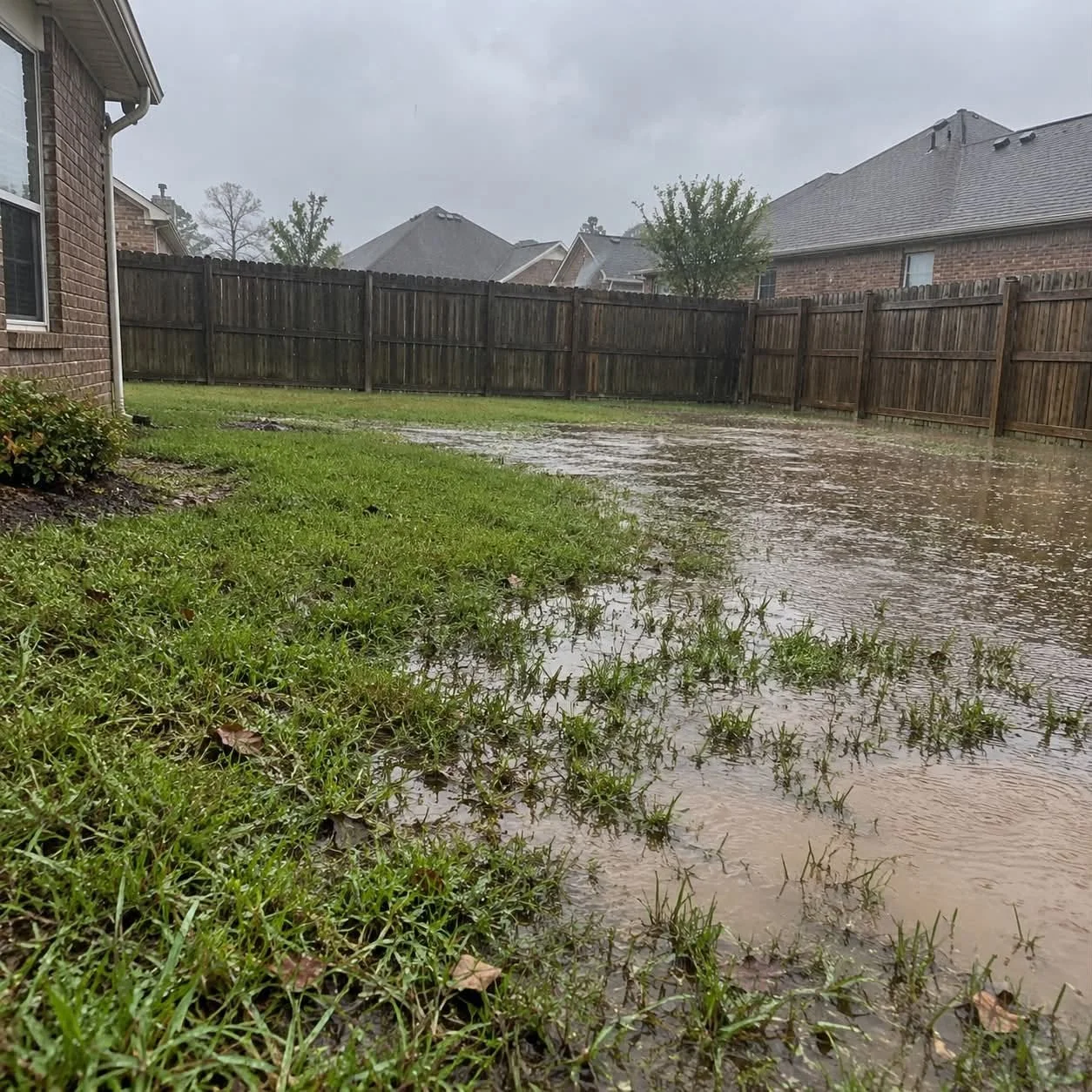
Rainy days are some of our most useful days at Drainage Solutions. We can see water moving across a property, overflowing from a downspout, collecting along a fence, or heading toward the house.
Once the yard dries up, much of that evidence disappears.
If today’s rain is bringing back a problem you’ve been meaning to address, use the opportunity to document it. A few photos and a short video can help us understand what happens at your home before we visit.
Follow the Water Before You Focus on the Puddle
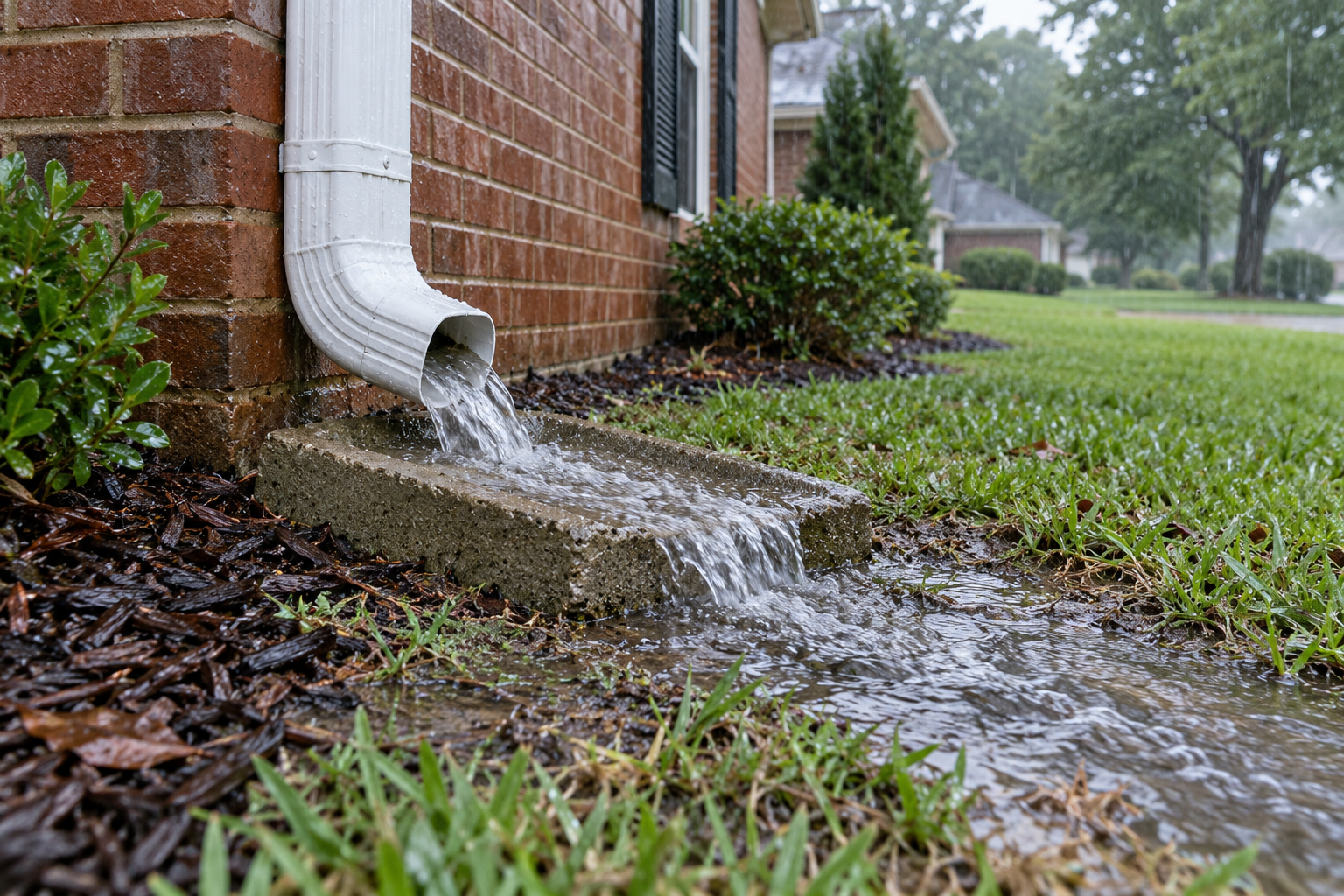
The deepest puddle gets your attention, but it doesn’t always tell the whole story.
Water collecting in the backyard might be coming from roof runoff, a higher section of the property, or several directions at once. A wet side yard might be receiving water from multiple downspouts. The place where water stops may be a long way from where it started.
That’s why we evaluate the water’s source, its path across the property, and the available discharge route together. Each matters when designing a drainage system.
What to Photograph While It’s Raining
From a sheltered location, capture a wide view of the problem area. Then document:
Downspouts: Where does the roof water go after it leaves the gutter?
Low spots: Where does water collect first, and how far does it spread?
The house: Does water pool against the foundation or flow toward an entrance?
Walkways and patios: Is water crossing the surface or collecting beside it?
Fence lines: Is water entering from another direction or getting trapped along the boundary?
A short video is especially helpful when it shows moving water. Start with a wide view, then follow its direction without walking into standing water.
Check Again After the Rain Stops
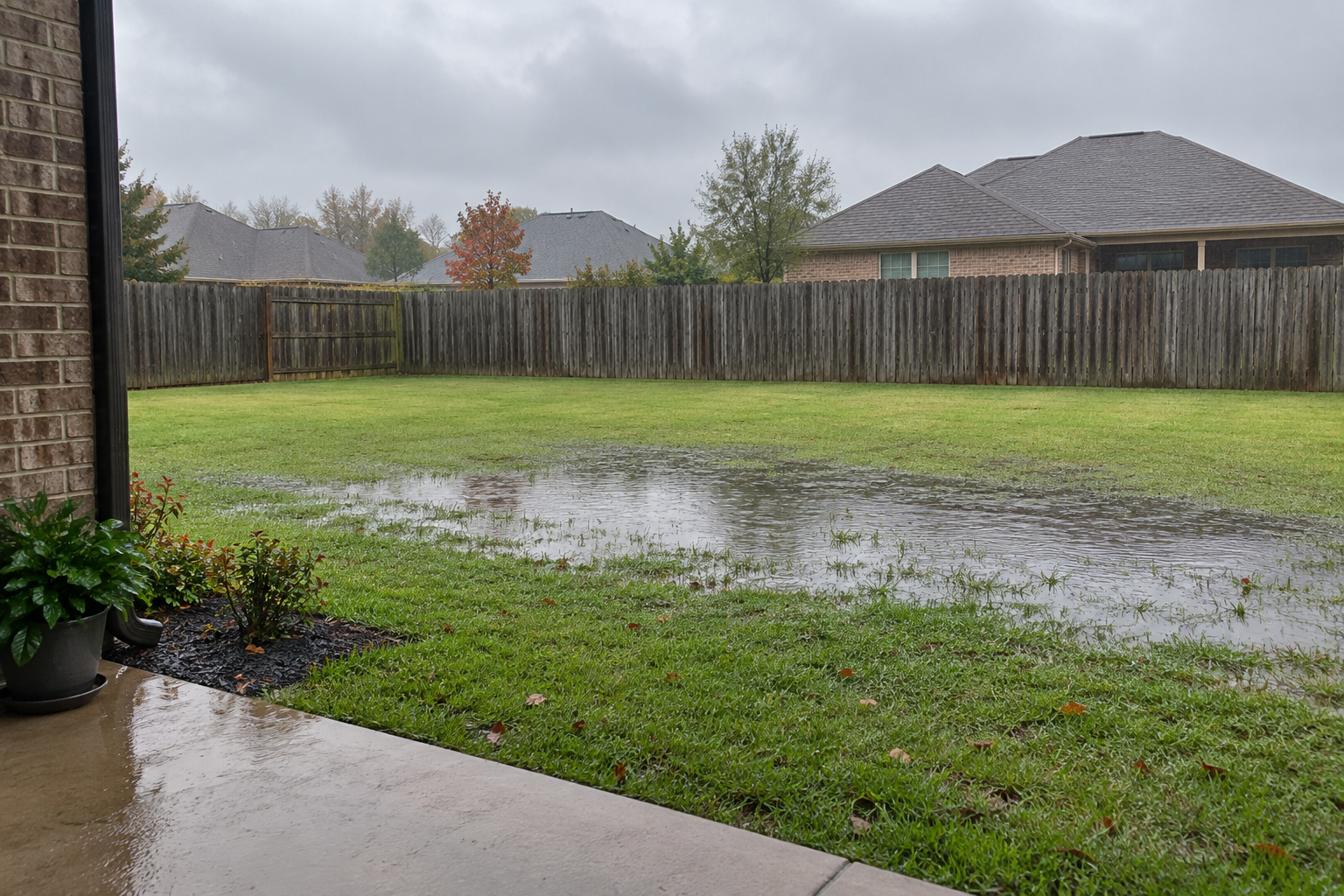
A photo during the storm shows how water moves. A photo afterward shows what remains.
Note when the rain ends and when you check the yard again. Does the water recede, or does the same section remain saturated? Do muddy areas keep you from using the yard?
Temporary ponding during a downpour and a recurring wet area can require different approaches. That timing helps us assess the problem.
Why Adding Dirt May Not Be Enough
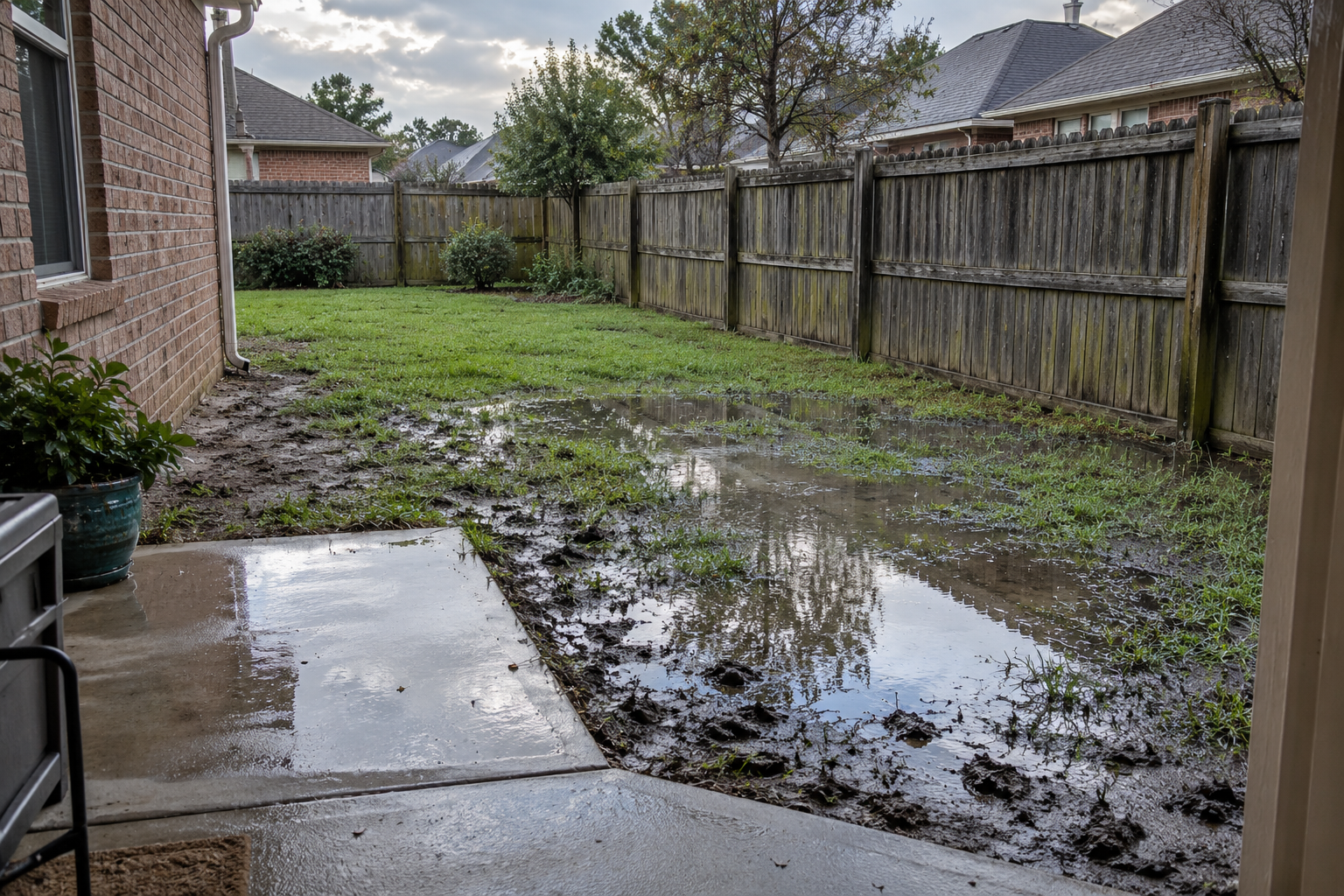
Raising a low spot changes the shape of the yard. It doesn’t automatically create a safe route for the water.
Without considering the surrounding elevations, added soil can push runoff toward another part of the property. Likewise, a drain needs a suitable discharge route to do its job.
Depending on the conditions, a solution may involve grading, catch basins, buried downspout lines, French drains, channel drains, or several components working together. The recommendation should follow the property’s needs.
What We Look at During a Drainage Evaluation
Drainage Solutions LLC has focused on drainage across Memphis and North Mississippi since 2017.
During an evaluation, we look at where the water originates, the elevations it travels across, the areas affected, and the practical options for discharge. We then explain the proposed work and what each part of the system is intended to accomplish.
Your rain photos help us see the conditions that may be gone by the time we arrive.
Put Today’s Rain to Work
If the same drainage problem returns every time it rains, start documenting it today. You don’t need to diagnose it yourself. Show us what happens, tell us how long it has been happening, and let us evaluate the property.
Drainage Solutions serves Memphis, Southaven, Olive Branch, Hernando, Germantown, Collierville, Bartlett, Byhalia, and surrounding communities.
Request a drainage evaluation and get a plan for your property.