French Drain, Catch Basin, or Grading: What Does Your Wet Yard Actually Need?
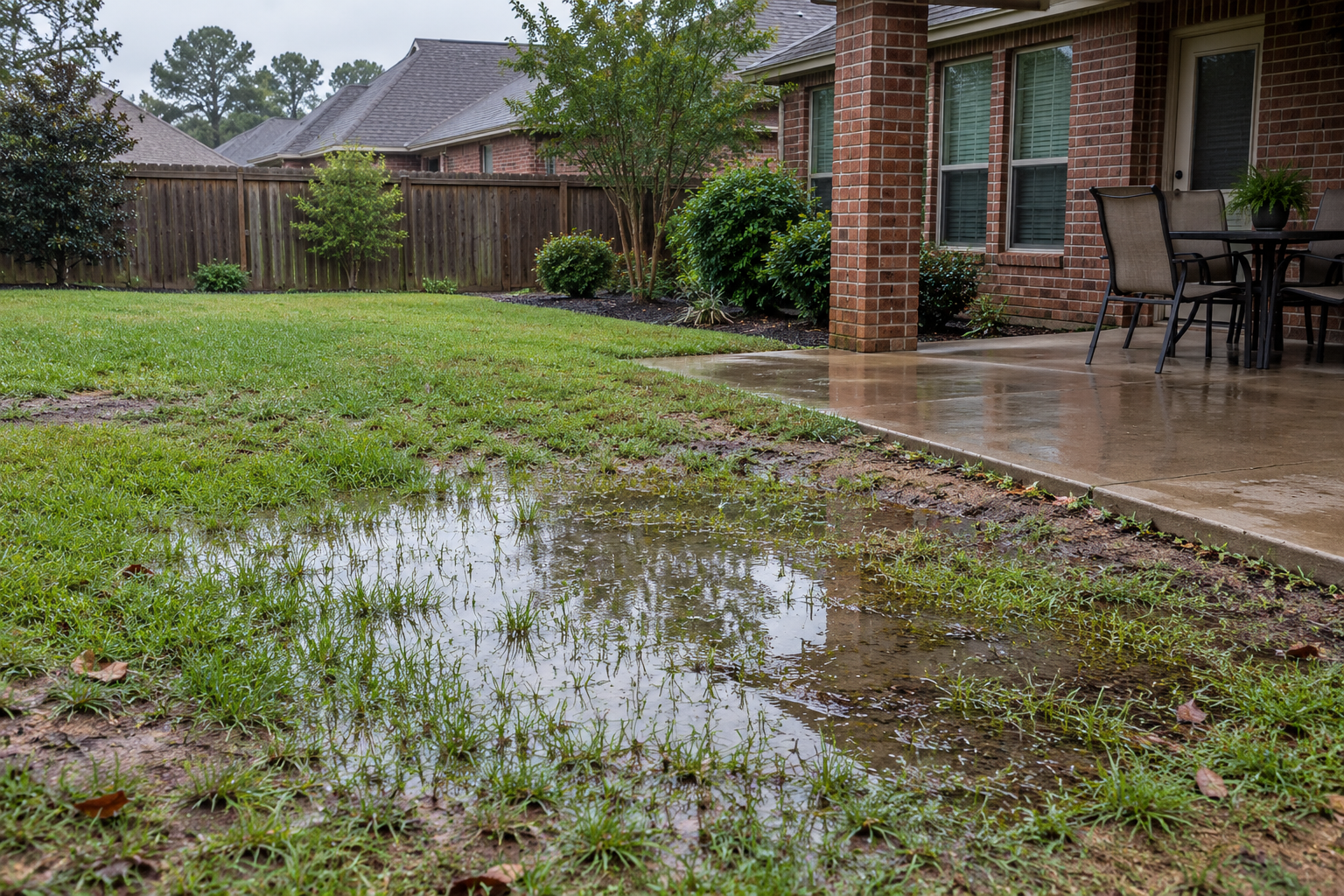
A puddle in your yard does not automatically mean you need a French drain.
We’ve seen homeowners spend money on pipe when the yard needed a grading correction. We’ve also seen low spots regraded while the real problem—a steady stream of water from the roof—was left untouched. The right fix starts with three questions: Where is the water coming from? How is it moving? Where can it safely go?
Here’s how we decide between three common drainage solutions for homes in Memphis, Collierville, Germantown, Bartlett, Southaven, Olive Branch, Hernando, and nearby areas.
When a French drain makes sense
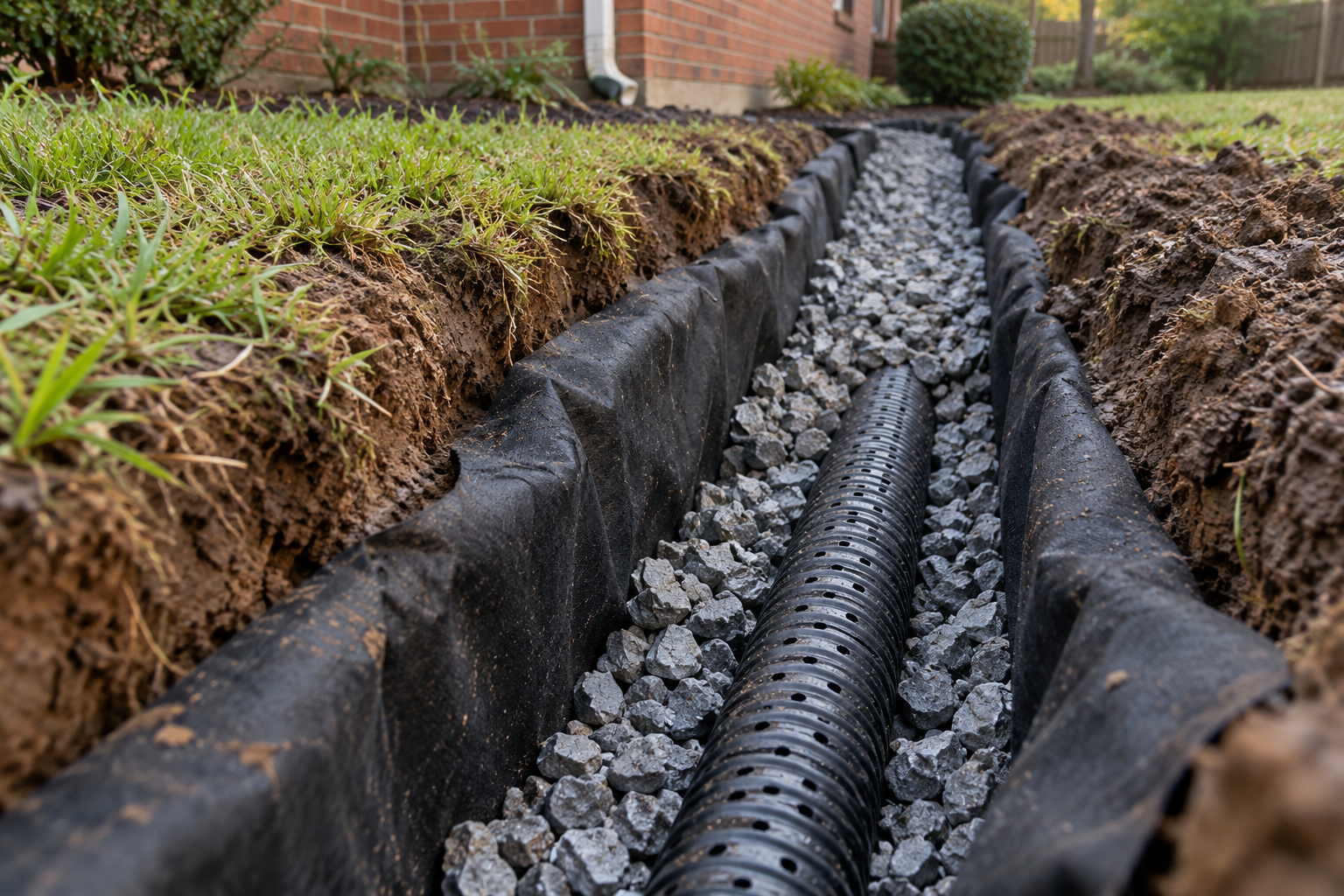
A French drain collects water that is moving through saturated soil. It typically uses a gravel-filled trench and perforated pipe to intercept that water and carry it to an appropriate outlet.
We consider one when an area stays soggy well after the rain ends, water seeps across a slope, or moisture repeatedly collects beside a foundation or along a fence line. The location, depth, and outlet all matter. A trench in the wrong place will not intercept the water causing the problem.
What to look for: The ground feels soft or squishy even when you cannot see a puddle, and the same strip of yard takes much longer to dry than the rest.
When a catch basin makes sense
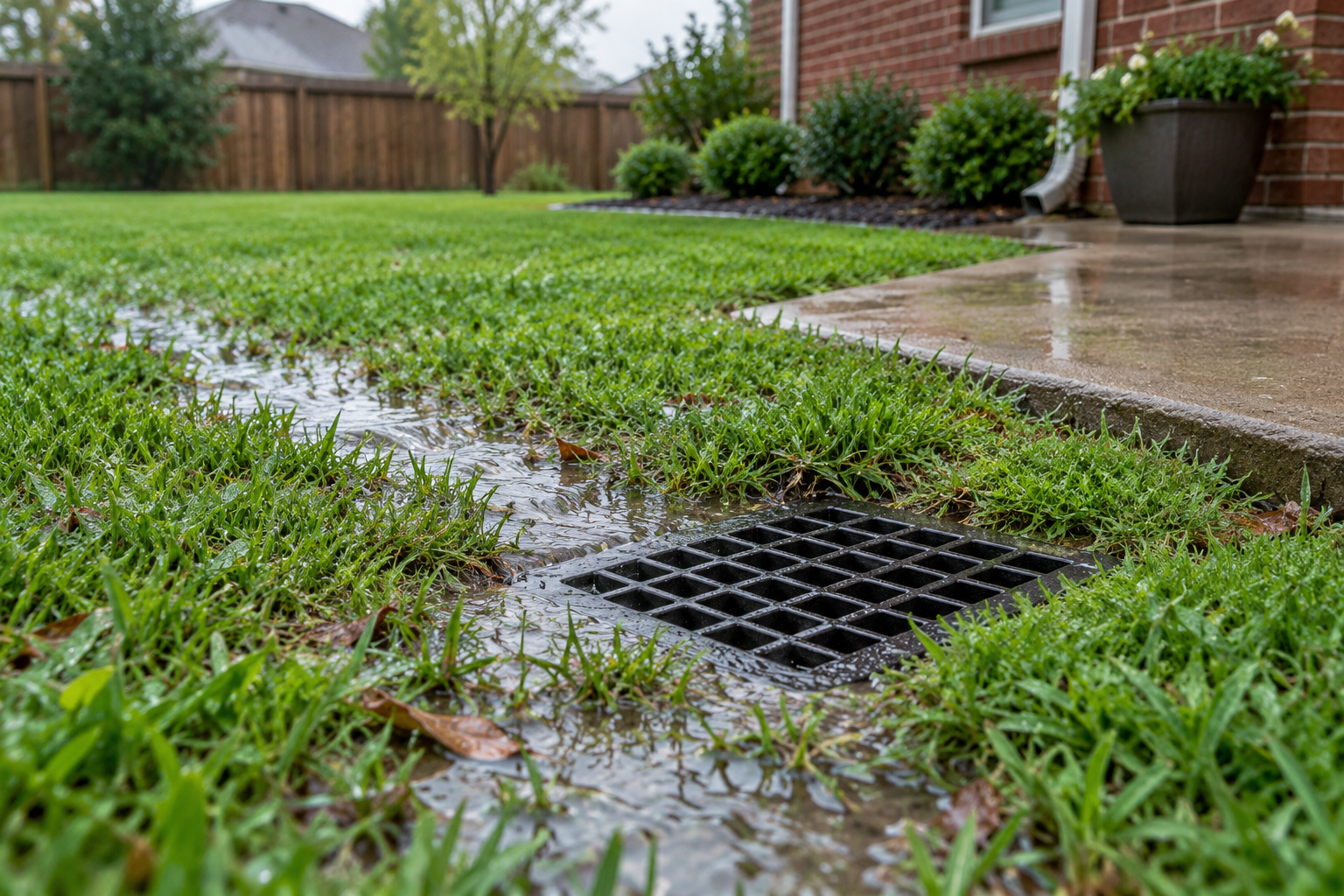
A catch basin collects water running across the surface. Its grate sits in a low area where runoff naturally gathers; buried solid pipe then carries the collected water toward a suitable discharge point.
This may be the better choice when water visibly flows into a low spot during a storm, collects near a patio, or crosses the yard from a downspout. A catch basin needs to sit where the water actually travels. Placing one in the middle of a puddle without a workable outlet will not solve the larger drainage problem.
What to look for: You can watch water move across the grass or pavement and collect in one predictable place during rain.
When grading is the fix
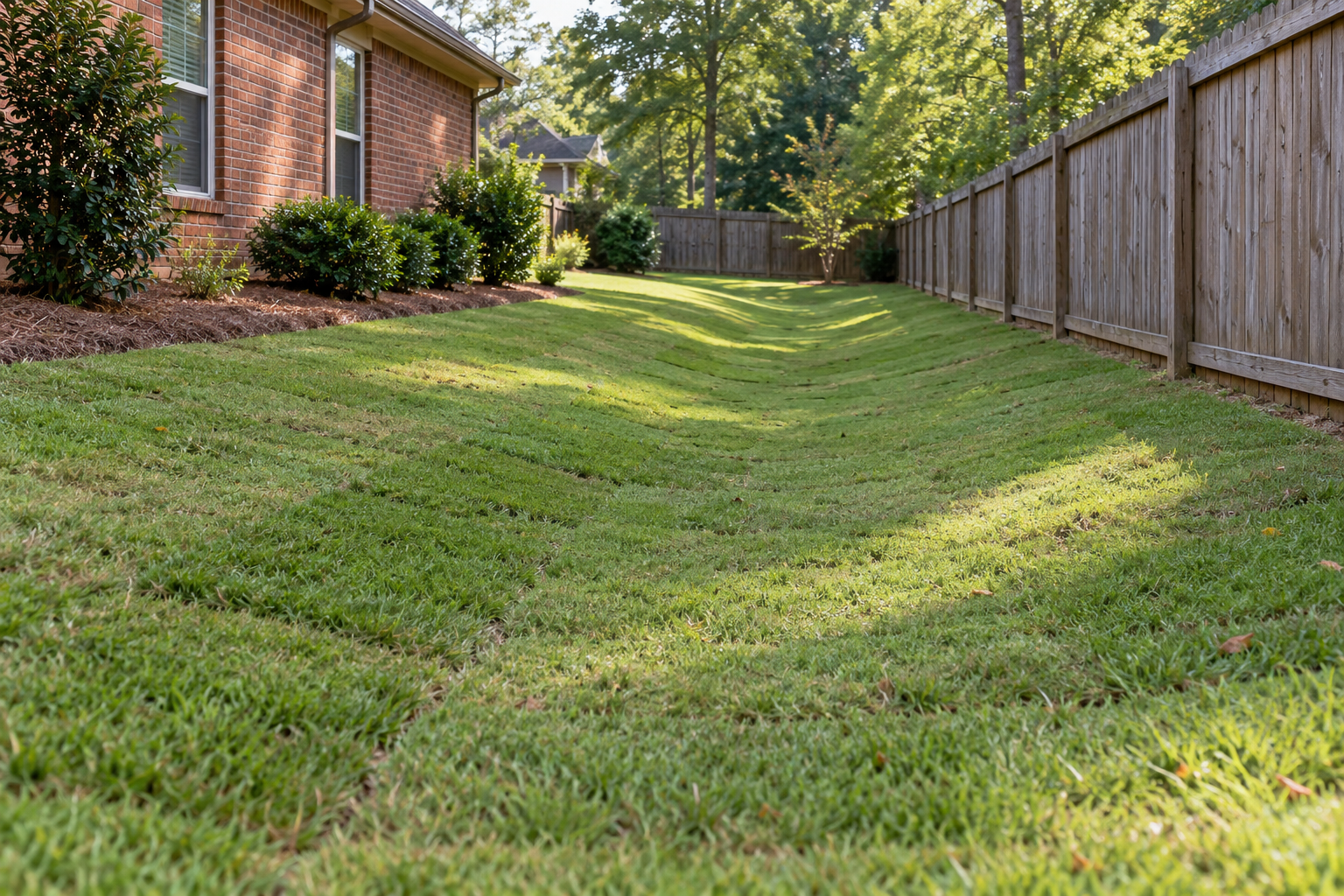
Sometimes the yard itself sends water in the wrong direction. A low pocket can trap runoff, or a slope can carry it toward the house instead of away from it.
Grading changes the shape of the ground so water has a better path. A small correction may be enough; another property may need a swale or grading combined with a drain. We check the elevations before recommending excavation, because shifting dirt without understanding the full path can move the problem to another part of the yard.
What to look for: Water consistently travels toward your house, garage, or patio, or a shallow depression holds water even though the surrounding yard drains.
Your yard might need more than one solution
These systems do different jobs. A home can have roof runoff pouring into a low spot and soil that stays wet along the foundation. In that case, a catch basin, buried downspout line, grading correction, or French drain may work together.
That is why “How much for a French drain?” is not always the first question to answer. First, someone needs to see what happens when it rains and identify a practical place for the water to go. The outlet is part of the solution, not an afterthought.
What to show us during an evaluation
If you can, take a short video while it is raining. Show where the water enters your yard, the direction it travels, and where it collects. A second photo the next day helps us see what remains wet after the surface runoff has stopped.
At Drainage Solutions, the people evaluating your property are responsible for the installation. We’ll explain what is causing the problem, why we recommend a particular fix, where the water will discharge, and what the written estimate includes. If a smaller correction makes sense, we’ll tell you.
Water still standing in your yard after the rain? Let’s find the cause before you pay for the wrong fix.